The Jakarta Post
Please Update your browser
Your browser is out of date, and may not be compatible with our website. A list of the most popular web browsers can be found below.
Just click on the icons to get to the download page.


Popular Reads
Top Results
No results found. Please check your search term and try again
Can't find what you're looking for?
View all search results
Popular Reads
Top Results
No results found. Please check your search term and try again
Can't find what you're looking for?
View all search resultsData should be treated as a national asset
Indonesia will need to decide whether its digital data should be treated merely as an input for external technology companies or as a strategic national asset whose value should also contribute to domestic development.
Change text size
Gift Premium Articles
to Anyone
Share the best of The Jakarta Post with friends, family, or colleagues. As a subscriber, you can gift 3 to 5 articles each month that anyone can read—no subscription needed!
 Set as preferred source
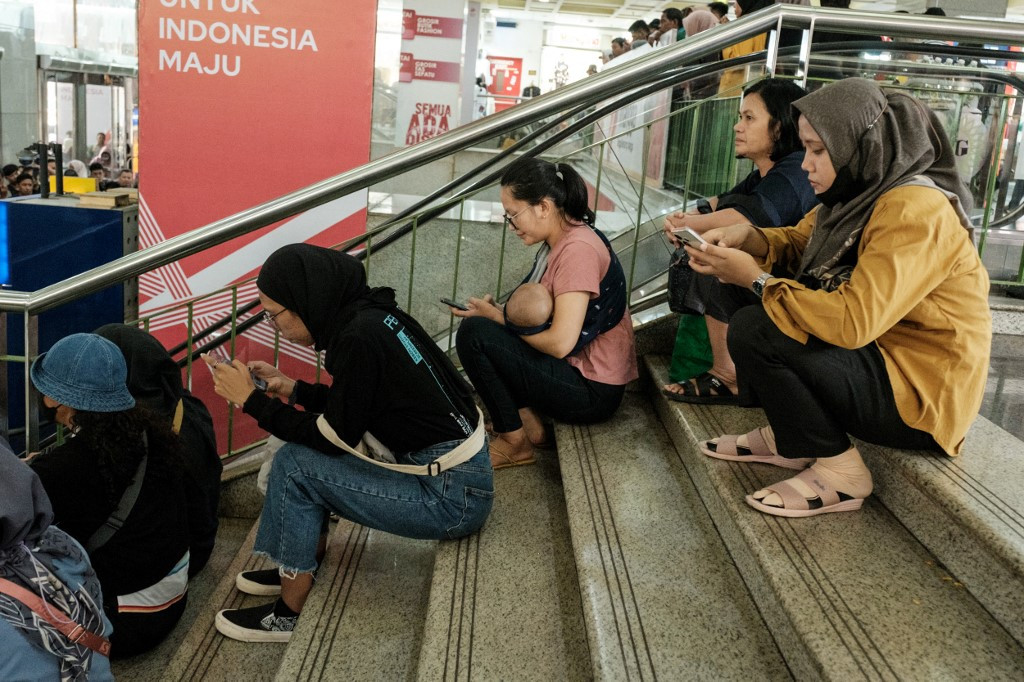 Women use smartphones on Sept. 28, 2023, at the entrance of Tanah Abang Market, Southeast Asia's largest wholesale shopping center for garments and textiles, in Jakarta. (AFP/Yasuyoshi Chiba)
A
s the saying goes, “The more things change, the more they stay the same.” Nearly two decades ago, there was an international debate about bird flu blood samples. Today, it’s about digital data samples. Yet the question of fairness for Indonesia is much the same.
Was it fair then for Indonesia to donate blood samples for developing H5N1 avian influenza vaccines that could then be sold to us at unaffordable prices? Is it now fair that the United States is pressing Indonesia for a more relaxed attitude toward IT companies when our digital activity helps create products that generate billions of dollars in economic value through AI?
As when Indonesia was asked to freely supply H5N1 blood samples and research results in 2007, there is now legitimate interest in ensuring that we also benefit from the value of sharing the data in our collective digital footprint.
During the debate over H5N1 virus research sharing, Indonesia wanted developing countries to receive a fair share of the benefits derived from the resources they provided. The government argued that while Indonesian virus samples were helping foreign pharmaceutical companies develop vaccines, the nation should enjoy affordable access to the resulting products.
Indonesia also questioned if countries providing an essential resource should remain passive suppliers while others captured most of the commercial value. Whether one agreed with Jakarta's position or not, the controversy ultimately contributed to wide discussions on fairer access and benefit-sharing in global health.
Today, artificial intelligence presents a comparable policy challenge. Instead of biological samples, the current critical resource is digital data. Instead of vaccines, the end product is increasingly powerful AI systems capable of generating substantial commercial value and potentially affecting the lives of everyone on the planet.

As Indonesia represents one of the richest sources of linguistic and cultural data available to developers of large language models (LLMs), data sharing deserves similar strategic consideration as our virus research once did.