The Jakarta Post
Please Update your browser
Your browser is out of date, and may not be compatible with our website. A list of the most popular web browsers can be found below.
Just click on the icons to get to the download page.


Popular Reads
Top Results
No results found. Please check your search term and try again
Can't find what you're looking for?
View all search results
Popular Reads
Top Results
No results found. Please check your search term and try again
Can't find what you're looking for?
View all search resultsWhat Bangkok and Jakarta can teach each other about political survival
The recent bilateral summit in Jakarta was a master class in Southeast Asian statecraft, where the visiting Thai premier and the hosting Indonesian president showed off their diplomatic chops in the art of political survival.
Change text size
Gift Premium Articles
to Anyone
Share the best of The Jakarta Post with friends, family, or colleagues. As a subscriber, you can gift 3 to 5 articles each month that anyone can read—no subscription needed!
 Set as preferred source
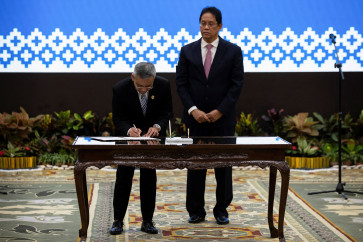
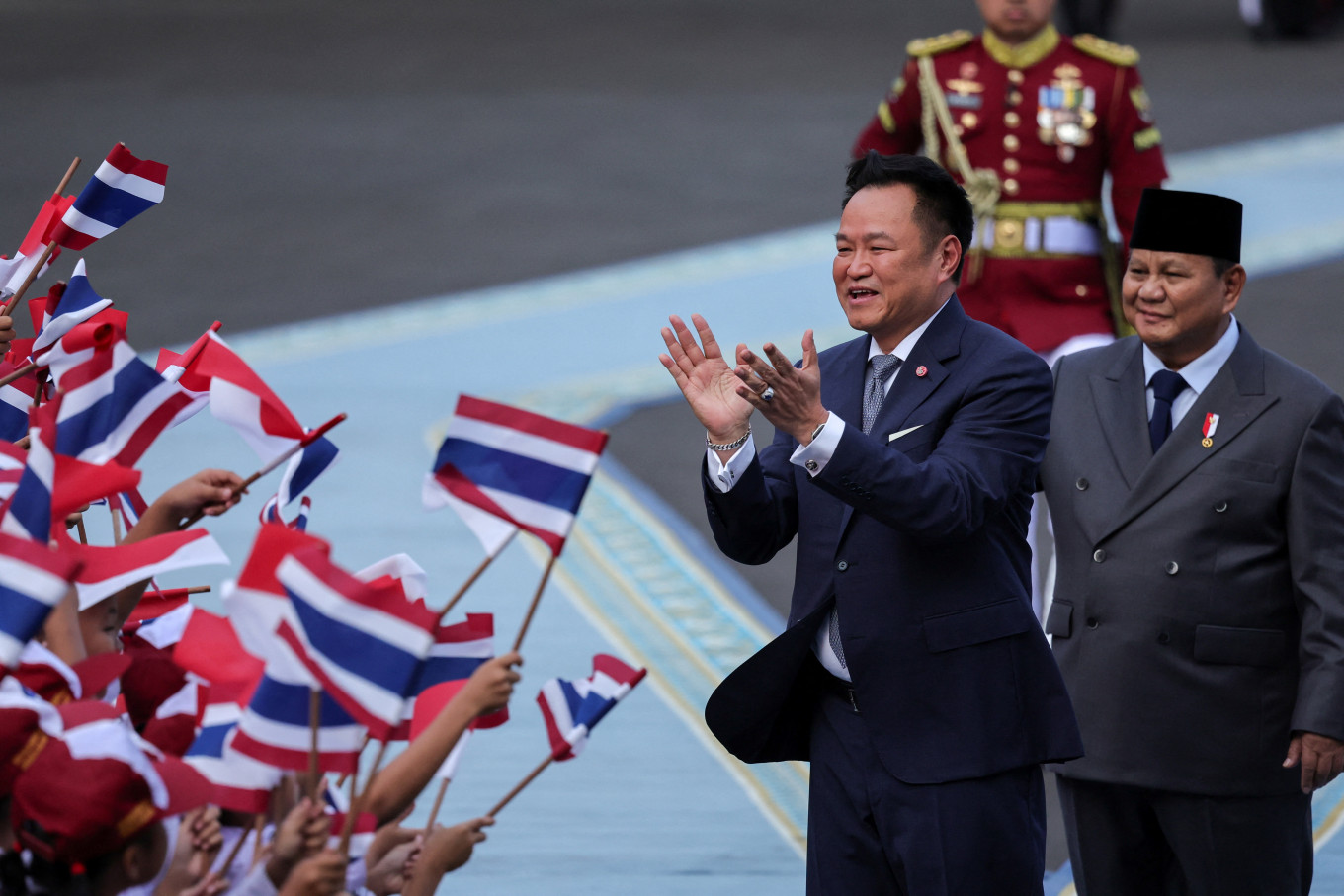 President Prabowo Subianto (right) looks on as Thai Prime Minister Anutin Charnvirakul reacts to elementary schoolchildren waving Thai and Indonesian flags on Aug. 3, 2026, during a ceremony to welcome the Thai leader’s visit to Jakarta. (Reuters/Willy Kurniawan)
W
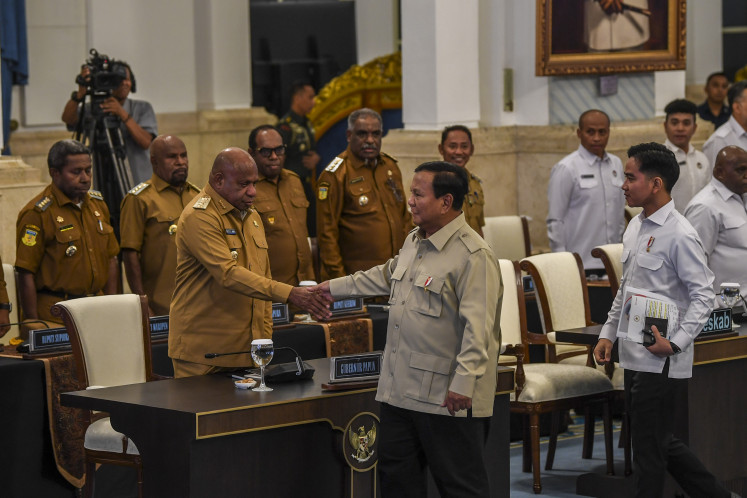
hen Thai Prime Minister Anutin Charnvirakul’s motorcade glided through the avenues of Jakarta this week, people were treated to the full, reassuring theater of Southeast Asian statecraft. The occasion, marking the first official visit by a Thai prime minister to Indonesia in 15 years, featured crisp honor guards, a 19-gun salute and carefully staged photo ops alongside President Prabowo Subianto against the grand backdrop of Merdeka Palace.
The official communiqués predictably praised "deep-rooted historical ties”, toasted "unshakable regional solidarity" and unveiled the newly minted Strategic Partnership Roadmap 2026-2030.
Behind the polished brass doors, however, lies a far more candid truth: Bangkok and Jakarta share a bond much deeper than trade tariffs or defense pacts. Both capitals have quietly perfected the high-stakes art of political survival.
If there is one piece of genuine expertise these two regional powerhouses can trade over steaming plates of tom yum and nasi goreng, it is the sophisticated alchemy of managing improbable coalition governments: the sort where yesterday’s mortal political enemies wake up as today’s devoted cabinet colleagues.
In both Thailand and Indonesia, political rivalries have evolved from bitter ideological clashes into an intricate team sport. Both nations have mastered the delicate choreography required to balance military establishment interests, legacy political dynasties and populist reformist pressure.
Looking at the parliamentary seating charts in either capital, one could be forgiven for proposing a Joint Thai-Indonesian Institute for Coalition Gymnastics: a master class where regional statesmen can learn how to shuffle 34 cabinet portfolios every six months without disturbing the status quo in the slightest.

Beyond the domestic political theater lies the real substance of the summit: urgent security and economic strains that demand cross-border action. While negotiators sat down for their 2nd Leaders' Consultation to formalize agreements on supply chains and green energy transitions, the most active pipeline running across Southeast Asian borders remains, regrettably, the flow of unwitting citizens lured into illegal cyber scam compounds in the Mekong region.