The Jakarta Post
Please Update your browser
Your browser is out of date, and may not be compatible with our website. A list of the most popular web browsers can be found below.
Just click on the icons to get to the download page.


Popular Reads
Top Results
No results found. Please check your search term and try again
Can't find what you're looking for?
View all search results
Popular Reads
Top Results
No results found. Please check your search term and try again
Can't find what you're looking for?
View all search resultsBeyond aid: Rethinking disaster assistance to Indonesia
Good intentions are never in short supply after a disaster, what Indonesia needs in Flores is the precision to strengthen local resilience rather than replace it.
Change text size
Gift Premium Articles
to Anyone
Share the best of The Jakarta Post with friends, family, or colleagues. As a subscriber, you can gift 3 to 5 articles each month that anyone can read—no subscription needed!
 Set as preferred source
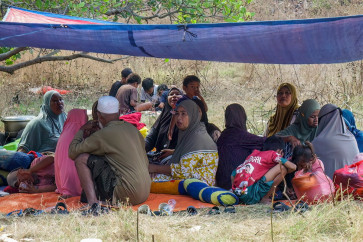
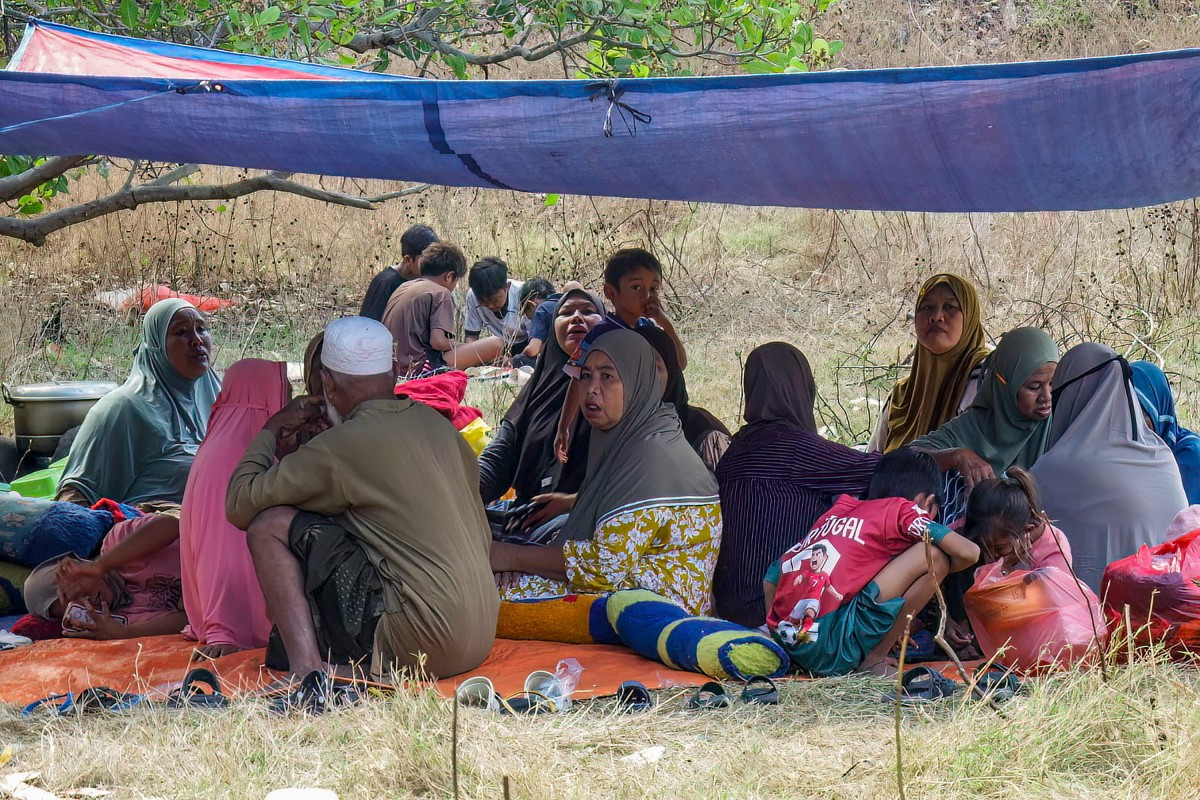 Displaced residents look on after spending the night in an open field near Nangahale village in Sikka regency, East Nusa Tenggara (NTT), on Aug. 16, 2026, after a 7.7 magnitude earthquake off Flores island. Rescuers combed through debris for survivors on Aug. 15 after the powerful earthquake had led to the death off at least 47 people, according to disaster officials. (AFP/ Arnold Welianto)
I
n the first 48 hours after the 7.7-magnitude earthquake struck Flores, East Nusa Tenggara, the casualty count climbed so fast that any figure cited was obsolete before the sentence was finished. Anyone looking for real-time operational data should check with the National Disaster Mitigation Agency (BNPB), not this column.
A constantly shifting death toll might seem like a simple data problem, but it points to a much tougher question: How should the world response to an unfolding disaster when the pressure to act is already mounting?
Indonesia lives with disaster like few other nations on Earth. Earthquakes, tsunamis, volcanic eruptions, flash floods, landslides, droughts and peat fires sweep across the archipelago in an endless cycle, often striking before communities have even begun to recover from the last shock. That reality demands a sharper conversation with the partner nations and donor agencies mobilizing for Flores.
The critical question isn’t simply how much aid can be delivered, but what kind is genuinely needed, when it can actually help, whom it reaches, and whether it reinforces Indonesia’s own resilience or quietly displaces it. Good intentions are never in short supply after a catastrophe; precision is.
Indonesia is far from helpless. Over the two decades since the 2004 Indian Ocean tsunami, the country has built a robust domestic response architecture: BNPB at the national level, Regional Disaster Mitigation Agencies (BPBD) in the provinces and districts, backed by the military, police, health workers, civil society and grassroots volunteer networks that mobilize long before the television cameras arrive.
Yet substantial gaps remain. BNPB estimates direct annual disaster losses in the tens of trillions of rupiah, routinely outstripping domestic budgets, which prompted the creation of the Disaster Pooling Fund. As ODI Global observes, while Indonesia has successfully shifted toward a nationally led disaster management model, it still struggles with friction in local coordination and shrinking civic space. The burden doesn't fall on donors alone; Indonesia has serious homework to do on data fidelity, institutional coordination and local governance, work that must outlast the news cycle.

The trouble with international disaster assistance is rarely its motive; it’s the premise. Aid designed around "what can we send?" yields fundamentally different results than aid built around "what is urgently required?" Surpluses in donor capitals rarely match the priorities on the ground; unsolicited winter clothing or mismatched gear only clogs already fragile supply lines. When needs are accurately mapped, modest, targeted relief, clean water, mobile clinics, basic logistics, emergency shelter, proves infinitely more valuable than massive, un-targeted shipments.