The Jakarta Post
Please Update your browser
Your browser is out of date, and may not be compatible with our website. A list of the most popular web browsers can be found below.
Just click on the icons to get to the download page.


Popular Reads
Top Results
No results found. Please check your search term and try again
Can't find what you're looking for?
View all search results
Popular Reads
Top Results
No results found. Please check your search term and try again
Can't find what you're looking for?
View all search resultsThe Mecca Pact: A new quest for strategic autonomy
For now, the pact’s principal strength may lie in its political message and deterrent effect.
Change text size
Gift Premium Articles
to Anyone
Share the best of The Jakarta Post with friends, family, or colleagues. As a subscriber, you can gift 3 to 5 articles each month that anyone can read—no subscription needed!
 Set as preferred source
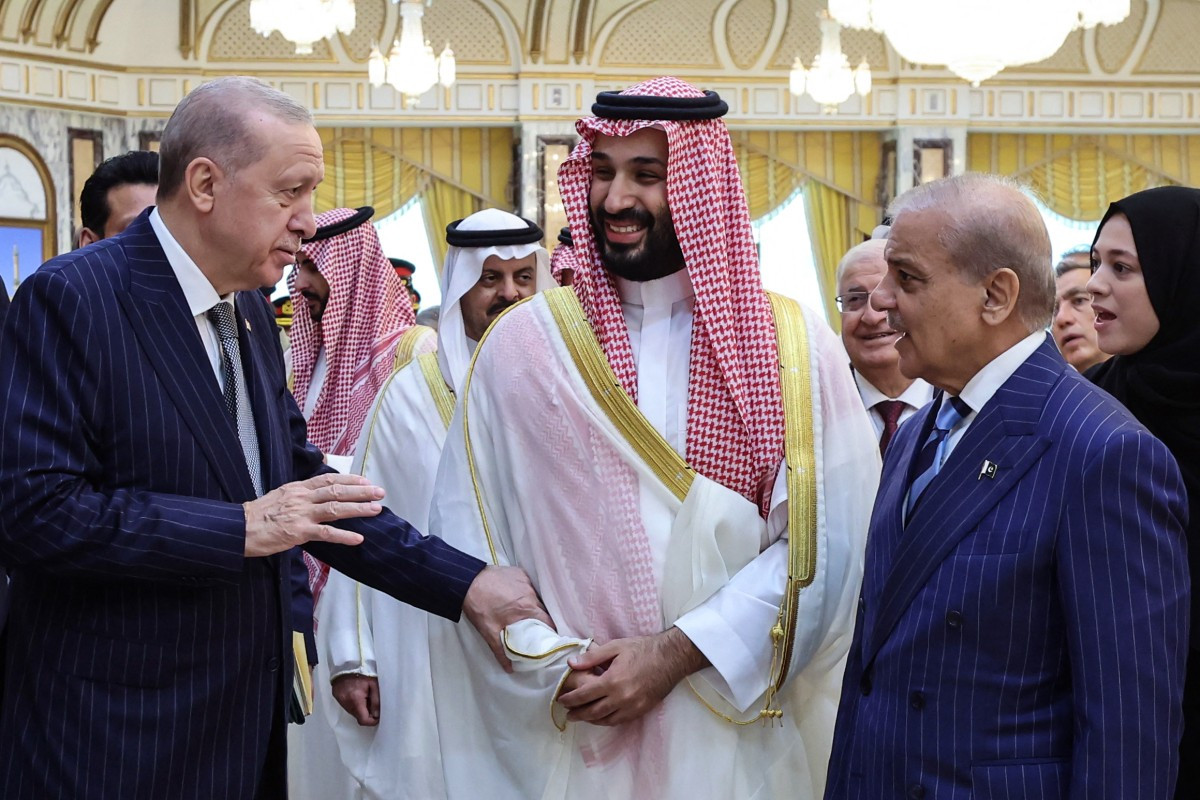 Turkey's President Recep Tayyip Erdogan (left), Saudi Arabia's Crown Prince Mohammed bin Salman (center) and Pakistan’s Prime Minister Shehbaz Sharif meet in Mecca, Saudi Arabia, on Aug. 7, 2026. Saudi Arabia, Turkey and Pakistan signed a joint defense agreement on Aug. 7 amid violence in the region from Houthi attacks and the United States-Iran war. (AFP/Turkish Presidency Press Office)
T
he signing of the Mecca Joint Defence Agreement by Saudi Crown Prince Mohammed bin Salman, Turkish President Recep Tayyip Erdoğan and Pakistani Prime Minister Shehbaz Sharif in Saudi Arabia's Mecca on Aug. 7, marks an important development in Middle East security politics. The pact comes as the United States-Israeli war against Iran has expanded into a broader regional conflict.
Pakistan described the agreement as an effort to strengthen “collective deterrence” against all forms of aggression. Yet details about its command structure, troop deployment procedures and military obligations remain unclear. For now, therefore, the pact’s principal strength may lie in its political message and deterrent effect.
Pakistan’s reference to “collective deterrence” evokes NATO’s Article 5, but the pact cannot yet be equated with the Atlantic alliance. It brings together three states with distinct strategic positions: Saudi Arabia, a major Gulf power and custodian of Islam’s two holy cities; Turkey, a NATO member with substantial military capabilities; and Pakistan, a Muslim-majority nation and nuclear-armed state.
This combination gives the pact considerable geopolitical weight. For Saudi Arabia, the pact serves a dual purpose: strengthening defenses against Iran while reducing strategic dependence on the United States without severing ties with Washington. For decades, Saudi security has relied heavily on the US military umbrella. Yet the Iran war has shown that US bases and defense systems cannot entirely prevent attacks on Gulf states.
By bringing in Turkey and Pakistan, Riyadh gains additional security options and greater leverage with Washington. The pact strengthens Ankara’s position as a major power in the Muslim world. With a large military, a growing defense industry and substantial regional influence, Turkey wants not merely to implement Western strategy in the Middle East, but also to help shape the region’s security architecture.
Pakistan has different interests. It has longstanding defense ties with Saudi Arabia but also shares a border with Iran. Islamabad has little interest in being drawn into an open-ended war. The pact can enhance Pakistan’s strategic value and strengthen its relationship with Riyadh without necessarily obliging it to participate in every regional conflict.

The pact can therefore be read in two dimensions: as an effort to pressure Iran and as an attempt to balance US influence. First, Iran has built regional influence through a network of states and armed proxy groups stretching from Iraq, Syria and Lebanon to Yemen. Through this network, Tehran has been able to pressure Israel, US military bases, maritime routes and Gulf Arab states without always engaging directly in conventional warfare.