The Jakarta Post
Please Update your browser
Your browser is out of date, and may not be compatible with our website. A list of the most popular web browsers can be found below.
Just click on the icons to get to the download page.


Popular Reads
Top Results
No results found. Please check your search term and try again
Can't find what you're looking for?
View all search results
Popular Reads
Top Results
No results found. Please check your search term and try again
Can't find what you're looking for?
View all search resultsSowing division: When the state pits citizens against citizens
When a government outsources repression to street militias, it isn't preserving order; it is waging a reckless, authoritarian war against its own people.
Change text size
Gift Premium Articles
to Anyone
Share the best of The Jakarta Post with friends, family, or colleagues. As a subscriber, you can gift 3 to 5 articles each month that anyone can read—no subscription needed!
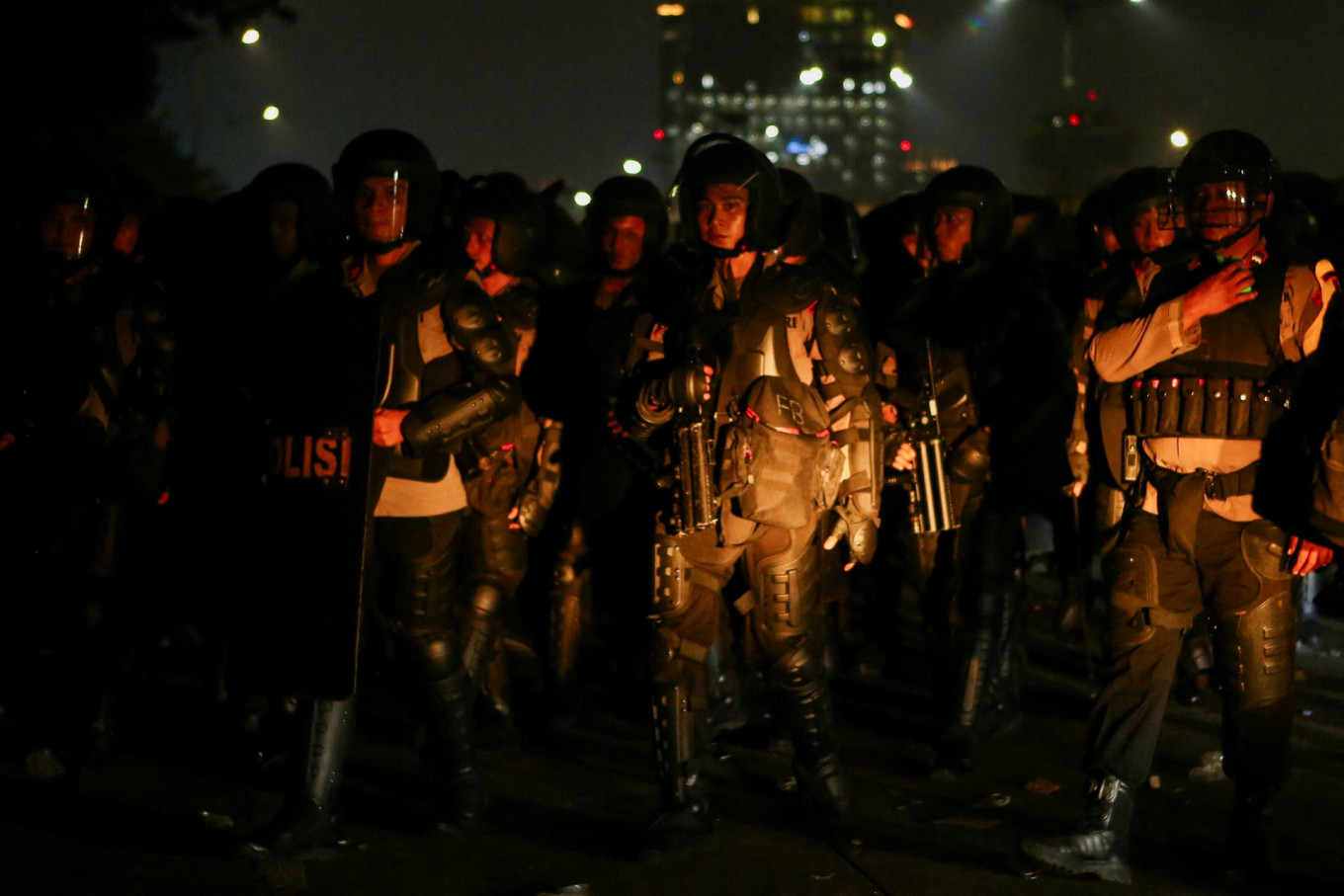 Riot police are deployed outside the Senayan Legislative Complex in Central Jakarta on Aug. 27, 2026, during a protest against government policies that also called for harsher penalties against corrupters. (Reuters/Claudio Pramana)
L
ate into the night on Aug. 27 and stretching into the early hours of Aug. 28, a chillingly familiar scene unfolded on the streets of Jakarta: A mob wearing white headbands and armed with makeshift weapons, including bamboo poles, moved in with force to violently scatter an ongoing demonstration. The protesters had assembled peacefully since midday, exercising their civic rights to challenge controversial policies like the free nutritious meal program while demanding that lawmakers finally pass the long-stalled asset forfeiture bill.
For anyone who lived through the democratic transition of 1998, the sight immediately triggered a sense of déjà vu.
The sudden appearance of this counter-mob unmistakably mirrored the dark legacy of Pam Swakarsa, the civilian militia organized by security elites during the final convulsions of the New Order. Back then, state-backed vigilantes routinely provoked violent clashes at critical flash points, from the historic grounds of the Proclamation Monument to the steps of the House of Representatives complex.
This pattern exemplifies the "authoritarian divide", a deliberate strategy designed to fracture the vertical relationship between citizens and the state by converting it into a vicious, horizontal conflict among citizens.
The violence on Aug. 28 was no spontaneous street brawl. Rather, it represented a classic instrument of authoritarian contention management, which operates across three distinct phases.
First, the regime works to systematically stigmatize legitimate dissent. Official rhetoric reframes critical voices as dividers of the nation or obstacles to national development, painting civic opposition to government policy as an attack on the broader public interest. In the name of national unity, political disagreement is stripped of its constitutional legitimacy, depoliticized and recast as an acute security threat.

Second, the state mobilizes its proxies. These can range from partisan loyalists to informal civilian groups and aggressive mass organizations (ormas). During the late-night rally on Aug. 28, credible evidence pointed to dozens of organized actors operating as an armed counterdemonstration, brandishing batons and wooden clubs.