The Jakarta Post
Please Update your browser
Your browser is out of date, and may not be compatible with our website. A list of the most popular web browsers can be found below.
Just click on the icons to get to the download page.


Popular Reads
Top Results
No results found. Please check your search term and try again
Can't find what you're looking for?
View all search results
Popular Reads
Top Results
No results found. Please check your search term and try again
Can't find what you're looking for?
View all search resultsFine businesses for fires
Temporary suspensions and advanced technologies won't clear ASEAN's skies from Indonesian wildfires; only prosecuting and bankrupting corporate arsonists will.
Change text size
Gift Premium Articles
to Anyone
Share the best of The Jakarta Post with friends, family, or colleagues. As a subscriber, you can gift 3 to 5 articles each month that anyone can read—no subscription needed!
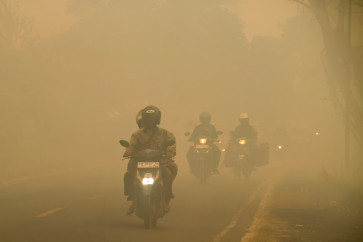
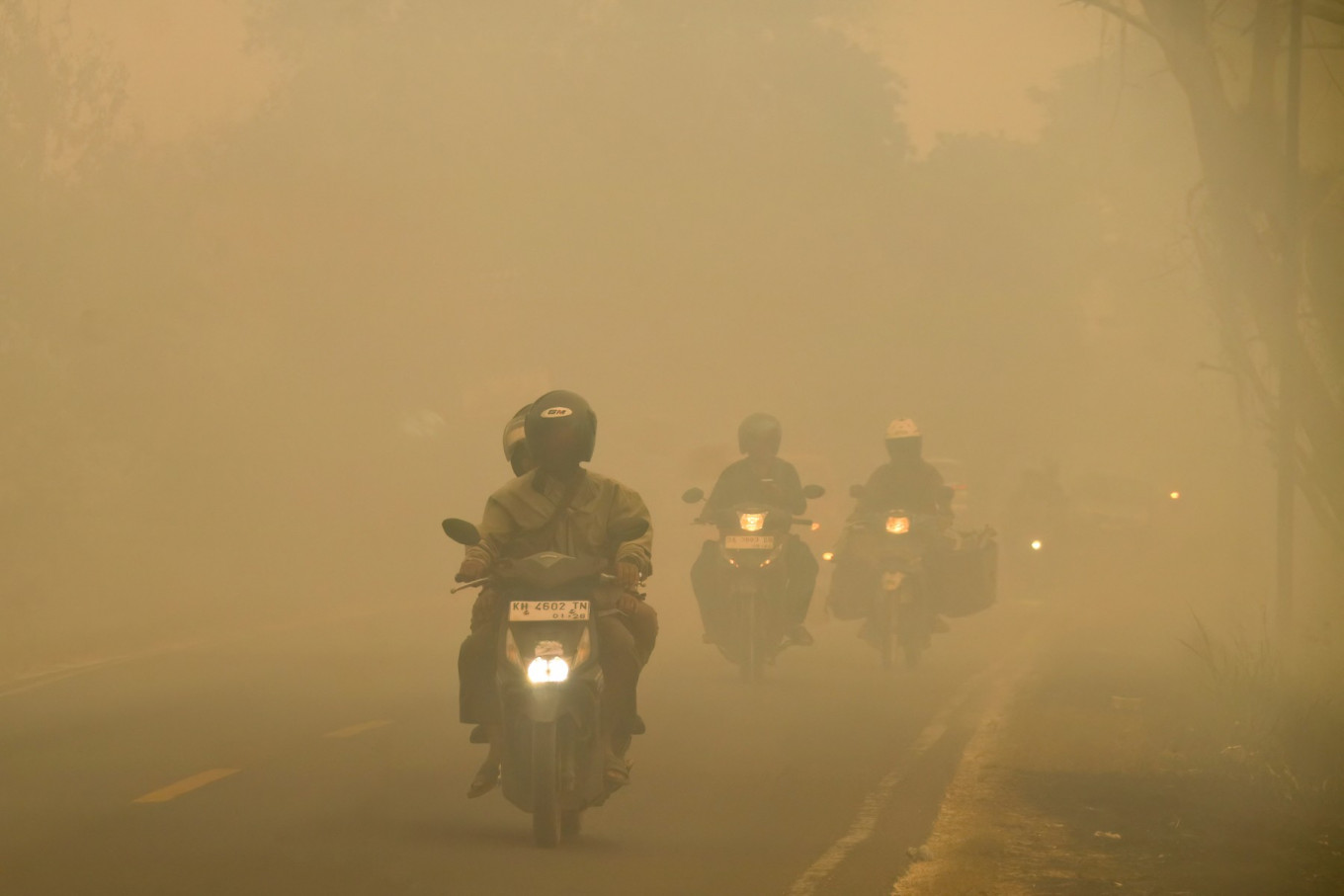 Motorcyclists pass a road cloaked in thick, murky haze from forest and peatland fires on Aug. 28, 2026, in Palangka Raya, the provincial capital of Central Kalimantan. (AFP/Reina)
F
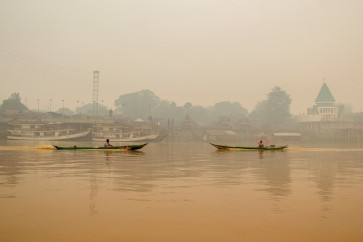
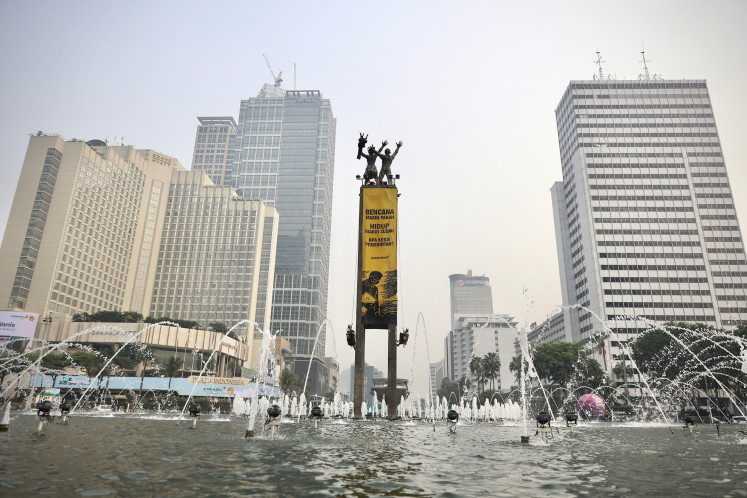
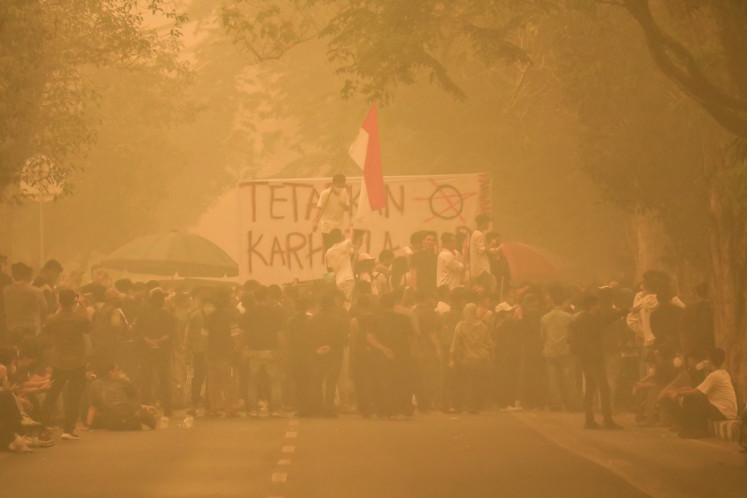
or weeks, Indonesia has dominated regional, if not global, headlines for the wrong reason. A familiar, suffocating haze has swept across the archipelago, drifting far beyond national borders to choke skies in Malaysia, Singapore and even the Philippines, swaths of peatlands in Kalimantan and Sumatra once again serving as ground zero. Aside from an annual embarrassment, it is a recurring public health crisis that ASEAN neighbors are growing increasingly weary of enduring.
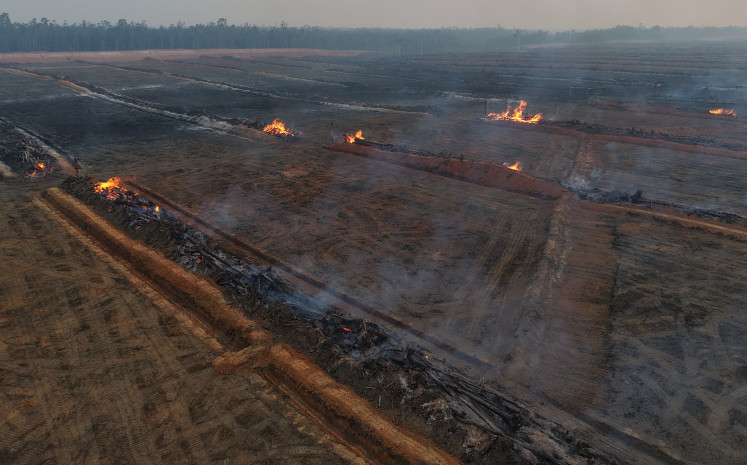
By late July, figures from independent forest monitoring platform Nusantara Atlas showed that some 280,000 hectares of land, an area roughly five times the size of Jakarta, had been reduced to ash.
Satellite mapping revealed that around 25 percent of every ha burnt sat squarely inside commercial concessions, with the palm oil, pulpwood and mining sectors emerging as the primary offenders. Predictably, industry associations were quick to issue blanket denials, insisting their members exercise strict due diligence and maintain zero-burning policies across their holdings.
They have also cited their wildfire prevention measures, claiming regularly over the past few years that these had worked, saying recent wildfires were not so bad as the ones in 2015, when the country bore the brunt of a prolonged, drier dry season that stemmed from an intense El Niño cycle.
But as fires burn more forests and peatlands, those self-congratulatory claims ring hollow. If corporate mitigation efforts were truly resilient, a typical dry spell would not trigger such widespread devastation as we are witnessing today.
More than just failing to control runaway blazes on their borders, some companies stand accused of igniting them. In Indonesia’s resource-heavy economy, setting a match to peat remains the quickest, cheapest way to clear land for planting, regardless of the nationwide ban. Fines and administrative paperwork have been simply priced in as the cost of doing business.

The onus is now on the government to investigate and prosecute industry players and corporations suspected of burning land for business expansion.