The Jakarta Post
Please Update your browser
Your browser is out of date, and may not be compatible with our website. A list of the most popular web browsers can be found below.
Just click on the icons to get to the download page.


Popular Reads
Top Results
No results found. Please check your search term and try again
Can't find what you're looking for?
View all search results
Popular Reads
Top Results
No results found. Please check your search term and try again
Can't find what you're looking for?
View all search resultsNepal floods obliterate final excuses for climate inaction
A deadly Himalayan avalanche has exposed the catastrophic human toll of global climate inaction, turning Nepal’s tragedy into an urgent test of whether world leaders will finally pay climate reparations or face international legal accountability.
Change text size
Gift Premium Articles
to Anyone
Share the best of The Jakarta Post with friends, family, or colleagues. As a subscriber, you can gift 3 to 5 articles each month that anyone can read—no subscription needed!
 Set as preferred source
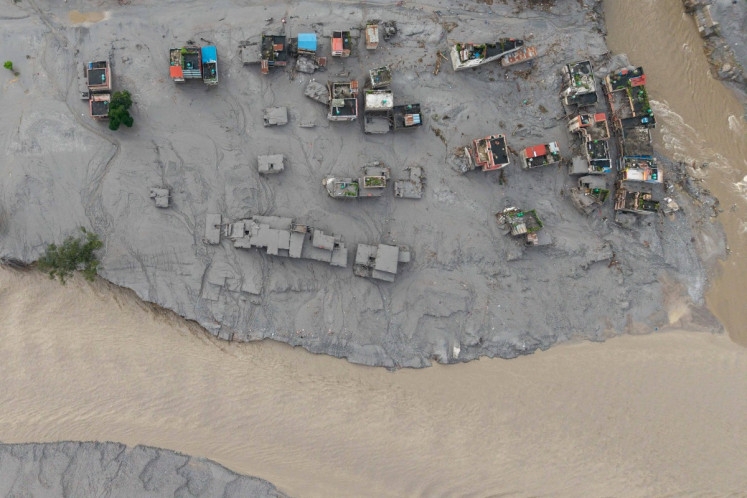
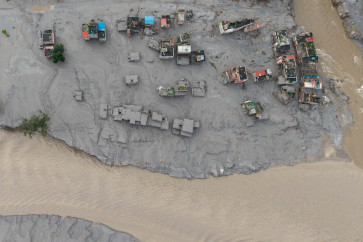
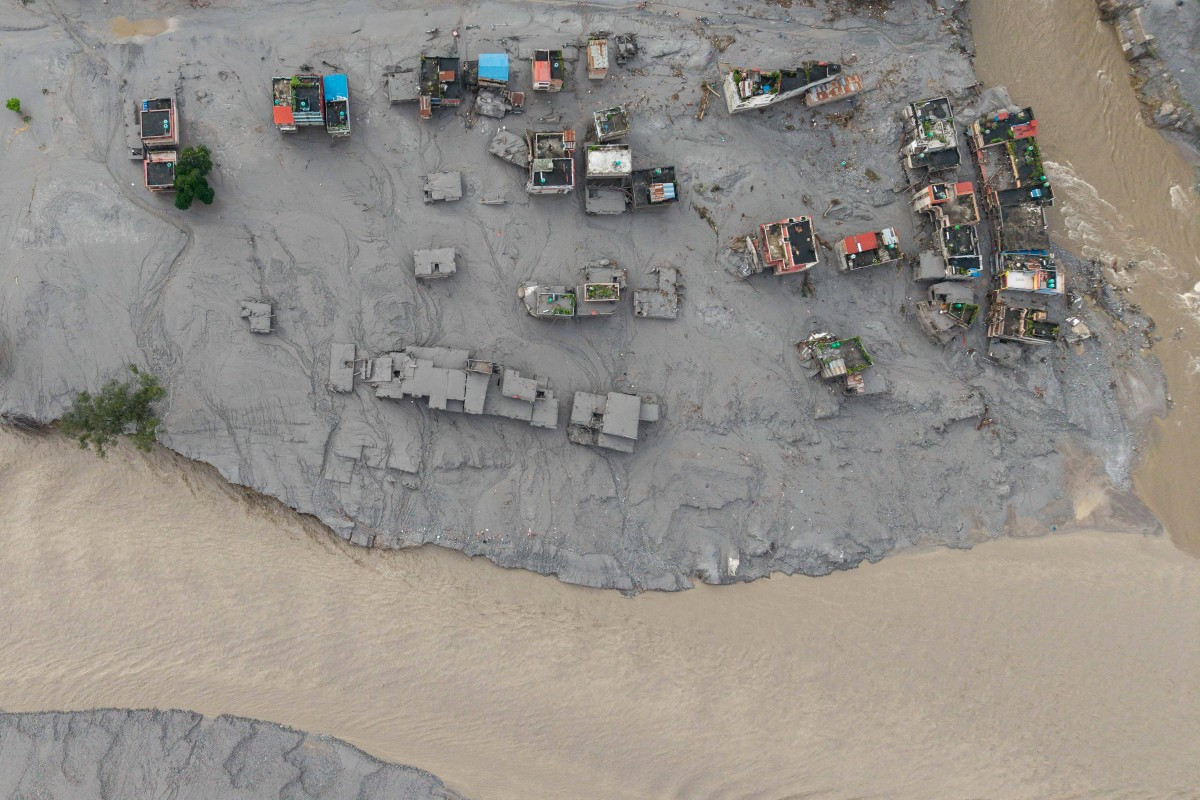 An aerial view shows houses lying deluged in sludge after flash floods at Devighat, Bidur municipality, along the confluence of the Trishuli and Tadi rivers in Nepal's Nuwakot district on Aug. 27, 2026. (AFP/Prabin Ranabhat)
W
hen 110 million cubic meters of rock and ice tore from the slopes of Langtang Lirung in late August, the resulting 180-kilometer-per-hour wall of freezing mud did more than destroy settlements along Nepal’s Trishuli River and take thousands of lives. It laid bare the devastating human cost of continued global climate inaction, and brought into sharp focus the questions of responsibility, accountability and reparations for climate destruction.
This week, as world leaders assemble in New York for the United Nations General Assembly (UNGA), the Himalayan tragedy will reverberate through the halls of the UN. Delegates gather under the shadow of the International Court of Justice’s (ICJ) landmark Advisory Opinion on Climate Change and the UN resolution adopted to advance its implementation. Nepal is seeking an initial US$20 million from the Fund for Responding to Loss and Damage while pressing the international community, and particularly major greenhouse gas emitters, to accept responsibility for the escalating destruction confronting the Himalayas.
That $20 million represents only a fraction of Nepal’s recovery needs, preliminarily estimated at $4 billion to $5 billion. More fundamentally, the disaster raises questions extending far beyond emergency assistance and loss and damage finance: who bears responsibility for climate destruction suffered by countries and peoples that contributed little to creating the crisis, and who should be paying reparations for the harm they have suffered?
The first scientific study of the disaster confirms what frontline communities have long experienced: More than a century of greenhouse gas pollution from capitalist industrialization has profoundly altered conditions in the Himalayas.
Researchers found clear fingerprints of human-induced warming in processes destabilizing the mountain environment. These changes acted upon already fragile geological conditions, contributing to the catastrophic rock-and-ice collapse and floods that have killed more than 1,400 people and left some 5,700 missing.
The Himalayas have warmed by roughly 2 degrees Celsius since pre-industrial times, while the freezing threshold has risen by about 100 meters per decade, accelerating glacier retreat and thawing high-altitude permafrost. Rock avalanches of this magnitude are extraordinarily rare, with an estimated frequency of roughly once every 1,000 to 10,000 years.

Beyond the immense human, physical and economic destruction, these impacts carry profound legal ramifications. In its landmark Advisory Opinion, the ICJ affirmed that states have binding obligations under treaty and customary international law to protect the climate system from significant harm caused by anthropogenic greenhouse gas emissions. States must exercise stringent due diligence and take all necessary measures within their capabilities to prevent significant environmental harm.