The Jakarta Post
Please Update your browser
Your browser is out of date, and may not be compatible with our website. A list of the most popular web browsers can be found below.
Just click on the icons to get to the download page.


Popular Reads
Top Results
No results found. Please check your search term and try again
Can't find what you're looking for?
View all search results
Popular Reads
Top Results
No results found. Please check your search term and try again
Can't find what you're looking for?
View all search resultsBI can hold rates, but Indonesia cannot escape expensive money
As high-cost borrowing collides with ambitious state spending, Indonesia must master smarter debt management and innovative finance before fiscal pressure catches up with its national ambitions.
Change text size
Gift Premium Articles
to Anyone
Share the best of The Jakarta Post with friends, family, or colleagues. As a subscriber, you can gift 3 to 5 articles each month that anyone can read—no subscription needed!
 Set as preferred source
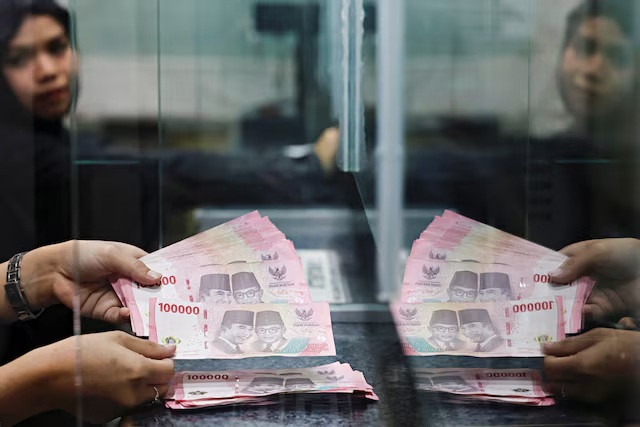 A teller counts rupiah bank notes at a money changer in Jakarta on Jan. 20, 2026. (Reuters/Ajeng Dinar Ulfiana)
I
n its September meeting, Bank Indonesia’s (BI) board of governors decided to keep its benchmark interest rate at 5.75 percent, even as major advanced-economy central banks moved in the opposite direction.
During the month, the United States Federal Reserve raised its target range by 25 basis points to 4 percent, while the European Central Bank increased its deposit rate to 2.5 percent and the Bank of Japan lifted its policy rate to 1.25 percent. The synchronized increases came amid renewed inflationary pressures as geopolitical tensions kept global energy prices elevated.
BI’s decision broadly followed market expectations. It also reflects concern that another rate increase would raise borrowing costs for businesses and households, weighing on investment and consumption. This could complicate President Prabowo Subianto’s ambition to spur growth to between 6 and 8 percent in the coming years, particularly because domestic consumption remains the economy’s main growth engine.
However, holding the policy rate also carries risks as the interest-rate advantage offered by Indonesian assets narrows. For instance, in September, Indonesia’s benchmark 10-year government bond yielded around 7.1 percent, compared with approximately 4.9 percent for the equivalent US Treasury bond. This 2.2 percentage-point difference compensates investors for the exchange-rate, inflation and other risks associated with rupiah-denominated debt.
If the premium proves insufficient, capital outflows could weaken the rupiah, push bond yields higher and eventually force BI to raise its policy rate more aggressively.
Against this backdrop, Indonesia’s two newly appointed economic policymakers face different constraints. BI Governor Destry Damayanti may be able to postpone further monetary tightening, but Finance Minister Suahasil Nazara cannot shield the budget from the higher cost of money. As bond yields rise, the government will gradually pay more when issuing new debt or refinancing maturing obligations.

Indonesia’s public debt, at around 40 percent of gross domestic product, remains moderate compared with that of many other major economies. However, the cost of servicing that debt is increasingly concerning. By the end of August, the Finance Ministry reported that the government had spent approximately Rp 394 trillion (US$23.5 billion) on interest payments, already around Rp 150 trillion more than Indonesia’s entire 2026 health budget of Rp 244 trillion.