The Jakarta Post
Please Update your browser
Your browser is out of date, and may not be compatible with our website. A list of the most popular web browsers can be found below.
Just click on the icons to get to the download page.


Popular Reads
Top Results
No results found. Please check your search term and try again
Can't find what you're looking for?
View all search results
Popular Reads
Top Results
No results found. Please check your search term and try again
Can't find what you're looking for?
View all search resultsBasic education first
Promising free higher education for all is a fiscal fantasy that threatens to bankrupt Indonesia's elementary and secondary school classrooms before the state even honors its basic education mandate.
Change text size
Gift Premium Articles
to Anyone
Share the best of The Jakarta Post with friends, family, or colleagues. As a subscriber, you can gift 3 to 5 articles each month that anyone can read—no subscription needed!
 Set as preferred source
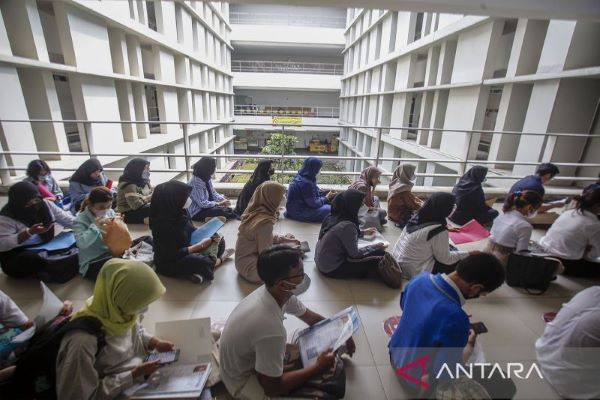
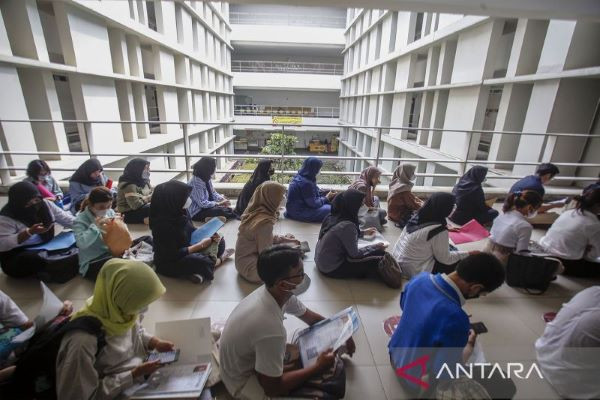 Senior high school graduates sit in line on May 8, 2023, as they wait to take a national state university admissions test at the University of Indonesia in Depok, West Java. (Antara/Yulius Satria Wijaya)
P
resident Prabowo Subianto’s directive to provide tuition-free education from kindergarten through university across all state institutions is unrealistic given Indonesia’s fiscal constraints. Worse, it distorts the Constitution’s clear mandate, which concentrates explicitly on free compulsory schooling at the elementary and junior high levels.
The directive followed a limited cabinet meeting convened last week to discuss access and quality in the national education system. Yet key details remain absent: The administration has neither outlined an implementation road map nor provided a credible cost projection.
Despite this ambiguity, the government is targeting a rollout next year across more than 160,000 public schools from kindergarten through senior high school as well as 127 state universities.
The scale of the fiscal burden is staggering. The Higher Education, Science and Technology Ministry estimates that waiving tuition for nearly 3 million incoming university students will require Rp 93.7 trillion (US$5.24 billion) next year alone. This expenditure would collide directly with the proposed 2027 education budget of Rp 820.9 trillion, Rp 240 trillion of which is already earmarked for rolling out the flagship free nutritious meal program.
With the Finance Ministry signaling that no supplemental funding will be created for public schools, this new initiative will cannibalize resources earmarked for far more urgent priorities, most notably deteriorating school infrastructure, lagging teacher pay and professional development.
The timing is equally confounding. The government has yet to comply with the Constitutional Court’s May 2025 ruling ordering the state to guarantee free compulsory basic education at both public and private schools, including madrassas. More than a year later, authorities have yet to establish an operational mechanism or provide the necessary budget allocations to carry out that mandate.

Expanding the state’s financial commitments upward to universities and downward to preschools before meeting an existing, legally binding obligation is policy malpractice. Compounding the problem is how the broader education budget has been stretched to fund noneducational programs.