The Jakarta Post
Please Update your browser
Your browser is out of date, and may not be compatible with our website. A list of the most popular web browsers can be found below.
Just click on the icons to get to the download page.


Popular Reads
Top Results
No results found. Please check your search term and try again
Can't find what you're looking for?
View all search results
Popular Reads
Top Results
No results found. Please check your search term and try again
Can't find what you're looking for?
View all search resultsAnalysis: Forest fires prove governance failures have gone too far
Change text size
Gift Premium Articles
to Anyone
Share the best of The Jakarta Post with friends, family, or colleagues. As a subscriber, you can gift 3 to 5 articles each month that anyone can read—no subscription needed!
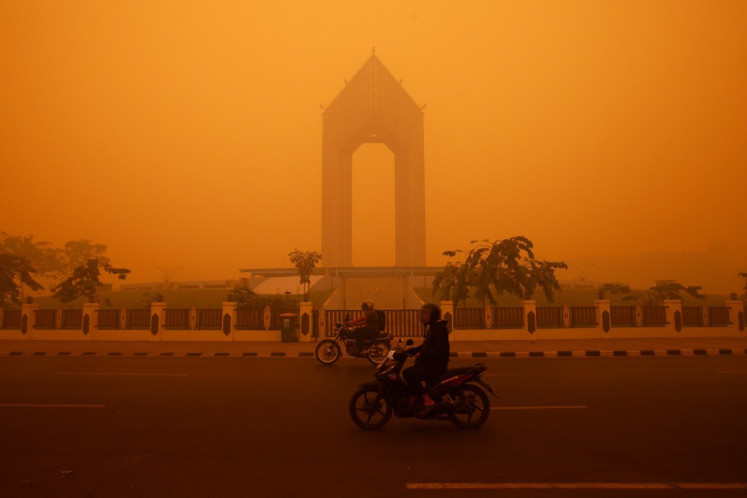
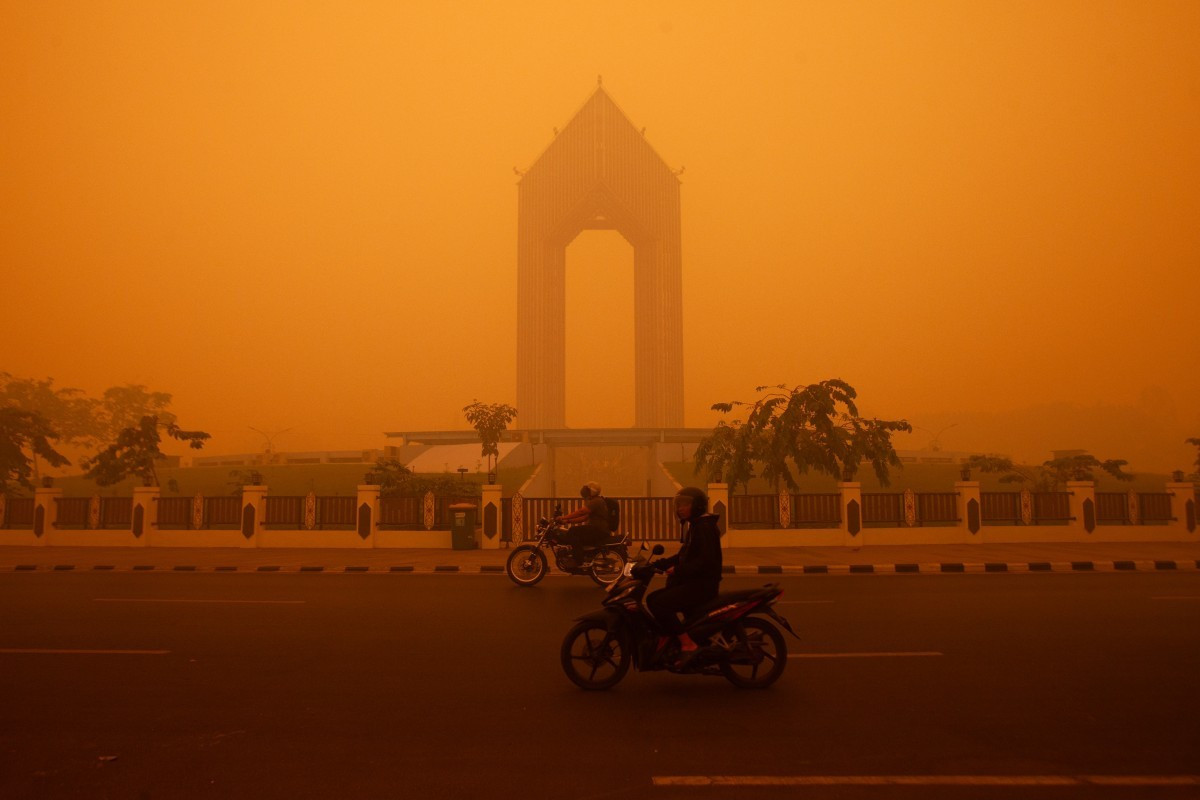 Motorcyclists ride in the morning in Palangka Raya, Central Kalimantan on October 14, 2026. Thick haze has turned the skies in the city into apocalyptic shades of yellow and orange on Thursday, reducing visibility to a few dozen meters as wildfires cause a regional air pollution crisis (AFP/Reina)
F
or nearly four months wildfires have ravaged Indonesia, exposing acute, systemic failures in government response and law enforcement. While the ongoing dry spell has exacerbated the crisis, suspected corporate land clearing by burning points to a deliberate, recurring practice that authorities have repeatedly failed to halt.
The scale of the destruction is alarming. At an emergency meeting with President Prabowo Subianto on Oct. 12, the National Disaster Mitigation Agency (BNPB) reported that 129,899.6 hectares of peatland had burned across six priority provinces: Central Kalimantan, South Kalimantan, West Kalimantan, South Sumatra, Jambi and Riau. Although officials claimed most blazes had been extinguished, active firefighting continued across another 639.2 ha. Furthermore, these figures omitted fires that had been burning unchecked across Papua for weeks.
Prabowo’s downplaying of the crisis, insisting that only a small area was still ablaze, contradicts the humanitarian toll on the ground. By Oct. 13, cases of respiratory infections linked to toxic haze had reached 283,270 across seven provinces.
Air quality measurements expose the depth of the public health emergency. On Oct. 15, the air quality index (AQI) in Pangkalan Bun, Central Kalimantan, spiked to a staggering 982, more than three times the minimum for the “hazardous” level, while Pontianak in West Kalimantan logged 280, near the upper range of the “very unhealthy” level. Even Jakarta, notorious for chronic pollution, recorded a far lower AQI of 176. Progress cannot be measured merely by hectares extinguished; it must be judged by the state's capacity to protect human lungs and prevent recurrent catastrophe.
The fallout has long breached national borders: Singapore recorded its highest PM2.5 readings of the year on Oct. 14, Timor-Leste shuttered classrooms for three days starting on Oct. 15, and Malaysia closed schools across several states as transboundary haze intensified. The crisis has evolved from an internal ecological disaster into a regional health and diplomatic liability.
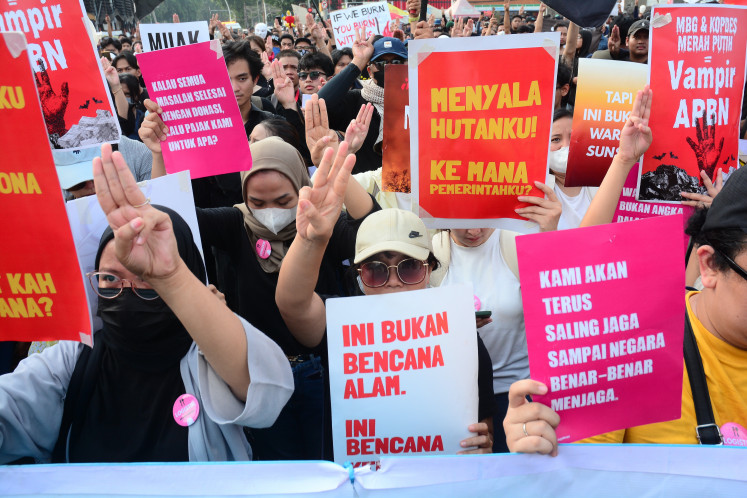
Public patience has run out. Grassroots outrage has surged across social media, where campaigns like “Our Forests Are Still Burning” have amassed millions of shares. Yet the backlash targets not only environmental devastation but also presidential priorities. While millions choke on toxic smoke, President Prabowo has maintained routine appearances at soccer events and taken foreign trips. Whatever diplomatic or political justifications these engagements carry, the optical disconnect is glaring: a presidency conducting business as usual while citizens gasp for clean air.

The fury has migrated to the streets. On Oct. 13, student protesters picketed the South Sumatra Police headquarters in Palembang, demanding criminal accountability for corporate fire starters. The previous week on Oct. 5, they had rallied outside the South Sumatra Governor’s office demanding transparency in wildfire management expenditure, real enforcement against offending agribusinesses and institutional accountability.