The Jakarta Post
Please Update your browser
Your browser is out of date, and may not be compatible with our website. A list of the most popular web browsers can be found below.
Just click on the icons to get to the download page.


Popular Reads
Top Results
No results found. Please check your search term and try again
Can't find what you're looking for?
View all search results
Popular Reads
Top Results
No results found. Please check your search term and try again
Can't find what you're looking for?
View all search resultsUnderstanding, adapting to the new world disorder
As the post-war order fractures into a volatile new world disorder, Malaysia must abandon diplomatic complacency and master the art of strategic autonomy—or risk becoming collateral damage in the next great-power shock.
Change text size
Gift Premium Articles
to Anyone
Share the best of The Jakarta Post with friends, family, or colleagues. As a subscriber, you can gift 3 to 5 articles each month that anyone can read—no subscription needed!
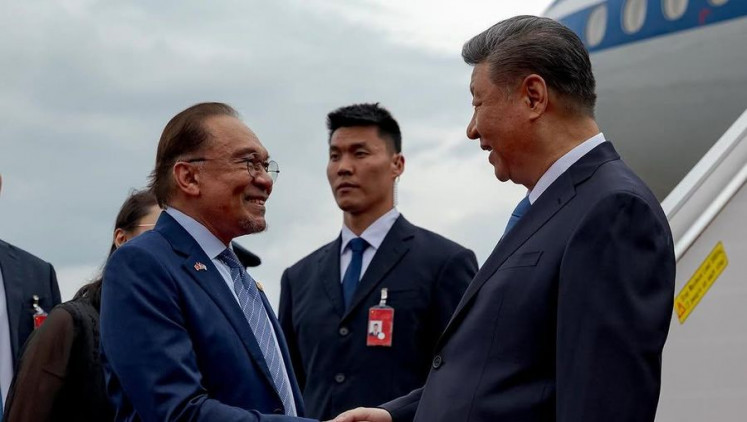
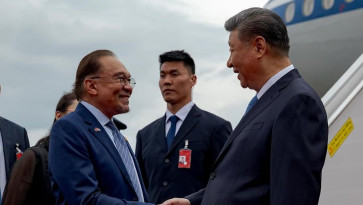
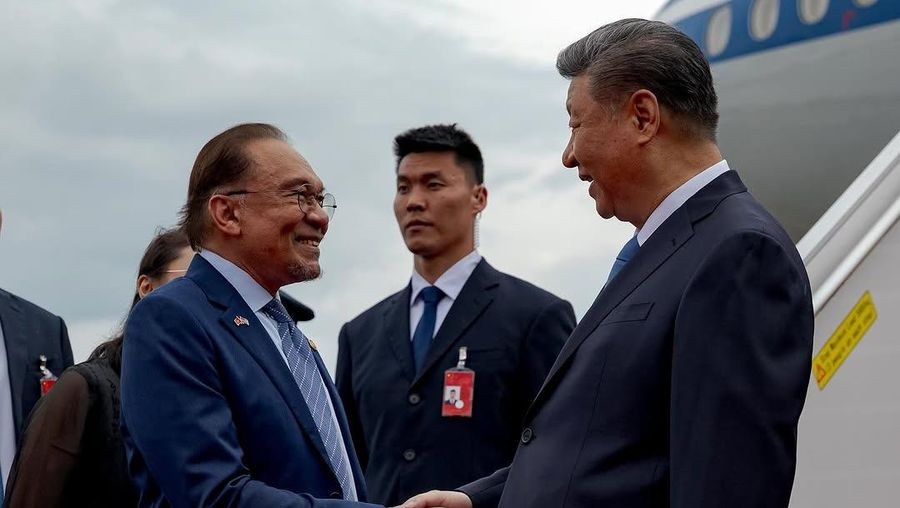 Malaysian Prime Minister Anwar Ibrahim (left) greets Chinese President Xi Jinping as the latter arrives in Kuala Lumpur on April 15, 2025, for a three-day visit to the Southeast Asian country. (Instagram/anwaribrahim_my)
W
hen India’s External Affairs Minister S. Jaishankar declared that every country must recalculate and reset its relationship with the United States, he was not merely describing India’s diplomatic predicament, he was identifying a fundamental transformation of the international system. Malaysia, alongside its fellow ASEAN member states, should take his observations seriously.
Speaking at the Bloomberg New Economy Forum in New Delhi, Jaishankar explained that the US has repositioned itself, altering both the manner and the basis of its global engagement. His formulation of India’s foreign policy was equally revealing: engage America, manage China, cultivate Europe and reassure Russia. Far from mere rhetorical flair, this represents a sophisticated appraisal of a world where power is increasingly dispersed, alliances are less predictable and economic interdependence is readily weaponized. For Malaysia and ASEAN, the implications are profound.
The international order that emerged after World War II, consolidated after the Cold War and sustained by American leadership is undergoing structural dissolution. What is emerging is not necessarily a stable multipolar balance, but something considerably more volatile: a new world disorder.
The distinction is critical. A multipolar order assumes several centers of power capable of establishing a workable equilibrium. A world disorder, by contrast, is defined by overlapping conflicts, contradictory strategic commitments, eroded institutions and erratic behavior among major powers. Malaysian policymakers must recognize that the transition between international orders is rarely peaceful, orderly or economically painless.
Under the current trajectory of American politics, Washington has increasingly prioritized tariffs, industrial reshoring, transactional bargaining and the renegotiation of longstanding economic ties. As Jaishankar astutely noted, Washington is not simply withdrawing from globalization; it is rewriting the terms under which globalization operates.
The US remains indispensable to Malaysia’s economic and technological trajectory. American capital and expertise in semiconductors, electronics, digital infrastructure and advanced manufacturing are foundational to Malaysia’s industrial ecosystem. Yet Washington’s push to reindustrialize introduces sharp uncertainties for export-oriented economies reliant on access to the American market.

Malaysia cannot presume that yesterday's commercial arrangements will automatically survive tomorrow. Trade negotiations are now dictated by national security imperatives, technology transfers face rigorous geopolitical scrutiny and supply chains are reorganized around strategic alignment rather than economic efficiency.