The Jakarta Post
Please Update your browser
Your browser is out of date, and may not be compatible with our website. A list of the most popular web browsers can be found below.
Just click on the icons to get to the download page.


Popular Reads
Top Results
No results found. Please check your search term and try again
Can't find what you're looking for?
View all search results
Popular Reads
Top Results
No results found. Please check your search term and try again
Can't find what you're looking for?
View all search resultsThe disparity of gig economy and rural-urban poverty
Gig economy work in Indonesia is extremely fragile – it exposes its workers to risks of living in poverty after giving them a taste of heaven for a split-second.
Change text size
Gift Premium Articles
to Anyone
Share the best of The Jakarta Post with friends, family, or colleagues. As a subscriber, you can gift 3 to 5 articles each month that anyone can read—no subscription needed!
 Set as preferred source
“We know what can end poverty. But how come poverty never diminish?” – was the reply I received from my friend, Harry, who works as a gig worker in a city in Scotland when we were discussing about poverty. The reason I specify his identity is because it is significant to what I am about to elaborate.
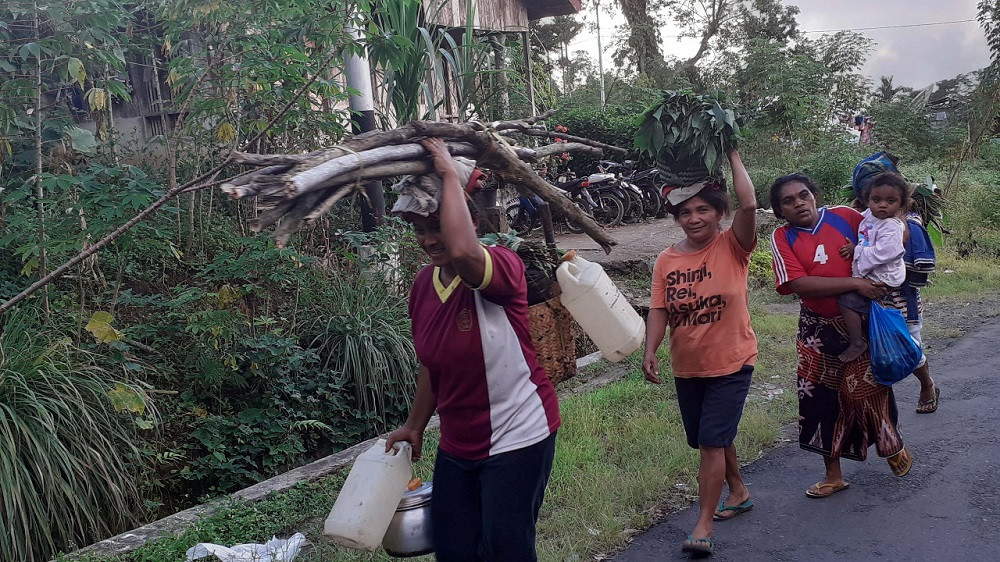
Indonesia’s rural poverty has always been higher than urban poverty. In September 2019, urban and rural poverty hit 9.86 million and 14.93 million, respectively. But when the pandemic struck, it has plunged more households into poverty. As of March 2020, urban and rural poverty were 11.16 million and 15.26 million, respectively.
The spike in rural poverty was not as high as urban poverty. Does this mean the urban communities are more prone to external shocks? Maybe. But we should dig deeper, deeper, and deeper.
Based on Statistics Indonesia (BPS) database, there is not much disparity between urban and rural areas in terms of bi-annual poverty trends. Even though poverty is much higher in Indonesian villages than in cities, the pace is quite similar. So, what makes March 2020 different? Both areas were hit by the same pandemic, but why did the spike in urban poverty quadruple the rise in rural poverty?
There might be a lot of plausible reasons behind this, but perhaps we should examine what has been sitting in front of our faces: the unequal geography of the gig economy in Indonesia, which, in the case of COVID-19, protects rural areas from more poverty cases.
The gig economy is mainly concentrated in urban areas, where people are no longer in the process of catching up – they are already there. The urban gig workers, which dominated the roughly 5 percent of total gig workers in Indonesia, were among the main recipients of negative effects of COVID-19.
On the other hand, Indonesia still has much homework to do for its villages. The needs to improve infrastructures, good quality of education, access to health services – which can pave the way to ending poverty. The slow progress in meeting these needs lead to an automatic rejection to – or slow absorption of – innovations in terms of employment or economic activities. The low concentration of the gig economy in rural areas correspond to a small effect of COVID-19 on rural households whose incomes are slightly above the poverty line.