The Jakarta Post
Please Update your browser
Your browser is out of date, and may not be compatible with our website. A list of the most popular web browsers can be found below.
Just click on the icons to get to the download page.


Popular Reads
Top Results
No results found. Please check your search term and try again
Can't find what you're looking for?
View all search results
Popular Reads
Top Results
No results found. Please check your search term and try again
Can't find what you're looking for?
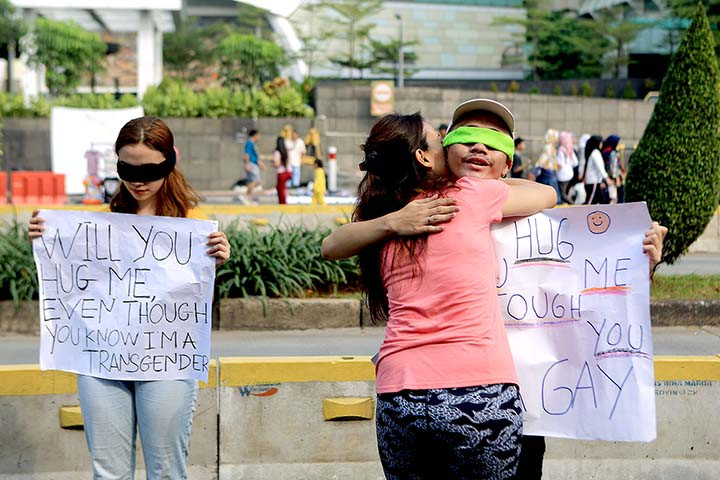
View all search resultsAccepting transgender, diverse identities on Peace Day
In a recent encounter with parents of LGBT children, Pope Francis said “God loves your children as they are”.
Change text size
Gift Premium Articles
to Anyone
Share the best of The Jakarta Post with friends, family, or colleagues. As a subscriber, you can gift 3 to 5 articles each month that anyone can read—no subscription needed!
 Set as preferred source
G
oing, going, gone. That blue Longchamp. The green Coach. Weather-beaten, soft-looking leathers. All at a fraction of their market prices, for these are second-hand, “preloved” items. Hundreds of spectators are gathered online, as the hunting and finding of the branded clothes, bags and boots, are aired live on Facebook.
The host, one potential buyer says, “looks like a banci [sissy],” drawing hilarious comments, for indeed, one says, the seller is a drag queen.
Gay activist Hartoyo started the now-popular online shop called Sriloved. Part of the proceeds support waria — transwomen — among the groups hardest hit by COVID-19. Mobility restrictions have closed their main livelihood sources — the beauty salons and streets for busking or konser — concerts in waria-speak. Another part supports the continued advocacy work of his group Suara Kita (Our Voice), from defending criminalized men attending a “gay party” in South Jakarta to supporting a young gang rape survivor.
The pandemic unwittingly gave birth to new fundraising ideas. The “preloveds”, Hartoyo told me, had become “a red carpet, a bridge to breaking the rigidity” of all the politicized frenzy that has landed the lesbian, gay, bisexual and transgender (LGBT) people — in the position of public enemy no. 1, along with “communists” especially around election seasons.
Then, when things cool down, social and cultural acceptance of minorities in Indonesia returns, along with the difficulties, such as accessing public services. One waria said it was even hard to get a burial plot for a deceased friend.
Fundraising with “preloveds” had become a fun education tool, Hartoyo said, adding that most buyers and sellers were not gender minority activists. But many happily buy goods for, say, Rp 300,000 (US$20) but pay Rp 1 million, he said, knowing they could help the wellbeing of waria. “So many of the middle class in Greater Jakarta, not just celebrities, have tons of unused stuff,” he adds. Sounds familiar!
The transwomen were featured on International Day of Peace, Sept. 21, with a webinar discussing a new book titled Santri Waria: Kisah Kehidupan Pondok Pesantren Waria Al-Fatah Yogyakarta (Transwomen Islamic Boarding School Students: Stories from the Al-Fatah Waria Islamic Boarding School in Yogyakarta), written by researcher Masthuriyah Sa’dan. The activist of NGO Solidaritas Perempuan (Women’s Solidarity for Human Rights) said she had been accompanying santri waria studying the Quran, since Islamic vigilantes forced temporary closure of the school in 2016.