The Jakarta Post
Please Update your browser
Your browser is out of date, and may not be compatible with our website. A list of the most popular web browsers can be found below.
Just click on the icons to get to the download page.


Popular Reads
Top Results
No results found. Please check your search term and try again
Can't find what you're looking for?
View all search results
Popular Reads
Top Results
No results found. Please check your search term and try again
Can't find what you're looking for?
View all search resultsWe must stop mass atrocities in Myanmar – now
The cardinal principle of non-interference among member states needs to be recalibrated if the grouping wants to be seen as respecting all of the principles described in the ASEAN Charter,
Change text size
Gift Premium Articles
to Anyone
Share the best of The Jakarta Post with friends, family, or colleagues. As a subscriber, you can gift 3 to 5 articles each month that anyone can read—no subscription needed!
 Set as preferred source
H
umanity has apparently failed to learn important lessons from the past about mass atrocities. Atrocity crimes still continue even as states also fail to ensure the protection of civilians amid outbreaks of violence.
This is particularly egregious in light of the myriad commitments made by member states of the United Nations, which vowed to “never again” stand idly by in the face of mass atrocity crimes after the adoption of the Responsibility to Protect (R2P) norm at the UN World Summit of Leaders in 2005.
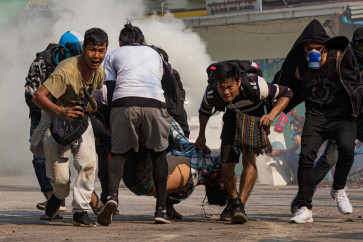
Following the Feb. 1 coup, I have followed the ongoing suffering of the people of Myanmar with a heavy heart. However, I believe that it is not too late for further atrocities to be prevented.
After the Khmer Rouge took power in 1975, at least 1.7 million innocent civilians died from starvation, torture, execution and forced labor during Pol Pot’s reign of terror over Cambodia. During that time, there was no such thing as R2P.
Over the last two decades, Cambodia has pursued international standards of justice – establishing the Extraordinary Chambers in the Court of Cambodia (ECCC) for the prosecution of crimes committed during the Khmer Rouge era. With support from the UN, this hybrid court, commonly known as the Khmer Rouge Tribunal, was established to bring justice and accountability to the victims of mass atrocities, while unveiling the truth as to what occurred during the Khmer Rouge regime, and to deter future atrocities.
This judicial process seeks to assist Cambodia to deal with its dark history while looking forward to a more peaceful, stable and developed society in the future. The trial of top Khmer Rouge leaders demonstrates the sincere political commitment from the Cambodian government to bring to justice the perpetrators of those crimes.
We should not fail to acknowledge the international community’s genuine commitment to assisting the Cambodian government in the fulfillment of its responsibility to protect by bringing about real justice. With a strong determination to stop atrocity crimes from re-occurring and strengthening capacity building, the Cambodian government and the international community have rendered correct credibility to the R2P norm.