TheJakartaPost
Please Update your browser
Your browser is out of date, and may not be compatible with our website. A list of the most popular web browsers can be found below.
Just click on the icons to get to the download page.


Popular Reads
Top Results
No results found. Please check your search term and try again
Can't find what you're looking for?
View all search results
Popular Reads
Top Results
No results found. Please check your search term and try again
Can't find what you're looking for?
View all search resultsASEAN must act on the crisis in Myanmar
To have any hope of influencing the Tatmadaw, ASEAN must be firm, unified and resolute in helping to pull Myanmar back from the brink.
Change text size
Gift Premium Articles
to Anyone
Share the best of The Jakarta Post with friends, family, or colleagues. As a subscriber, you can gift 3 to 5 articles each month that anyone can read—no subscription needed!
A
lmost three months on since the coup d’état on Feb. 1, the international community, including the UN Security Council (UNSC), have still not been able to influence the Myanmar military, known as the Tatmadaw, to change its course. Statements of condemnation and sanctions imposed by the West, without stronger UNSC measures, have not had the desired effect on the military.
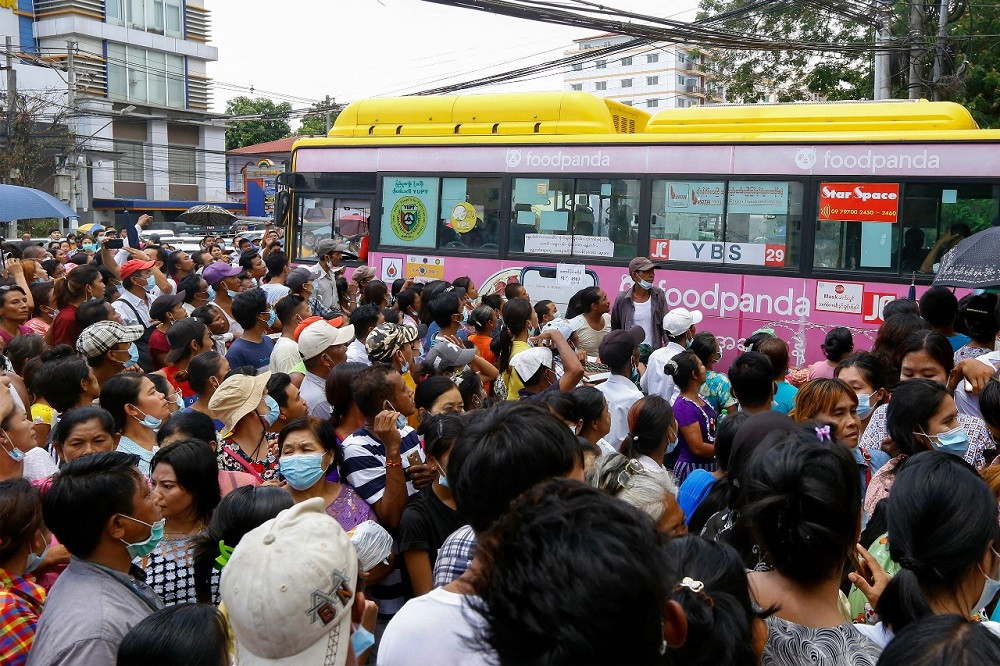
In the November 2020 election, prior to the coup, the political party backed by the military lost by a landslide to the National League for Democracy led by Aung San Suu Kyi. The Myanmar people voted decisively against military rule. Despite the violent crackdown against demonstrations and the civil disobedience movement, there are no signs that any sides are backing down.
The situation looks increasingly grim as the Tatmadaw escalates its brutal campaign by shooting to kill and using heavy weaponry, including assault rifles and grenades, against unarmed civilians. More than 700 people, including at least dozens of children, have been killed by security forces and thousands more have been injured or arbitrarily detained, many with their whereabouts and fates unknown. Widespread and indiscriminate attacks on the population have taken place not just in cities, towns, wards and villages, but have extended to border areas already marred by violence against ethnic minorities.
Myanmar is home to at least 20 ethnic armed groups who control about a third of the country's territory. They have been fighting for greater autonomy for decades and some groups are being pulled into renewed conflict with the Tatmadaw. Several groups have condemned the coup and threatened retaliation for the Tatmadaw’s brutal treatment of the protests. Two of the strongest armed groups, the Kachin Independence Army and the Karen National Union, acted upon those threats and attacked military outposts.
Consequently, there has been increased fighting in Kayin, Shan and Kachin states, including military airstrikes in Kayin State which have resulted in human suffering and displacement, and thousands fleeing to Thailand. The movement of refugees at the Thai and Indian borders and elsewhere is likely to continue as the situation deteriorates further.
This crisis is occurring against the backdrop of the COVID-19 pandemic which is having an adverse impact on the already fragile public health system. There is also an increased risk of other health emergencies, including outbreaks of diseases.
As calls grow louder for ASEAN to do more, the regional bloc, which has long provided solidarity and support for Myanmar, cannot take a “business as usual” approach while the situation in the country is rapidly unravelling. ASEAN through its Chair issued a statement at the beginning of the coup and at the subsequent foreign ministers’ meeting expressing further concerns, but they were disregarded by the Tatmadaw.