The Jakarta Post
Please Update your browser
Your browser is out of date, and may not be compatible with our website. A list of the most popular web browsers can be found below.
Just click on the icons to get to the download page.


Popular Reads
Top Results
No results found. Please check your search term and try again
Can't find what you're looking for?
View all search results
Popular Reads
Top Results
No results found. Please check your search term and try again
Can't find what you're looking for?
View all search resultsLeveraging inclusive hiring automation to meet demand in post-pandemic recovery
Given the scale of rehiring needed, conventional human resources systems will likely be overwhelmed and unlikely to meet the demand for recovery when push comes to shove.
Change text size
Gift Premium Articles
to Anyone
Share the best of The Jakarta Post with friends, family, or colleagues. As a subscriber, you can gift 3 to 5 articles each month that anyone can read—no subscription needed!
 Set as preferred source
M
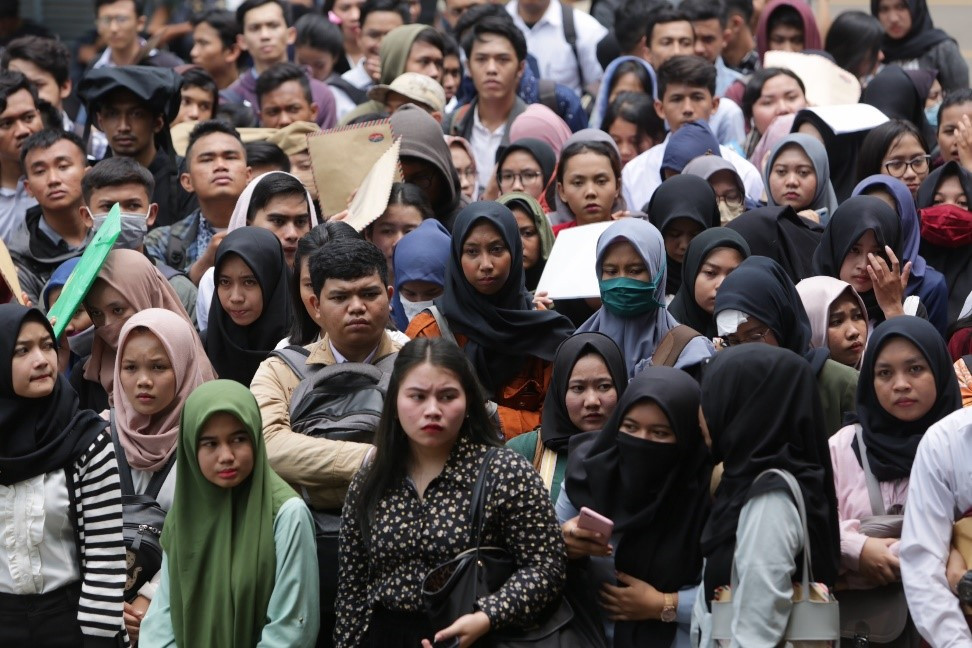
anpower Minister Ida Fauziah recently said that COVID-19 had impacted the employment of nearly 30 million Indonesians, of which 1.77 million have lost their jobs due to the pandemic. The unemployment rate rose from 4.9 percent to 7 percent, and the poverty rate increased to a three-year high, with 7.55 million citizens living below the poverty line.
Yet, with mass vaccination underway across the nation, recovery is no longer a faint glimmer on the horizon. Industries heavily impacted by the pandemic, such as hospitality and retail, can finally gather enough conviction to start mapping out the way to resurgence. It is time for businesses to establish clear strategic recovery plans.
As businesses start to rebuild, rehiring will prove to be a new challenge. However, the existing hiring structure is designed for a traditional turnover rate of 3 to 4 percent, which will not be sufficient for the task at hand.
A survey found that, globally, it takes between 25 to 46 days on average to hire a new employee. Given the scale of rehiring needed, conventional human resources systems will likely be overwhelmed and unlikely to meet the demand for recovery when push comes to shove.
The challenge of rapid rehiring is daunting for businesses, but the situation is even more pressing for the millions of Indonesians who rely on these jobs for their living. Before the pandemic, more than 70 million workers (which is more than half of Indonesia's workforce) relied for their livelihoods on the informal sector.
Statistics Indonesia (BPS) also recorded that around half of the nation’s poor were working in the informal sector. COVID-19 has only exacerbated the vulnerability and instability that comes with informal employment. For many Indonesians who were already facing job insecurity, the past year has been devastating, to say the least.
Facing this crisis, employers must ensure that their human resource management is backed up by sufficient tools and resources. Digital solutions, like in many sectors during the pandemic, can be very useful to manage human resources. Yet it is crucial to ensure that these solutions not only replicate conventional processes in digital form, but rather transform the recruitment process to meet the pressing need.