The Jakarta Post
Please Update your browser
Your browser is out of date, and may not be compatible with our website. A list of the most popular web browsers can be found below.
Just click on the icons to get to the download page.


Popular Reads
Top Results
No results found. Please check your search term and try again
Can't find what you're looking for?
View all search results
Popular Reads
Top Results
No results found. Please check your search term and try again
Can't find what you're looking for?
View all search resultsIndonesia's Islam, for the world
Scholars might debate the orthodoxy of Indonesian Islam, but it may just be what world peace needs, and NU and other like-minded groups are the ones to deliver it, in line with the country's rising prominence on the global stage.
Change text size
Gift Premium Articles
to Anyone
Share the best of The Jakarta Post with friends, family, or colleagues. As a subscriber, you can gift 3 to 5 articles each month that anyone can read—no subscription needed!
 Set as preferred source
I
ndonesia has long been considered to be on the periphery of the Muslim world, which has for centuries been represented by Arabic-speaking Gulf countries.
While Islam is embraced by a majority of Indonesians, classical Islamic scholars have debated whether Indonesia’ Islam is actually orthodox enough to be called Islam, considering how the faith is practiced in the country, especially with its idiosyncrasies.
This peculiarity of the country’s Islam is one reason that Indonesian Muslims are mostly insular, meaning that they are not really interested in spreading their brand of Islam elsewhere. In fact, Indonesia has become an ideological battleground for competing transnational Islamic movements, such as the Muslim Brotherhood, Hizbut Tahrir and the various Salafi groups.
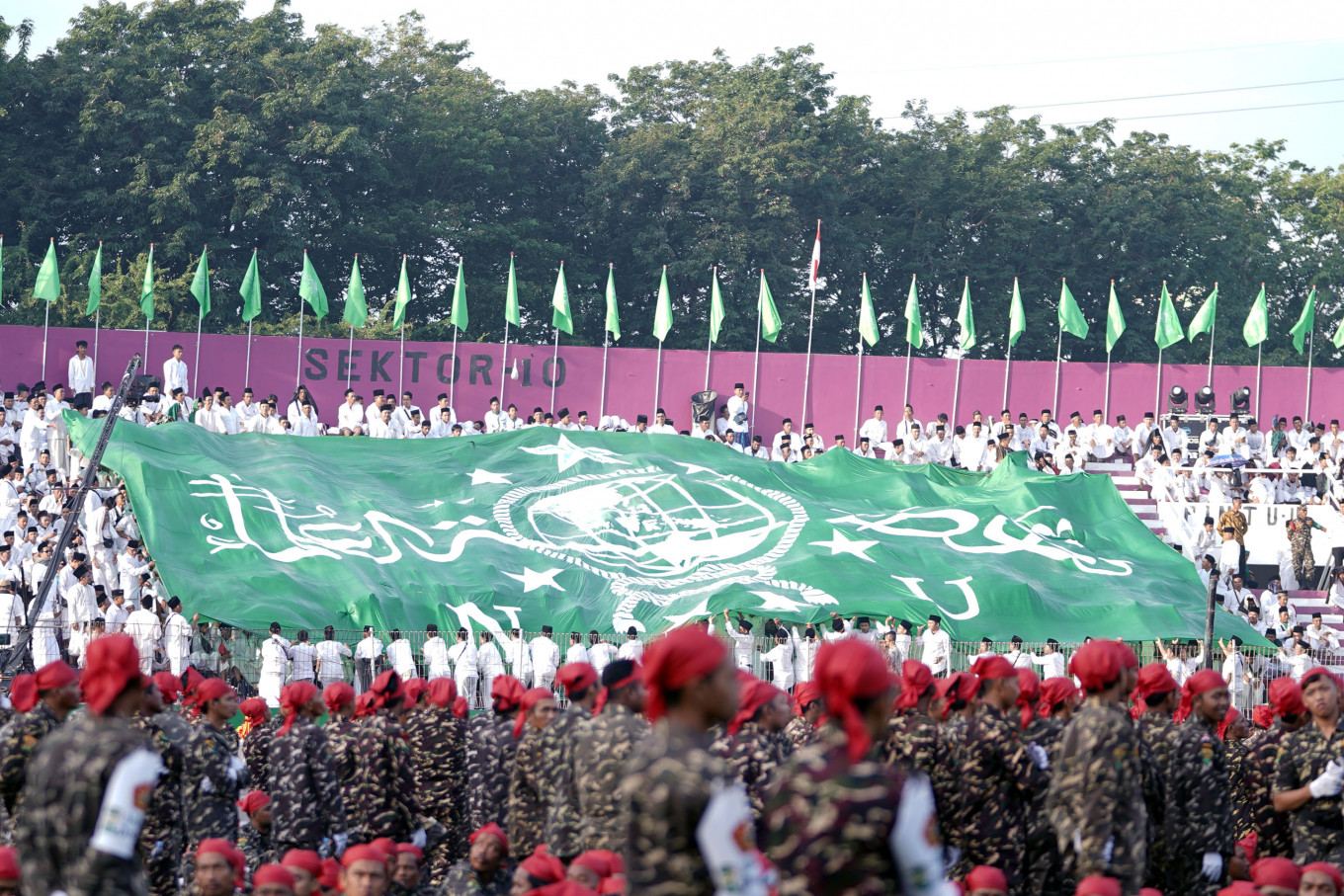
That attitude is changing slightly as the leaders of Nahdlatul Ulama (NU), which claims to represent the face of Indonesian Islam and counts the majority of Indonesian Muslims among its members, seeks to expand its clout beyond the nation’s borders to take a leading role in a dialogue between civilizations.
In marking its centenary on Feb. 7, NU has shifted its ideological gear against what it believes is a rigid interpretation of Islam, which the organization deems incompatible with not only local traditions but also the global norms of democracy and human rights.
The organization rejects the idea of reviving the caliphate system as a way of uniting the global Muslim community, which it said would only create conflict. It is now seeking to formulate Islamic jurisprudence (fiqh) and its own school of thought on the need to create world peace, with the 1945 United Nations Charter serving as the foundational text.
This is not to say that NU wants to become a transnational Islamic movement, though it has several overseas branches. But it is clear that under the leadership of a globalist like Yahya Cholil Staquf, the organization wants to become more assertive in the global marketplace of ideas, especially at a time when the world is facing a multitude of crises, from the war in Ukraine to the warming planet.