The Jakarta Post
Please Update your browser
Your browser is out of date, and may not be compatible with our website. A list of the most popular web browsers can be found below.
Just click on the icons to get to the download page.


Popular Reads
Top Results
No results found. Please check your search term and try again
Can't find what you're looking for?
View all search results
Popular Reads
Top Results
No results found. Please check your search term and try again
Can't find what you're looking for?
View all search resultsDon’t rush on EV in ASEAN
Electricity in ASEAN countries still largely relies on fossil fuels, meaning EV adoption will not be truly green in the region.
Change text size
Gift Premium Articles
to Anyone
Share the best of The Jakarta Post with friends, family, or colleagues. As a subscriber, you can gift 3 to 5 articles each month that anyone can read—no subscription needed!
 Set as preferred source
I
t may seem hard to be hopeful about ASEAN these days. With ongoing conflicts in Myanmar and tensions in the South China Sea, it is reasonable to question the regional bloc’s relevance in maintaining peace and stability in Southeast Asia.
Notwithstanding the political and security tensions, there is still much to celebrate. Although it is often overlooked, most of the countries in ASEAN have recovered from the COVID-19 pandemic and its subsequent global recession. They have also withstood small impacts from global food and energy crisis caused by the Ukraine War, as the countries rely on intra-regional trade and relations with China and other Asian countries to fulfill domestic demand.
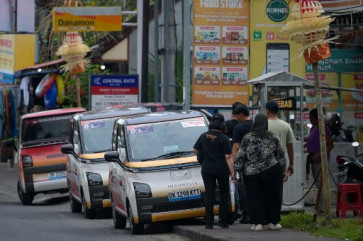
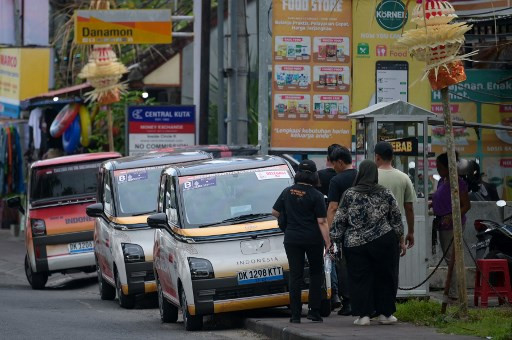
When the group’s summit in Labuan Bajo, East Nusa Tenggara, produced a declaration to support member countries to adopt electric vehicles (EV) and build its industries, many were skeptical and considered it another empty pledge made by the bloc. Given the relatively less-developed automotive industry and EV battery manufacturing in the region, there is indeed ample room for doubt.
But there is also potential.
Unlike the industry for internal-combustion engine vehicles, the EV ecosystem tends to be more segmented and close-looped. Critical minerals like nickel, tin and copper that are used to produce the batteries that power up EV are available only in certain countries, fewer than those which have oil deposits. Sustainable production is only possible if auto manufacturers include these countries in their supply chain.
ASEAN countries with large deposits of minerals like Indonesia and Vietnam are building their EV battery industries, albeit still at the development stage. In Indonesia, South Korea’s LG and Hyundai are operating an EV battery plant, which is expected to start producing in 2024. Vietnam’s conglomerate Vinfast has also began construction of a facility to produce batteries for sale and its own EV production.
There are also large vehicle manufacturing industries in the region. According to a study by ISEAS-Yusof Ishak Institute, Thailand is the biggest car manufacturer in Southeast Asia, producing over 1.6 million vehicles in 2021. Indonesia and Malaysia follow with 1.1 million and 0.48 million units respectively.