The Jakarta Post
Please Update your browser
Your browser is out of date, and may not be compatible with our website. A list of the most popular web browsers can be found below.
Just click on the icons to get to the download page.


Popular Reads
Top Results
No results found. Please check your search term and try again
Can't find what you're looking for?
View all search results
Popular Reads
Top Results
No results found. Please check your search term and try again
Can't find what you're looking for?
View all search resultslpg

Economy 2 months ago
PREMIUM
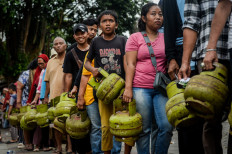
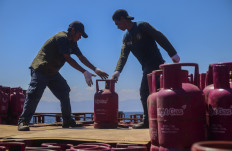
South Sumatra CNG station on fast track to slash LPG imports
In a bid to cut annual LNG imports totaling around Rp 500 trillion to fill a gaping shortfall of nearly 7 million tonnes, the government is pushing to accelerate development on a CNG central compression station to exploit substantial methane reserves in South Sumatra.
Opinion 3 months ago
PREMIUM
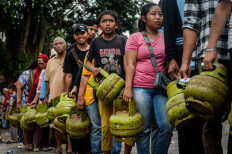
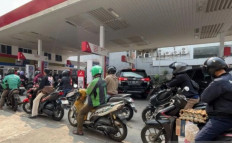
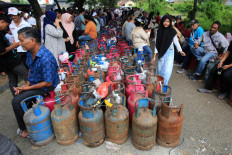
Analysis: Indonesia eyes CNG, DME to ease LPG import burden amid energy crisis
The Indonesian government is looking to dimethyl ether (DME) and compressed natural gas (CNG) as alternatives to import-reliant liquefied petroleum gas (LPG), as it grapples with the impact of the global energy crisis triggered by the United States-Israeli war with Iran. Competing blockades by Iran and the US have shown little sign of easing, pushing up global energy prices and increasing pressure on Indonesia’s state budget, particularly energy subsidies for 3-kilogram LPG cylinders. In response, the government has raised prices for unsubsidized LPG products, sought alternative import sources and accelerated efforts to develop DME and CNG as substitute fuels.

Regulations 4 months ago
PREMIUM
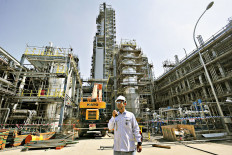
Pivoting from LPG to CNG to require 'billions of dollars’
As the government looks to replace millions of subsidized 3‑kilogram LPG cylinders with compressed natural gas (CNG) to reduce costly imports, experts warn the switch would require billions of dollars in investment, and a tight safety regime.
Economy 4 months ago
PREMIUM
RI manufacturing growth slows in April: Industry Ministry survey
The Industrial Confidence Index (IKI), a monthly gauge of factory activity published by on Wednesday, came in at 51.75 last month, easing from March’s 51.86 but still above the 50 threshold that separates expansion from contraction.
Opinion 4 months ago
PREMIUM
Analysis: Unsubsidized fuel, LPG prices rise as energy crisis persists
President Prabowo Subianto’s administration has begun feeling the pressure of the global energy crisis, with state-owned energy company Pertamina raising prices for several unsubsidized fuel and liquefied petroleum gas (LPG) products. The move appears necessary to protect fiscal stability and Pertamina’s operations amid supply disruptions caused by the United States-Israeli war on Iran.
Economy 4 months ago
PREMIUM
Govt exempts LPG, plastic precursors import duties amid supply strains
The government has been scrambling since earlier this month to secure supplies of naphtha, a raw material used to produce plastic, from alternative sources such as African countries, India and the United States.
Editor's Picks
Popular
- Much ado about asset forfeiture
- Mass poisonings cast doubt on free meals reforms
- New data rules could unlock cross-border data flows
- Children are no longer the priority, were they ever?
- Rescuers searching for 140 people from passenger ship in Java Sea
- Three more volcanoes erupt following Sinabung, Anak Krakatau
- BRICS nations call for 'maximum restraint' in Middle East war
- Ministry ready to repatriate five orangutan babies found in India
- Indonesia, China eye cooperation to boost 3 million homes program
- SOE dividend grab tests Danantara’s mandate


