The Jakarta Post
Please Update your browser
Your browser is out of date, and may not be compatible with our website. A list of the most popular web browsers can be found below.
Just click on the icons to get to the download page.


Popular Reads
Top Results
No results found. Please check your search term and try again
Can't find what you're looking for?
View all search results
Popular Reads
Top Results
No results found. Please check your search term and try again
Can't find what you're looking for?
View all search resultschildren
Society 3 months ago
PREMIUM
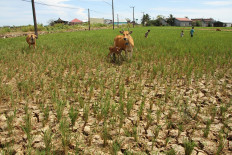
El Niño may raise stunting rate as food output falls and prices rise
IDAI chairman Dr. Piprim Basarah Yanuarso said children are among the most vulnerable groups affected by climate change due to their still-developing immune systems and limited ability to regulate body temperature.

Academia 3 months ago
PREMIUM
Counter-extremism strategy must anticipate, not just respond
For the second phase of Indonesia's counter-extremism policy to succeed, it must become a discipline of strategic thinking with the capacity to evolve alongside the complex security, social and developmental issues that are intertwined in violent extremism.

Society 4 months ago
Vitamins over vaccines: Misinformation entrenched amid Indonesia measles surge
Misinformation circulating on social media about vaccines causing disease paralysis, behavioral problems, or worse has become an issue as the number of measles cases in Indonesia has soared, becoming the second-highest in the world behind only war-torn Yemen, according to the Indonesian Pediatric Society (IDAI).



Editorial 4 months ago
PREMIUM
Childcare reform can’t wait
As viral tragedies expose a broken system of unregulated daycares and uncertified caregivers, Indonesia must choose between performing temporary damage control or finally building the foundational safety net its "golden generation" deserves.

Opinion 4 months ago
PREMIUM
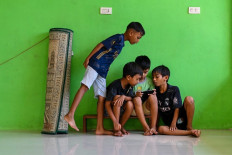
Analysis: Protection or control? Govt blocks children’s access to social media
Over the past two weeks, the government has begun overseeing the implementation of Communications and Digital Ministerial Regulation No. 9/2026. The policy reflects a national push to strengthen protections for children, though concerns have emerged regarding its effectiveness and its potential impact on children’s access to information and freedom of expression.

Academia 5 months ago
PREMIUM
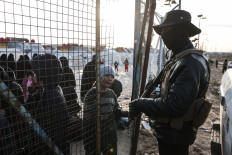
When the Middle East crisis reaches Southeast Asia
As the collapse of old regimes and escalating tensions reshape the Middle East, the walls containing extremist threats are beginning to crumble. Indonesia must act now to bridge the gap between global geopolitical shifts and domestic security before "strategic ambiguity" turns into a national crisis.
Editor's Picks
Popular
- Much ado about asset forfeiture
- Mass poisonings cast doubt on free meals reforms
- New data rules could unlock cross-border data flows
- The benefit of the doubt has expired
- Children are no longer the priority, were they ever?
- Rescuers searching for 140 people from passenger ship in Java Sea
- SOE dividend grab tests Danantara’s mandate
- Three more volcanoes erupt following Sinabung, Anak Krakatau
- BRICS nations call for 'maximum restraint' in Middle East war
- Indonesia, China eye cooperation to boost 3 million homes program


