The Jakarta Post
Please Update your browser
Your browser is out of date, and may not be compatible with our website. A list of the most popular web browsers can be found below.
Just click on the icons to get to the download page.


Popular Reads
Top Results
No results found. Please check your search term and try again
Can't find what you're looking for?
View all search results
Popular Reads
Top Results
No results found. Please check your search term and try again
Can't find what you're looking for?
View all search resultscode-of-conduct


Asia & Pacific 2 years ago
PREMIUM
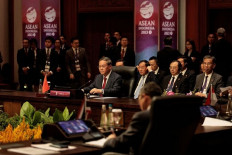
ASEAN unity urged for South China Sea progress
Hopes are not high that the talks in Vientiane will result in significant progress on the South China Sea issue, such as a code of conduct (COC) for nations operating in the body of water, but analysts warn that ASEAN must at least refrain from backpedaling on its existing position.
Asia & Pacific 2 years ago
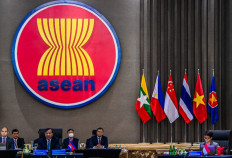
Top China, US diplomats to meet at ASEAN foreign minister talks
United States Secretary of State Antony Blinken will meet his Chinese counterpart Wang Yi on the sidelines of the event where he will "discuss the importance of adherence to international law in the South China Sea", according to the US State Department.



Asia & Pacific 2 years ago
PREMIUM
SCS code of conduct unlikely concluded on time due to lack of ASEAN unity
A lack of unity among ASEAN nations is regarded as the core stumbling block to immediately concluding the long-awaited code of conduct (COC) in the South China Sea, which had been expected to establish a guiding framework for preventing an open conflict in the troubled waters.

Academia 2 years ago
PREMIUM
'If only': ASEAN, China must resume talks over SCS code of conduct
“If only” isn’t a good basis for designing foreign policy, but ASEAN and China both need to look beyond the current tensions in the South China Sea at the bigger, far-reaching picture of the region’s future to decide if they want peace and if so, how they’re going to get there, together.
Asia & Pacific 2 years ago
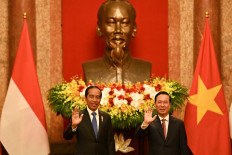
Jokowi visits Vietnam to talk South China Sea security, trade
Ahead of Jokowi's trip, Foreign Minister Retno Marsudi said the country was ready to work with other Southeast Asian nations to finalise a long-delayed code of conduct for the South China Sea, amid tensions with Beijing in the contested waterway.
Editor's Picks
Popular
- Much ado about asset forfeiture
- Mass poisonings cast doubt on free meals reforms
- Indonesia, China eye cooperation to boost 3 million homes program
- Prabowo sacks Purbaya, turns to familiar hand at Finance Ministry
- Children are no longer the priority, were they ever?
- The benefit of the doubt has expired
- Australian woman dies after falling from cliff at Bali’s Kelingking Beach
- Wildfire breaks out again at Mount Bromo
- Purbaya says he was 'upset', but half expected removal
- Suahasil seen to prioritize fiscal discipline, continuity


