The Jakarta Post
Please Update your browser
Your browser is out of date, and may not be compatible with our website. A list of the most popular web browsers can be found below.
Just click on the icons to get to the download page.


Popular Reads
Top Results
No results found. Please check your search term and try again
Can't find what you're looking for?
View all search results
Popular Reads
Top Results
No results found. Please check your search term and try again
Can't find what you're looking for?
View all search resultsfarmer
Academia 1 year ago
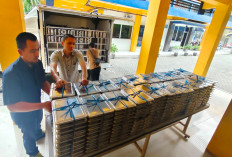
Free nutritious meals for resilient agrifood systems
For decades, Indonesia has strived to optimize the productivity of its farmers to be able to meet the ever-growing domestic demand. The free meals program now presents a golden opportunity to pursue that ambition at a systemic scale, from farm to table, from nature to the pockets of the poorest.
Front Row 1 year ago
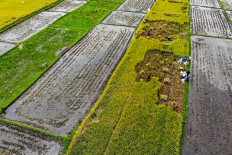
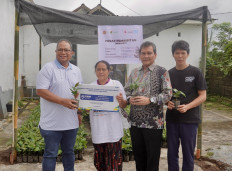
PNM boosts Kintamani coffee farmers' growth through empowerment and collaboration
PT Permodalan Nasional Madani (PNM) held an empowerment event for coffee farmers in the Kintamani region of Bangli regency, Bali. The event, which took place at the Farmers’ Support Center (FSC), was attended by PNM's operational director, Sunar Basuki, and involved collaborations with Coop Coffee Indonesia, the Micro, Small and Medium Enterprises (MSMEs) Ministry and the Women’s Empowerment and Child Protection Ministry.
Regulations 1 year ago
PREMIUM
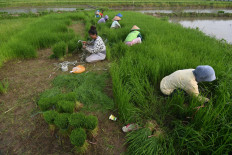
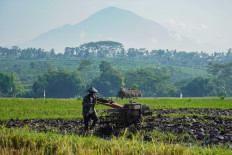
Young farmers unlikely stay despite govt’s big pay promise for newcomers
The output of rice, the country’s major staple food for instance, dropped to 30.34 million tonnes last year from 31.31 million tonnes in 2019, BPS data show. Similarly, farmland has also been shrinking over the past years.

Opinion 1 year ago
PREMIUM
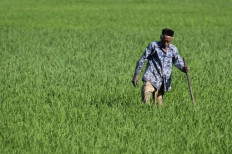
Analysis: Prabowo cancels farmers’ and fishermen’s debts
President Prabowo Subianto has issued a new Government Regulation (PP) to forgive loans from state-owned banks for individuals and micro, small and medium enterprises (MSMEs) in sectors like farming, fisheries and plantations, as in select industries including clothing, food and the creative economy. The new regulation is expected to boost business growth for debtors in these sectors and industries, and also presents a potential political advantage for the current administration, at minimal cost.
Markets 1 year ago
PREMIUM
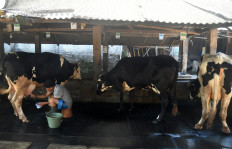
Tonnes of milk thrown away in Java as farmers protest industry restriction
The protest took place amid the government’s plan to increase milk consumption in the country, including through the flagship free nutritious meal program promised by President Prabowo Subianto during his campaign for the February election.
Opinion 1 year ago
PREMIUM
Analysis: Prabowo’s promise to achieve food self-sufficiency amid import reliance
President Prabowo Subianto has expressed his commitment to prioritizing food self-sufficiency for Indonesia, setting a five-year deadline to achieve this objective. However, Indonesia still faces many issues with its food supply as the country relies heavily on food imports to meet the needs of the hour, a challenge that many previous presidents have attempted to address to no avail.
Economy 1 year ago
PREMIUM
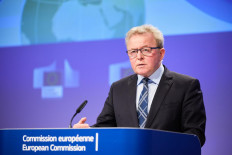
Smallholders must organize to succeed: EU commissioner
Europe's agriculture commissioner, who is currently on a state visit to Indonesia, suggests that smallholders must organize to increase productivity, add value and cut out the scourge of middlemen by taking a more prominent position in the agricultural supply chain.
Editor's Picks
Popular
- PISA gains belie Indonesia’s persistent education crisis
- Not the Ministry of Magic
- Suahasil seen to prioritize fiscal discipline, continuity
- The benefit of the doubt has expired
- Ed Sheeran struggles against Gaza tide
- Osama the gamer: A list of Bin Laden’s video games from his hard drive
- Another company flees Batam, abandons 1,025 workers
- Indonesian Navy welcomes former Italian warship as its first aircraft carrier
- Is Indonesia returning to fiscal orthodoxy?
- Saudi civil defense sends all-clear after alerts issued for capital Riyadh


