The Jakarta Post
Please Update your browser
Your browser is out of date, and may not be compatible with our website. A list of the most popular web browsers can be found below.
Just click on the icons to get to the download page.


Popular Reads
Top Results
No results found. Please check your search term and try again
Can't find what you're looking for?
View all search results
Popular Reads
Top Results
No results found. Please check your search term and try again
Can't find what you're looking for?
View all search resultsfood-estate
Society 08:30 am
PREMIUM
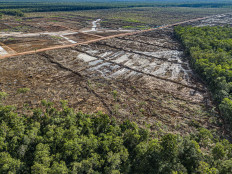
State-led food estate blamed for wildfire in Papua
Observation by an independent forest monitoring platform shows that around 60,000 hectares of burned land is located inside the Merauke estate project, one-third of the total burn scar recorded across Indonesia’s easternmost island.
Academia 1 month ago
PREMIUM
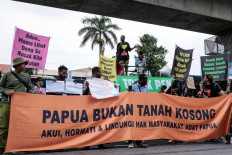
The primacy of security logic over indigenous rights: The Wanam case
By prioritizing military expansion and resource extraction over indigenous land rights, Indonesia’s strategic development in Papua risks sacrificing constitutional protections and human safety for state control.
Academia 2 months ago
PREMIUM
The 5Es of economic growth and their impact on exchange rates (Part 2 of 3)
To safeguard economic sovereignty against foreign currency shocks and exploitative tech monopolies, developing nations must pivot from exporting raw materials to mandating "balanced exports" and reclaiming local control over their digital economies.
Society 5 months ago
PREMIUM
State-led projects drive soaring forest loss in Indonesia, watchdog finds
An environmental watchdog has found that over 430,000 hectares of forest areas were cut down last year, primarily for realizing President Prabowo Subianto’s food and energy self-sufficiency agenda.
Opinion 7 months ago
PREMIUM
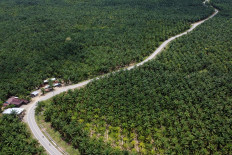
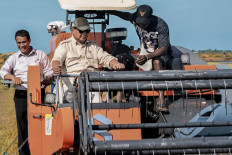
Analysis: Food estate dream in South Papua grows bigger, more destructive
The country’s long-running food estate ambition is entering a new and larger phase with the conversion of vast forest areas in South Papua into non-forest zones, or areas for other uses (APL). Initially framed as a strategy to achieve rice self-sufficiency, the program has now expanded under President Prabowo Subianto to also pursue energy security, with palm oil positioned as a key commodity to serve both goals.
Editor's Picks
Popular
- Much ado about asset forfeiture
- Suahasil seen to prioritize fiscal discipline, continuity
- Not the Ministry of Magic
- Mass poisonings cast doubt on free meals reforms
- Children are no longer the priority, were they ever?
- Purbaya ousted after clash with Prabowo's ex-army colleague, sources say
- Whoosh takeover in limbo after Purbaya ousted as finance minister
- Malaysia talks to rival airlines as it monitors AirAsia's financial health
- Artists exit Sheeran tour in solidarity with Macklemore pro-Palestinian comments
- Prabowo opens new LRT link, backs Jakarta’s expansion push


