The Jakarta Post
Please Update your browser
Your browser is out of date, and may not be compatible with our website. A list of the most popular web browsers can be found below.
Just click on the icons to get to the download page.


Popular Reads
Top Results
No results found. Please check your search term and try again
Can't find what you're looking for?
View all search results
Popular Reads
Top Results
No results found. Please check your search term and try again
Can't find what you're looking for?
View all search resultsforeign-affairs

Academia 8 months ago
PREMIUM
Has Indonesia forsaken the Bandung Spirit?
The way the government responded to the recent kidnapping of Venezuela’s president by the United States and its claim to now run that country, may have put the final nail in the Bandung coffin, as far as Indonesia is concerned.

Academia 8 months ago
PREMIUM
A model to keep multilateralism alive
As countries shift away from multilateral cooperation as the world grows more multipolar, organizations that are mission-driven, involve multiple stakeholders and founded on a spirit of partnership will become ever more necessary to face contemporary challenges.
Politics 8 months ago
PREMIUM
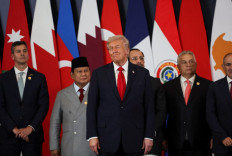
Yearender: A year of leadership leaving home
In one of the country’s most internationally visible stretches in years, Indonesia’s exposure more than doubled, with President Prabowo making 35 overseas visits to 29 countries in 12 months, nearly triple the average annual pace of the previous decade.

Asia & Pacific 9 months ago
PREMIUM
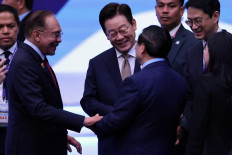
South Korea seeks closer ASEAN ties with revived New Southern Policy
The digital economy, including the development of artificial intelligence and cooperation to bolster the fight against transnational crimes surrounding online scams, is among the sectors to be prioritized in the expansion of cooperation between South Korea and Southeast Asian nations.
Academia 10 months ago
PREMIUM
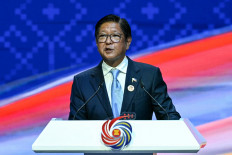
Mediating in a broken world: How Indonesia can make a difference
Indonesia’s "free and active" foreign policy, its laissez-faire mediation style as well as its cumulative experience, from the national revolution to the post-tsunami Aceh peace process, might succeed in helping to resolve geopolitical conflicts in Southeast Asia as well as the Middle East amid the global breakdown in the rules-based order.
Editor's Picks
Popular
- PISA gains belie Indonesia’s persistent education crisis
- Not the Ministry of Magic
- Suahasil seen to prioritize fiscal discipline, continuity
- The benefit of the doubt has expired
- Osama the gamer: A list of Bin Laden’s video games from his hard drive
- Saudi civil defense sends all-clear after alerts issued for capital Riyadh
- Indonesian Navy welcomes former Italian warship as its first aircraft carrier
- Prabowo skips UNGA as RI seeks to bridge divides
- Another 150 Indonesians deported from Malaysia to Batam
- Saudi-led coalition says Houthis fired ballistic missile at Riyadh


