The Jakarta Post
Please Update your browser
Your browser is out of date, and may not be compatible with our website. A list of the most popular web browsers can be found below.
Just click on the icons to get to the download page.


Popular Reads
Top Results
No results found. Please check your search term and try again
Can't find what you're looking for?
View all search results
Popular Reads
Top Results
No results found. Please check your search term and try again
Can't find what you're looking for?
View all search resultsforeign-policy
Editorial 4 months ago
PREMIUM
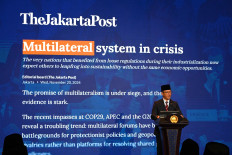
Making sense of Indonesia
Standard practice around that period mostly revolved foreign correspondents parachuted from the major capitals of the West to report from the “exotic” East, who often wrote with an outlook which literary critic Edward Said deemed “orientalist”.
Asia & Pacific 4 months ago
PREMIUM
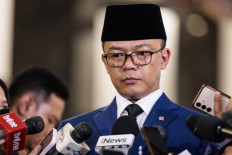
Call grows for clearer foreign policy communication in Indonesia
Lawmakers have urged the government to improve clarity in its foreign policy communication, warning that unclear messaging risks misinterpretation by international partners and could undermine Indonesia’s long-standing non-aligned position amid growing scrutiny of recent diplomatic moves.

Academia 4 months ago
PREMIUM
Indonesia-US defense cooperation: Between national interest and geopolitical pressures
Indonesia’s deepening military ties with the United States represent a high-stakes balancing act between necessary defense modernization and the preservation of its foundational "free and active" sovereign identity.
Academia 4 months ago
PREMIUM
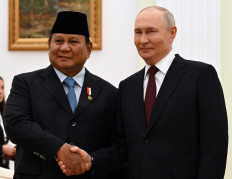
Beyond oil: What is Prabowo’s energy diplomacy really securing?
As Prabowo spreads his diplomatic wings and travels the world making deals to secure immediate, future and broader energy needs, the real issue at hand is whether the country's energy transition can take flight as part of a comprehensive strategy once he lands back in Jakarta.
Editorial 4 months ago
PREMIUM
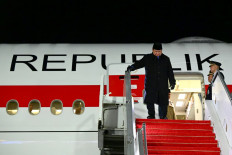
Put country first
At a time when global leaders are shifting their priorities toward securing national interests amid the ongoing war in the Middle East, our President is fluttering from country to country drumming up cooperation deals instead of heeding his people's calls to come home and attend to domestic matters first.
Academia 5 months ago
PREMIUM
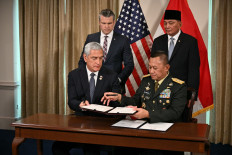
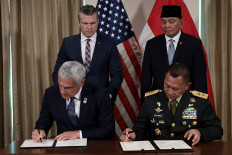
Indonesia’s airspace torn between sovereignty and partnership
If Indonesia approves new military overflight arrangements with the United States, it will face a high-stakes balancing act between strategic partnership and national autonomy. In an era of shifting global power, control of Indonesia’s skies must remain a matter of substance, not just symbolism.

Editor's Picks
Popular
- Much ado about asset forfeiture
- Mass poisonings cast doubt on free meals reforms
- Purbaya ousted after clash with Prabowo's ex-army colleague, sources say
- Children are no longer the priority, were they ever?
- Indonesia, China eye cooperation to boost 3 million homes program
- El Niño chokes Indonesia’s coal exports as rivers run shallow
- Suahasil seen to prioritize fiscal discipline, continuity
- Not the Ministry of Magic
- Feeding, not poisoning
- Sumatran elephants run out of room as fires spread


