The Jakarta Post
Please Update your browser
Your browser is out of date, and may not be compatible with our website. A list of the most popular web browsers can be found below.
Just click on the icons to get to the download page.


Popular Reads
Top Results
No results found. Please check your search term and try again
Can't find what you're looking for?
View all search results
Popular Reads
Top Results
No results found. Please check your search term and try again
Can't find what you're looking for?
View all search resultstaiwan
Asia & Pacific 4 months ago
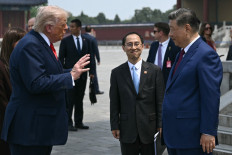
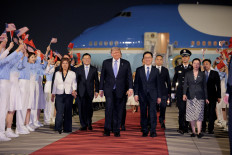
Trump, Xi set for Beijing talks with trade truce, Iran war at stake
The power dynamic has shifted since Trump's last visit in 2017, when China went out of its way to persuade the United States to acknowledge its growing status. This time around, it's the United States, unprompted and of its own volition, that is acknowledging that status.
Asia & Pacific 4 months ago
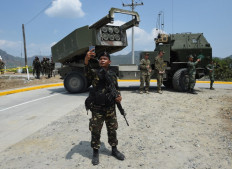
US, Philippines deploy anti-ship missile system near Taiwan
The Philippines' northernmost province, with about 20,000 residents, sits around 100 miles south of Taiwan, along the Luzon Strait, a strategic corridor on the frontline of the great power competition between the US and China for dominance in the Asia-Pacific region.
Asia & Pacific 4 months ago
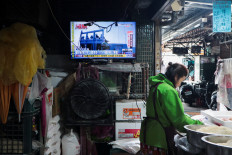
China praises nations that denied overflight rights for Taiwan president
It is the first instance of a Taiwan president having to cancel a foreign trip due to denial of access to airspace, as lack of diplomatic ties with the island does not normally pose a problem for its leaders in flying over countries.
Academia 5 months ago
PREMIUM
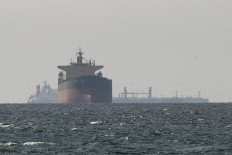
Lessons from the Iran crisis for the Indo-Pacific
As the Iran crisis draws US attention back to West Asia, the Indo-Pacific faces a dangerous vacuum in leadership and deterrence. This strategic overstretch is forcing regional powers like Japan, Australia and India to abandon their reliance on Washington and seize control of their own security destinies.

Asia & Pacific 5 months ago
China offers incentives to Taiwan following opposition leader's visit
China on Sunday unveiled 10 new incentive measures for Taiwan, including easing tourist curbs, allowing in "healthy" television dramas and facilitating food sales, following a visit by the island's opposition leader.


Academia 5 months ago
PREMIUM
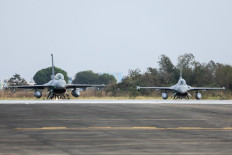
ASEAN’s survival depends on doing less
ASEAN is drowning in its own bureaucracy while the region’s nuclear stability begins to fracture. To survive, the bloc must abandon its "do everything" approach and reinvent itself as a lean, security-focused guardian of a nuclear-free Southeast Asia.
Editor's Picks
Popular
- Not the Ministry of Magic
- PISA gains belie Indonesia’s persistent education crisis
- The benefit of the doubt has expired
- Suahasil seen to prioritize fiscal discipline, continuity
- Saudi-led coalition says Houthis fired ballistic missile at Riyadh
- Court decision tightens House oversight on free meals funding
- Police probe kidnapping, murder of Ukrainian tourist in Bali
- 3% deficit cap revision puts Indonesia’s fiscal credibility at risk
- UN peacekeeping chief in Lebanon says smooth transition is critical before pull-out
- Denmark hails 'binding' Greenland deal with Trump


