The Jakarta Post
Please Update your browser
Your browser is out of date, and may not be compatible with our website. A list of the most popular web browsers can be found below.
Just click on the icons to get to the download page.


Popular Reads
Top Results
No results found. Please check your search term and try again
Can't find what you're looking for?
View all search results
Popular Reads
Top Results
No results found. Please check your search term and try again
Can't find what you're looking for?
View all search resultsSuspected Ebola cases top 900 in DRC, WHO chief says
Change text size
Gift Premium Articles
to Anyone
Share the best of The Jakarta Post with friends, family, or colleagues. As a subscriber, you can gift 3 to 5 articles each month that anyone can read—no subscription needed!
 Set as preferred source
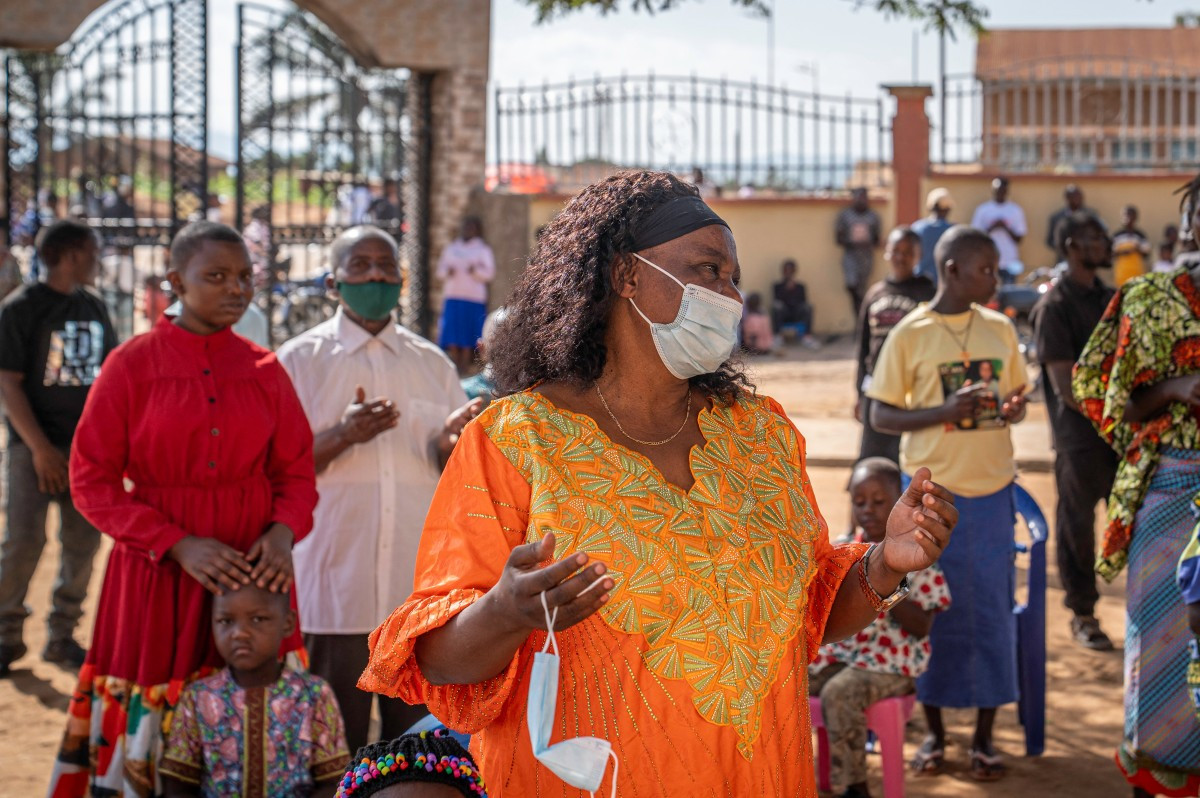 A Catholic prays while wearing a mask following local authorities’ instructions to limit the spread of the Ebola outbreak in eastern Democratic Republic of the Congo during a mass at Bunia Cathedral in Bunia on May 24, 2026. Officials in the DRC updated the death toll from the Ebola outbreak to 204 on May 23, 2026, hours after the Red Cross said three volunteers had died there and Uganda confirmed three new Ebola cases. (AFP/Glody Murhabazi)
M
ore than 900 suspected Ebola cases have been identified in the conflict-hit Democratic Republic of Congo, the World Health Organization (WHO) chief has said.
"As surveillance efforts have been scaled up in the DRC Ebola response, more than 900 suspected cases have been identified so far, including 101 confirmed cases," WHO Director-General Tedros Adhanom Ghebreyesus said in a Sunday social media post that gave no update on the death toll.
Ebola is a deadly viral disease that spreads through direct contact with bodily fluids. It can cause severe bleeding and organ failure.
The country declared an outbreak on May 15 caused by the Bundibugyo strain, which has no approved vaccine or treatments.
In a previous update released on Saturday, the DR Congo health ministry said 204 deaths had been recorded in three provinces of the vast central African country, from 867 suspected cases.
Ebola has killed more than 15,000 people across Africa in the past half-century.
Three new Ebola cases have been confirmed in Uganda, health authorities said Saturday. The new cases bring to five the total confirmed in Uganda since the current outbreak was discovered in the east African country on May 15. One person in Uganda has died.
On Saturday, the African Union's health agency warned that more countries on the continent were at risk of being affected by the Ebola virus, in addition to the DRC and Uganda.
"We have 10 countries at risk," said Jean Kaseya, head of the Africa Centers for Disease Control and Prevention (Africa CDC), listing Angola, Burundi, the Central African Republic, the Republic of Congo, Ethiopia, Kenya, Rwanda, South Sudan, Tanzania and Zambia.
Kaseya said "high mobility and insecurity" in the region were helping spread the disease.