The Jakarta Post
Please Update your browser
Your browser is out of date, and may not be compatible with our website. A list of the most popular web browsers can be found below.
Just click on the icons to get to the download page.


Popular Reads
Top Results
No results found. Please check your search term and try again
Can't find what you're looking for?
View all search results
Popular Reads
Top Results
No results found. Please check your search term and try again
Can't find what you're looking for?
View all search resultsThink tanks seek closer Indonesia-China ties
Change text size
Gift Premium Articles
to Anyone
Share the best of The Jakarta Post with friends, family, or colleagues. As a subscriber, you can gift 3 to 5 articles each month that anyone can read—no subscription needed!
 Set as preferred source
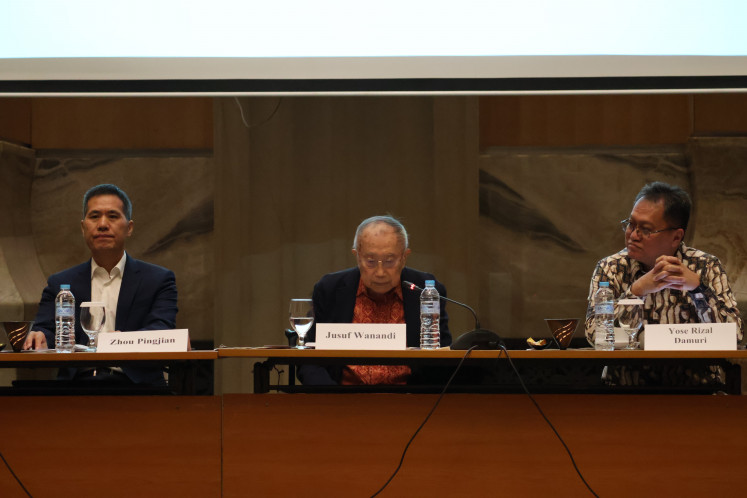
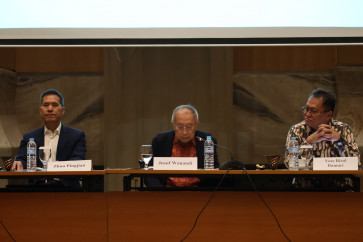
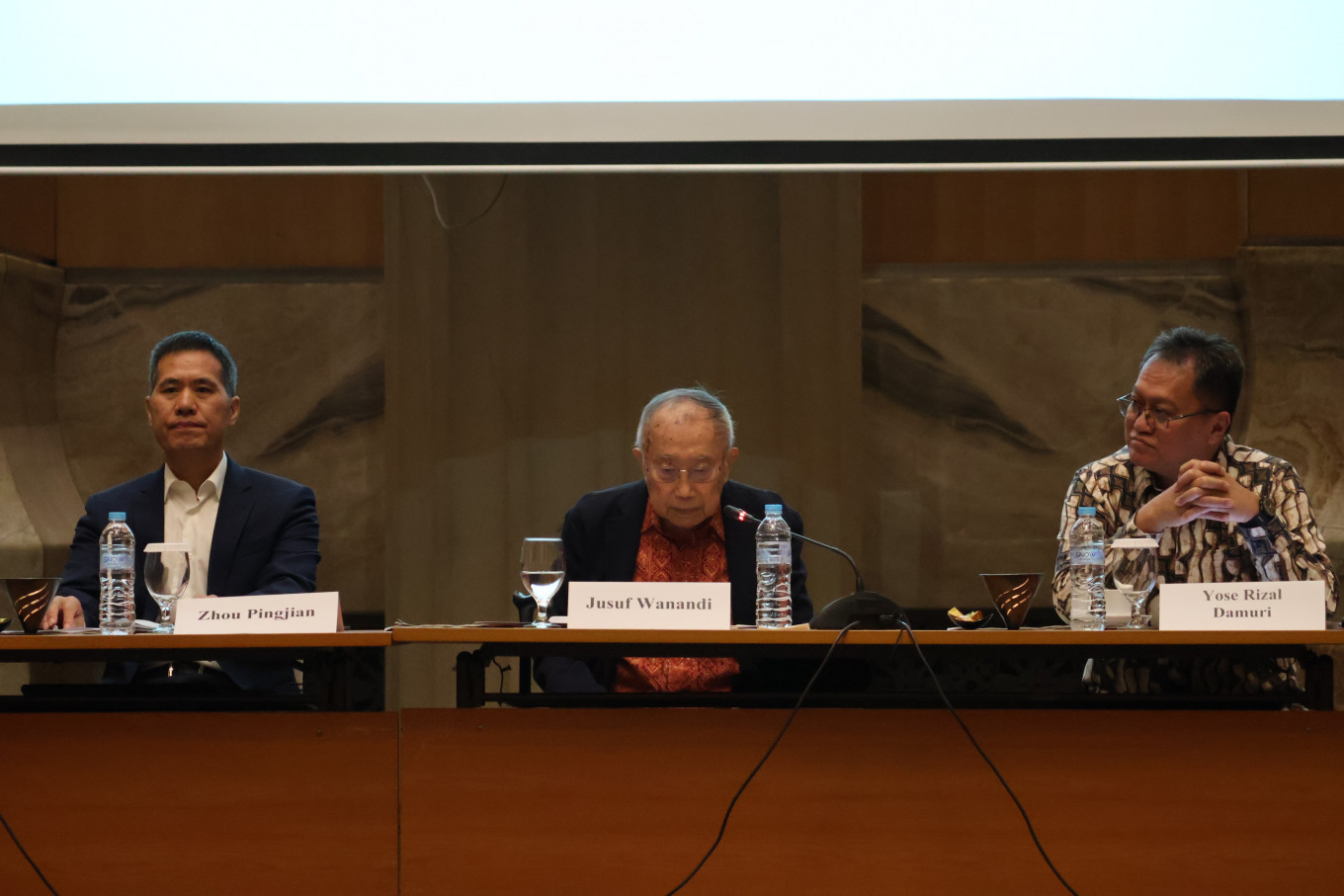 From left to right, Vice President of the Chinese People's Institute of Foreign Affairs (CPIFA) Zhou Pingjian, Jusuf Wanandi, vice chair of the Board of Trustees of the Centre for Strategic and International Studies (CSIS), and Yose Rizal Damuri, executive director of CSIS, attend a roundtable discussion titled “Indonesia-China Relations and the Changing International Order,” jointly organized by CSIS and the China Institute of International Studies (CIIS), in Yogyakarta on Monday. The discussion took place from Sept. 21 to 22, 2026. (Courtesy of Centre for Strategic and International Studies (CSIS)/-)
A
s the world enters a critical juncture, stronger Indonesia-China relations will be “elemental” in shaping a new international order, think tanks from both countries said, calling for deeper communication and more practical cooperation across political, economic and cultural spheres.
The call came during the first Track 2 dialogue between the two countries’ policy communities, where dozens of scholars and government representatives gathered in Yogyakarta this week for a two-day roundtable on the changing international order, regional peace and prosperity and the future of Jakarta-Beijing ties amid shifts in global governance.
Coled by Jakarta’s Center for Strategic and International Studies (CSIS) and Beijing’s China Institute of International Studies (CIIS), the closed-door talks brought the two sides together to exchange views on shared challenges and to identify areas of common ground that could be elevated to policymakers in both countries.
Speaking to reporters after the talks, participants said Indonesia and China need to strengthen communication and mutual understanding as they navigate differences between two major developing economies before moving toward more technical cooperation in areas including energy transition, climate change, digitalization and AI governance.
CSIS Executive Director Yose Rizal Damuri said greater understanding could begin at the people-to-people level, including by increasing the number of Indonesian students studying in China while also extending to substantive issues such as perceptions of investment.
Read also: Indonesia and China: Toward a more honest conversation
“We do have a lot of converged interests, but we also have some diversions in looking at certain issues. An example is how we view investment in China, Indonesia or Southeast Asian countries,” Yose said.