The Jakarta Post
Please Update your browser
Your browser is out of date, and may not be compatible with our website. A list of the most popular web browsers can be found below.
Just click on the icons to get to the download page.


Popular Reads
Top Results
No results found. Please check your search term and try again
Can't find what you're looking for?
View all search results
Popular Reads
Top Results
No results found. Please check your search term and try again
Can't find what you're looking for?
View all search resultsInside the lab and mill where women are redefining industrial work
Change text size
Gift Premium Articles
to Anyone
Share the best of The Jakarta Post with friends, family, or colleagues. As a subscriber, you can gift 3 to 5 articles each month that anyone can read—no subscription needed!
 Set as preferred source
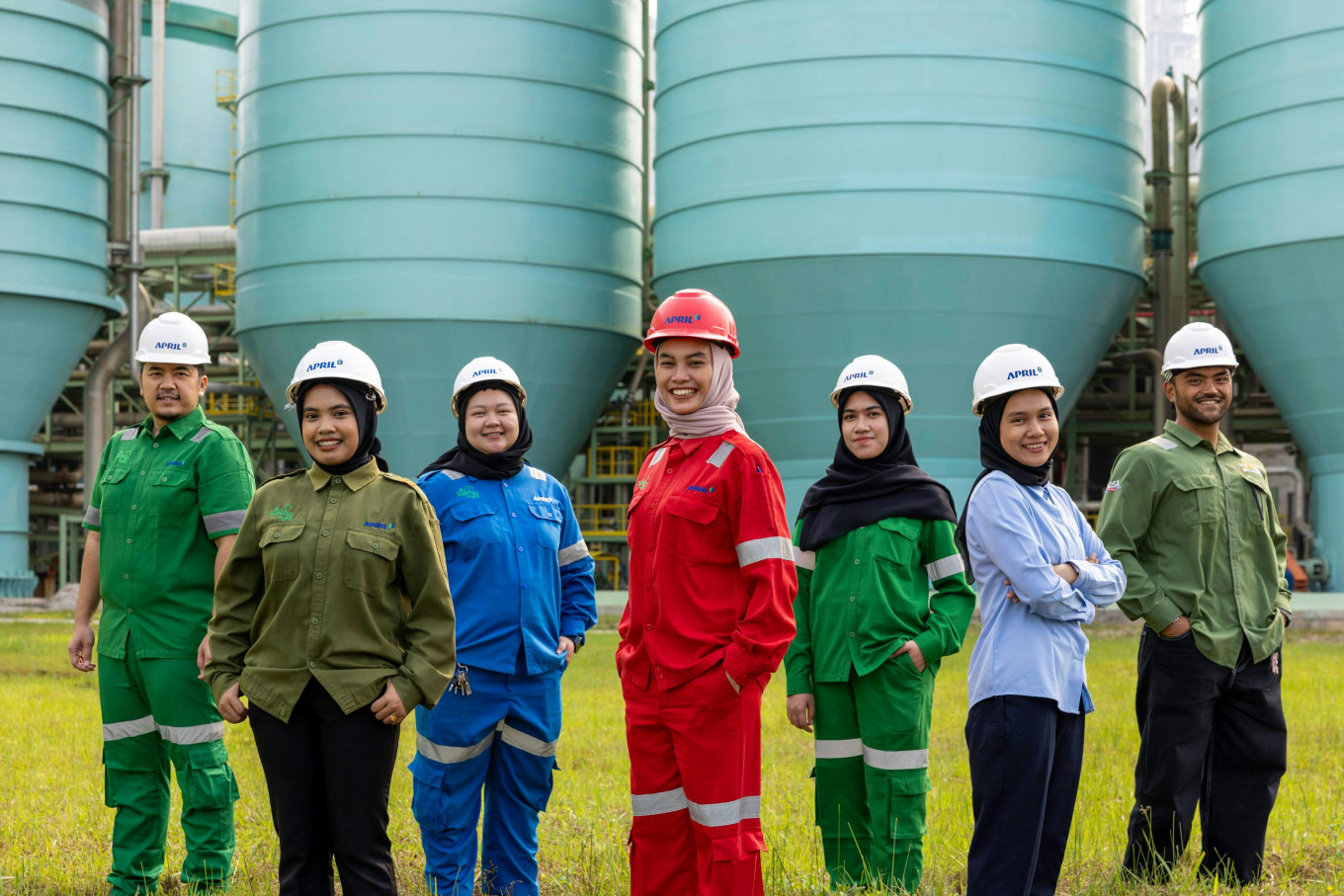 At APRIL Group, more women are taking increasingly technical roles that were once dominated by men. (Courtesy of APRIL Group)
A
cross Indonesia, women continue to break barriers and step into roles once considered unconventional. That spirit is reflected in the growing presence of women across technical and leadership roles—opening new pathways across industries that are rapidly evolving.
Today, women are increasingly stepping into science, technology, engineering and mathematics (STEM)-based roles within modernizing industrial sectors that prioritize long-term sustainability.
According to the World Economic Forum, this shift is especially visible in industrial sectors where sustainability is a key business strategy, including forestry and bio-based manufacturing—industries once perceived as male-dominated but now evolving through automation, technology and scientific research. Meanwhile, the FAO notes that women comprise 25 percent of the global forestry workforce, and research from RECOFTC highlights that integrating women into the value chain—from biotech labs to forest management—drives more sustainable and innovative outcomes.
In Indonesia, this shift is becoming more visible across industries, including in areas such as the forestry sector in Pangkalan Kerinci, Riau, where women across paper producer APRIL’s operations are contributing at different stages of the production process—from laboratories and fieldwork to mill operations.
From research labs to the field
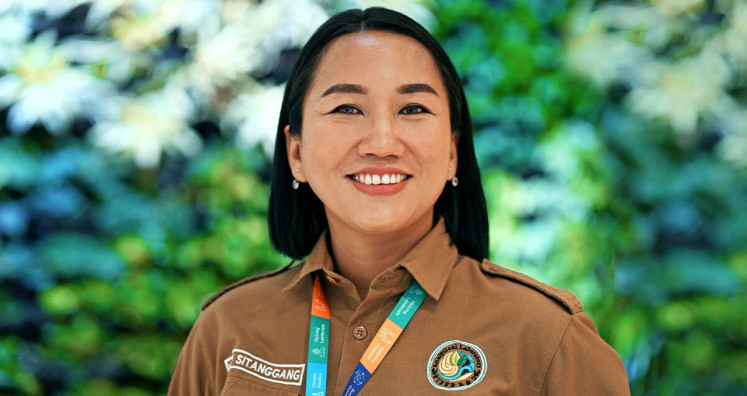

Scientific research is essential to balancing modern productivity with environmental stewardship. While UNESCO notes that women globally account for roughly one-third of researchers, this shift is even more pronounced in specialized technical fields. In the heart of Indonesia’s landscape, data-driven research is transforming how resources are managed and protected.
For example, senior researcher Dian Sitanggang leads a team focused on soil and fiber research that directly influences land management. Her work may not always be visible from the outside, but it plays an important role in how fiber plantations are managed, how productivity is improved, and how land can remain productive over the long term.
“I lead my team in conducting research to map and assess soil conditions, understand how soil characteristics affect productivity, and optimize fertilizer use,” said Dian. “Our research is essential for shaping plantation strategies, improving soil recovery, and increasing field efficiency.”
Dian's vision wasn't just about boosting the lab's capabilities; she was also deeply committed to empowering her team, especially women. For Dian, leadership is also about creating space for others to grow. "If you are trying to teach them, they will remember. But when you involve them, they will learn," she states.
She actively mentors younger team members, including women in technical roles, by giving them opportunities to present their work, lead discussions and take ownership of their development.
Breaking ground in mill operations
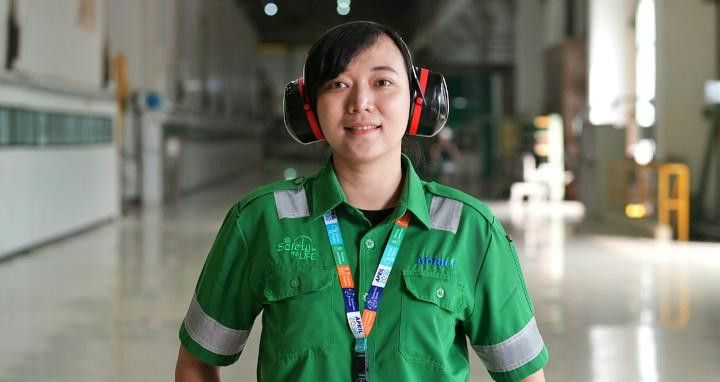
Not far from the lab, Gabriella Carissa works inside the paper mill operation, overseeing production processes in an environment long perceived as male-dominated. Her work reflects a gradual but important shift in Indonesia’s industrial sector: more women are taking on technical roles that directly shape how modern industry operates.
One of her most defining experiences was being involved in the development of a new production line from its early stages. From system design to testing, she worked closely across different phases of the process. Seeing the first output come through after months of work was, she recalls, a particularly meaningful moment.
“Seeing that first result made every late night and challenge worth it,” she says.
Her work involves managing complex systems—from pulp processing to final paper output—while ensuring consistency, minimizing waste and optimizing resource use. Her experience reflects how technical roles in industrial operations are becoming more accessible to women.
Looking ahead
The growing presence of women in technical roles is part of a broader change taking place across Indonesia’s industrial landscape. As sectors such as forestry, manufacturing, and renewable fiber-based production continue to evolve, the contribution of women will become increasingly important.
At APRIL, this shift is reflected in ongoing efforts to strengthen female representation across the workforce. The company has set a target to reach 20 percent female workforce participation by 2030, with women making up 18.1 percent of its workforce as of 2024.
For women like Dian and Gabriella, the progress is not only about representation, but also capability, trust, and the opportunity to contribute meaningfully in roles that shape the future of industry.