The Jakarta Post
Please Update your browser
Your browser is out of date, and may not be compatible with our website. A list of the most popular web browsers can be found below.
Just click on the icons to get to the download page.


Popular Reads
Top Results
No results found. Please check your search term and try again
Can't find what you're looking for?
View all search results
Popular Reads
Top Results
No results found. Please check your search term and try again
Can't find what you're looking for?
View all search resultsLawmakers, Purbaya butt heads over Rp 370t excess cash management
Experts noted that the risk of banks getting too reliant on the funds “is real” and a dependency cycle might materialize as banks grow accustomed to the idea that the funds are a “permanent source of liquidity”.
Change text size
Gift Premium Articles
to Anyone
Share the best of The Jakarta Post with friends, family, or colleagues. As a subscriber, you can gift 3 to 5 articles each month that anyone can read—no subscription needed!
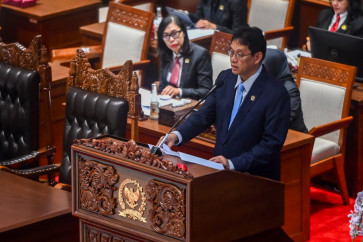
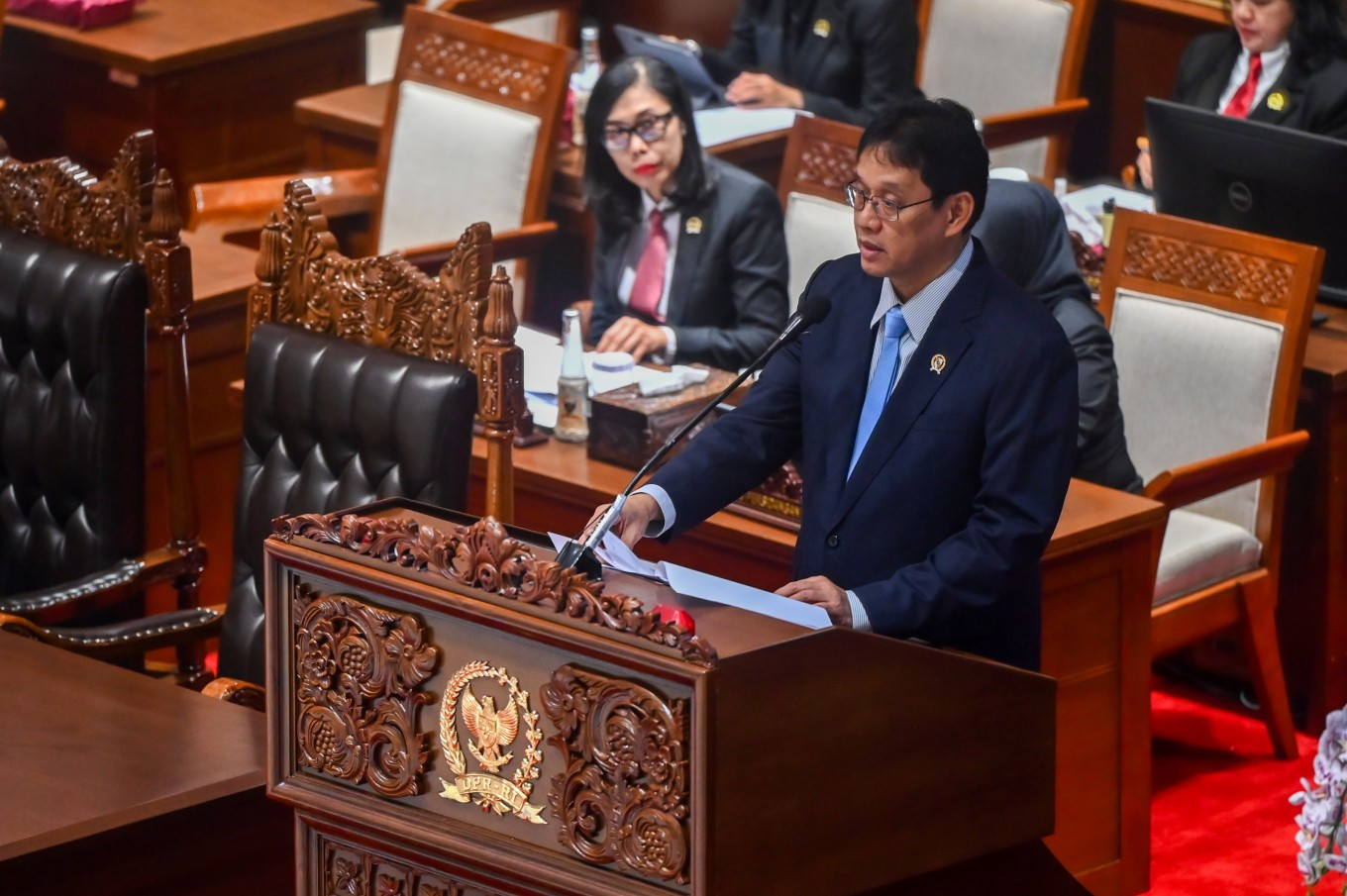 Finance Minister Purbaya Yudhi Sadewa delivers the government's final statement on behalf of President Prabowo Subianto on June 4 during a plenary session on amendments to the 2023 Financial Sector Development and Strengthening (P2SK) Law at the Senayan Legislative Complex in Central Jakarta. (Antara/Rivan Awal Lingga)
M
embers of House of Representatives’ Commission XI overseeing financial affairs have butted heads with Finance Minister Purbaya Yudhi Sadewa over the policy of excess cash (SAL) deposit in state-owned banks that the latter said functions as a liquidity injection to jumpstart the economy.
The commission’s deputy head Dolfie Othniel Fredric Palit, a seasoned lawmaker from the Indonesian Democratic Party of Struggle (PDI-P), stressed in a hearing with Purbaya on Wednesday that the maneuver required approval from the House, in accordance with the 2026 State Budget Law.
Purbaya rebuked on the basis that “it’s just cash management” but responded with “I’ll study it back” when Dolfie pressed ahead and insisted that such a move had to be discussed in an official meeting with the House first.
The maneuver in question is the decision the minister made in September last year when he moved the state’s excess cash from the government’s accounts in Bank Indonesia (BI) to deposits in select state-owned banks.
The law’s article 28 paragraph 2 stipulated that the House’s approval was needed to use the cash except for “cash management and to cover widening deficit”.
The move was one of the first things Purbaya did since taking up the minister’s mantle in early September under the conviction that banks lack liquidity leading to low loan growth. It started with a sum of Rp 200 trillion (US$11.1 billion) and after several withdrawals and redeposits, the number now rests at Rp 370 trillion.

Purbaya’s logic was that the banks would be forced to disburse more loans to make up for the deposit’s interest they have to pay, but they would be happy to receive it since the rate was set at just 80 percent of the BI Rate.