The Jakarta Post
Please Update your browser
Your browser is out of date, and may not be compatible with our website. A list of the most popular web browsers can be found below.
Just click on the icons to get to the download page.


Popular Reads
Top Results
No results found. Please check your search term and try again
Can't find what you're looking for?
View all search results
Popular Reads
Top Results
No results found. Please check your search term and try again
Can't find what you're looking for?
View all search resultsFresh push for asset forfeiture bill met with political concerns
Critics say the new commitment to pass the asset forfeiture bill may be driven by the government’s need to finance President Prabowo Subianto’s flagship programs, while also underlining concerns about the lack of transparency around the draft law.
Change text size
Gift Premium Articles
to Anyone
Share the best of The Jakarta Post with friends, family, or colleagues. As a subscriber, you can gift 3 to 5 articles each month that anyone can read—no subscription needed!
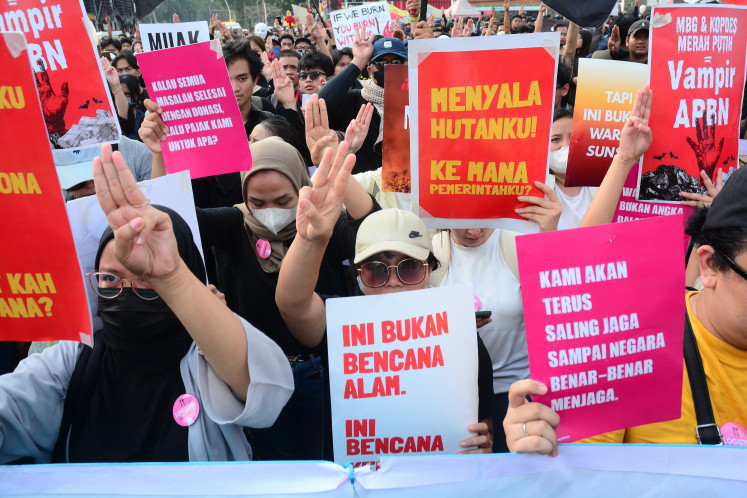
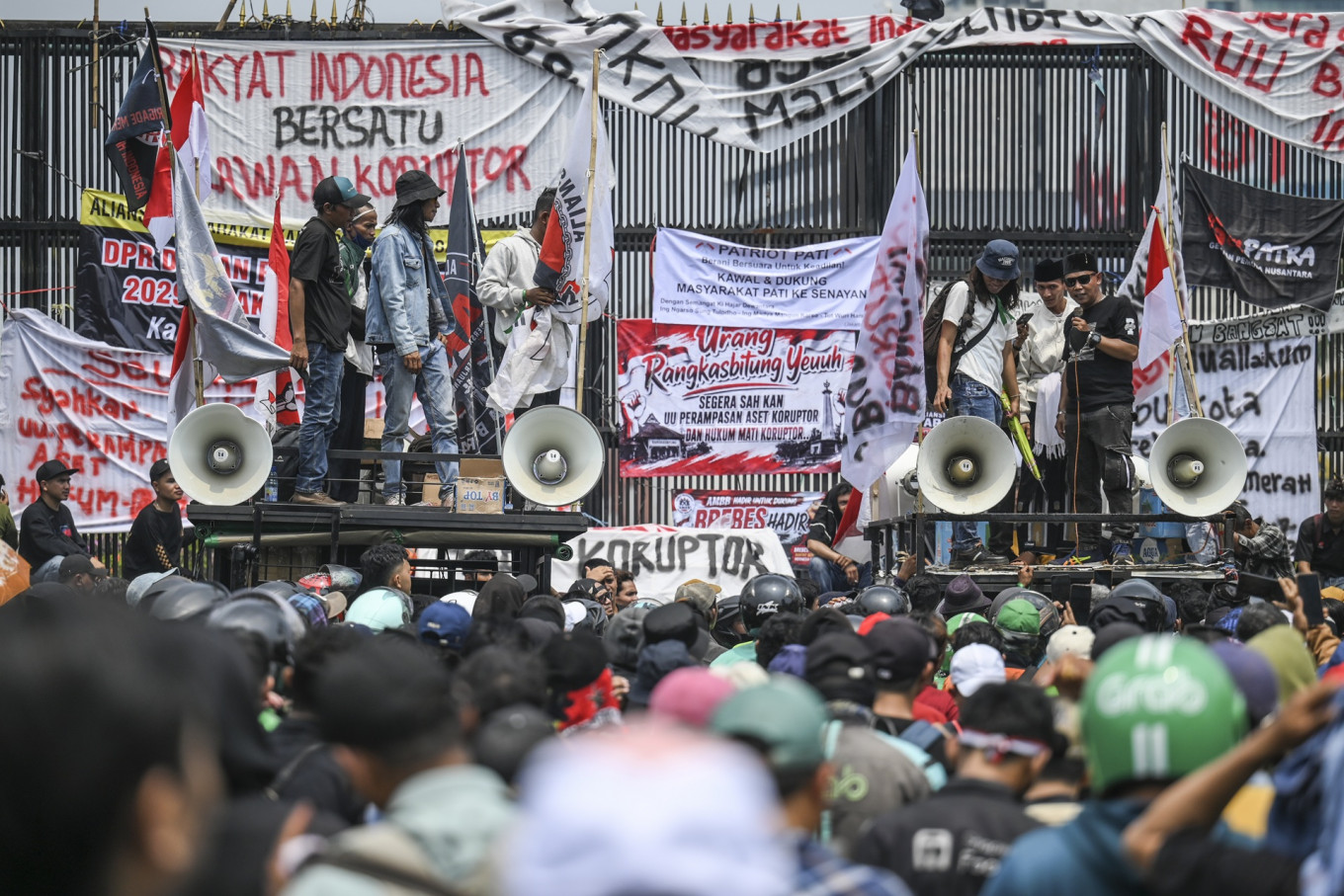 Rallygoers, led by members of the United Pati People's Alliance (AMPB), stage a protest on Aug. 27 in front of the Senayan legislative complex in Central Jakarta. They demand the passage of the long-awaited asset forfeiture bill and harsher punishment for corrupt officials. (Antara/Hafidz Mubarak A. )
T
he long-delayed asset forfeiture bill has recently taken an unexpected political turn with the House of Representatives promising to pass the legislation by the end of the year, citing growing public pressure.
But the pledge was met with caution amid concerns from observers, including those who once championed the draft law, that it is becoming increasingly tied to the government’s efforts to finance President Prabowo Subianto’s ambitious programs while burnishing the President’s antigraft credentials.
The latest shift came to the fore after the House, whose political parties have for years resisted passing the bill over perceived conflict of interest concerns, announced its commitment to push through the decades-old legislation by mid-December. The commitment was proclaimed by House Deputy Speaker Sufmi Dasco Ahmad of Prabowo’s Gerindra Party.
The announcement came following a protest on Aug. 27 spearheaded by the United Pati People’s Alliance (AMPB) to demand lawmakers expedite the bill deliberations. The group, which hails from Central Java’s Pati, rose to prominence through protests in 2025 against former regent and Gerindra politician Sudewo.
First proposed in 2008, the asset bill has languished for years, with an initial draft developed during former president Susilo Bambang Yudhoyono’s term failing to advance to the house. Another version was submitted to the legislature during the tenure of his successor, Joko “Jokowi” Widodo, but deliberations stalled without meaningful progress.

The renewed push for the bill could be driven partly by the government’s need to finance its costly ambitious programs, including Prabowo’s flagship free nutritious meal program that cost the state hundreds of trillions of rupiah.