The Jakarta Post
Please Update your browser
Your browser is out of date, and may not be compatible with our website. A list of the most popular web browsers can be found below.
Just click on the icons to get to the download page.


Popular Reads
Top Results
No results found. Please check your search term and try again
Can't find what you're looking for?
View all search results
Popular Reads
Top Results
No results found. Please check your search term and try again
Can't find what you're looking for?
View all search resultsHouse brushes off fears asset forfeiture bill could target rivals
Critics have urged lawmakers not to rush the bill through without “meaningful public participation,” warning that weak safeguards and oversight could allow the expanded asset seizure powers to be turned against political opponents and government critics.
Change text size
Gift Premium Articles
to Anyone
Share the best of The Jakarta Post with friends, family, or colleagues. As a subscriber, you can gift 3 to 5 articles each month that anyone can read—no subscription needed!
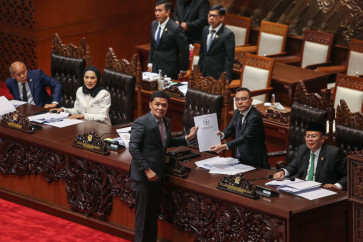
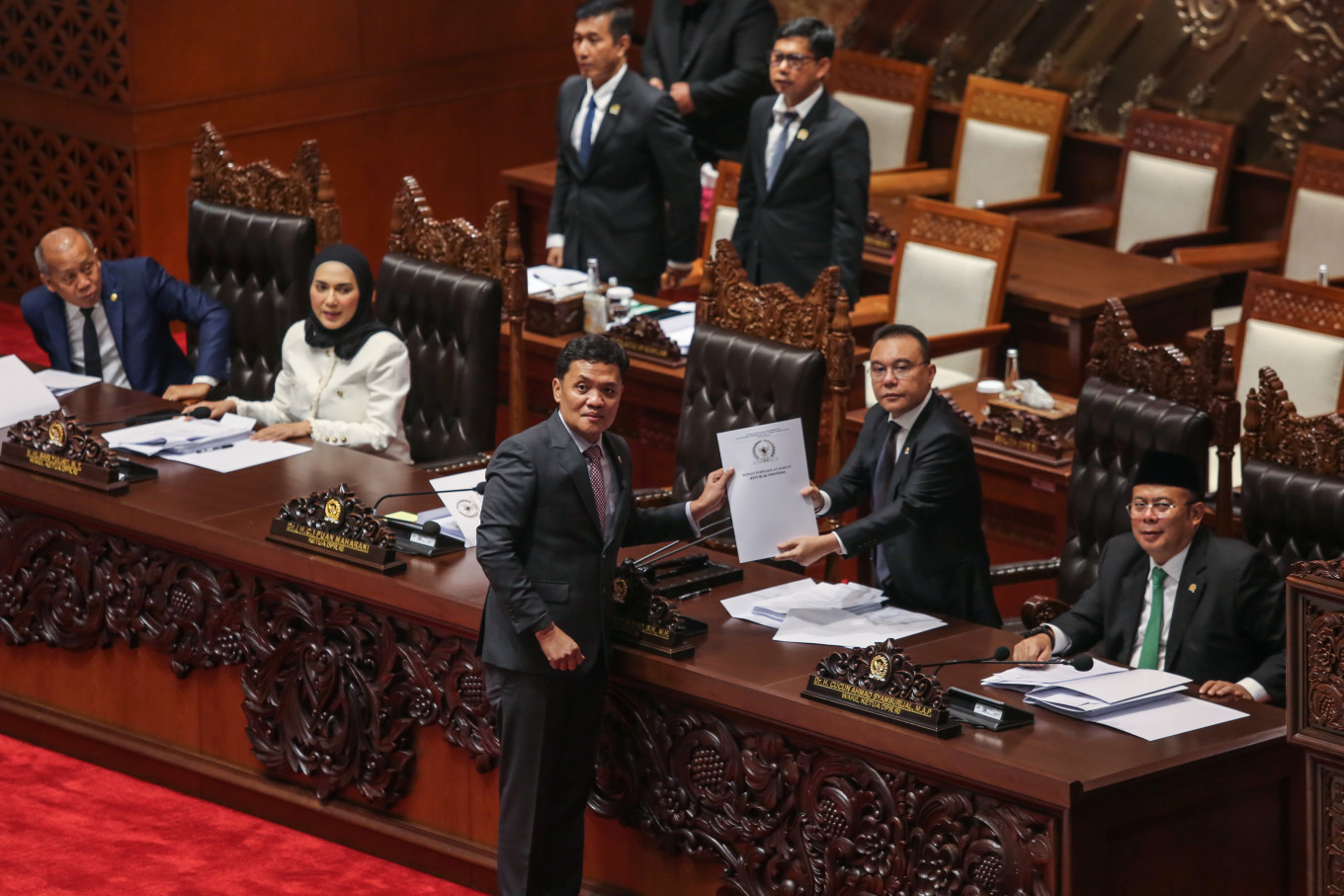 House Deputy Speaker Sufmi Dasco Ahmad (second right) receives a report on the progress of drafting the Asset Forfeiture Bill from Commission III chairman Habiburokhman (center) during the House’s third plenary session of the 2026–2027 legislative year on Aug. 27 at the Senayan Legislative Complex in Central Jakarta. Commission III said it expects to complete the bill by Dec. 15. (Antara/Asprilla Dwi Adha)
T
he House of Representatives has sought to allay concerns that the proposed Asset Forfeiture Bill could be used by the government to target political opponents under President Prabowo Subianto, as lawmakers reaffirmed their commitment to pass the long-stalled legislation by mid-December.
The reassurance came amid a renewed push by the government-controlled House to pass the bill by the end of this year, marking a sharp shift under President Prabowo Subianto from decades of legislative resistance to a measure that anti-graft activists have long argued could strengthen the fight against entrenched corruption.
The push, however, has divided civil society groups and antigraft activists. Some have urged lawmakers not to rush the bill through without “meaningful public participation,” warning that weak safeguards and oversight could allow the expanded asset seizure powers to be turned against political opponents and government critics.
Habiburokhman, chairman of the House’s Commission III, which oversees legal and security affairs, addressed the concerns while presiding over a hearing with the Indonesian Advocates Association (Peradi) on Monday as the commission continued to gather input on the bill.
Read also: Fresh push for asset forfeiture bill met with political concerns
A politician from Prabowo’s Gerindra Party who had previously served as an opposition lawmaker, Habibburokhman acknowledged the risk of laws being used as political tools. But he insisted that the current administration had shown a stronger commitment to democratic principles.

“I was also in the opposition before becoming a supporter of the government. It is extremely painful when the law becomes a political tool, a tool of power,” he said.