The Jakarta Post
Please Update your browser
Your browser is out of date, and may not be compatible with our website. A list of the most popular web browsers can be found below.
Just click on the icons to get to the download page.


Popular Reads
Top Results
No results found. Please check your search term and try again
Can't find what you're looking for?
View all search results
Popular Reads
Top Results
No results found. Please check your search term and try again
Can't find what you're looking for?
View all search resultsThe future of development finance is not primarily about money
For middle-income countries like India, accessing knowledge and technology is now a bigger challenge than raising capital, which suggests that MDBs must rethink their operating model.
Change text size
Gift Premium Articles
to Anyone
Share the best of The Jakarta Post with friends, family, or colleagues. As a subscriber, you can gift 3 to 5 articles each month that anyone can read—no subscription needed!
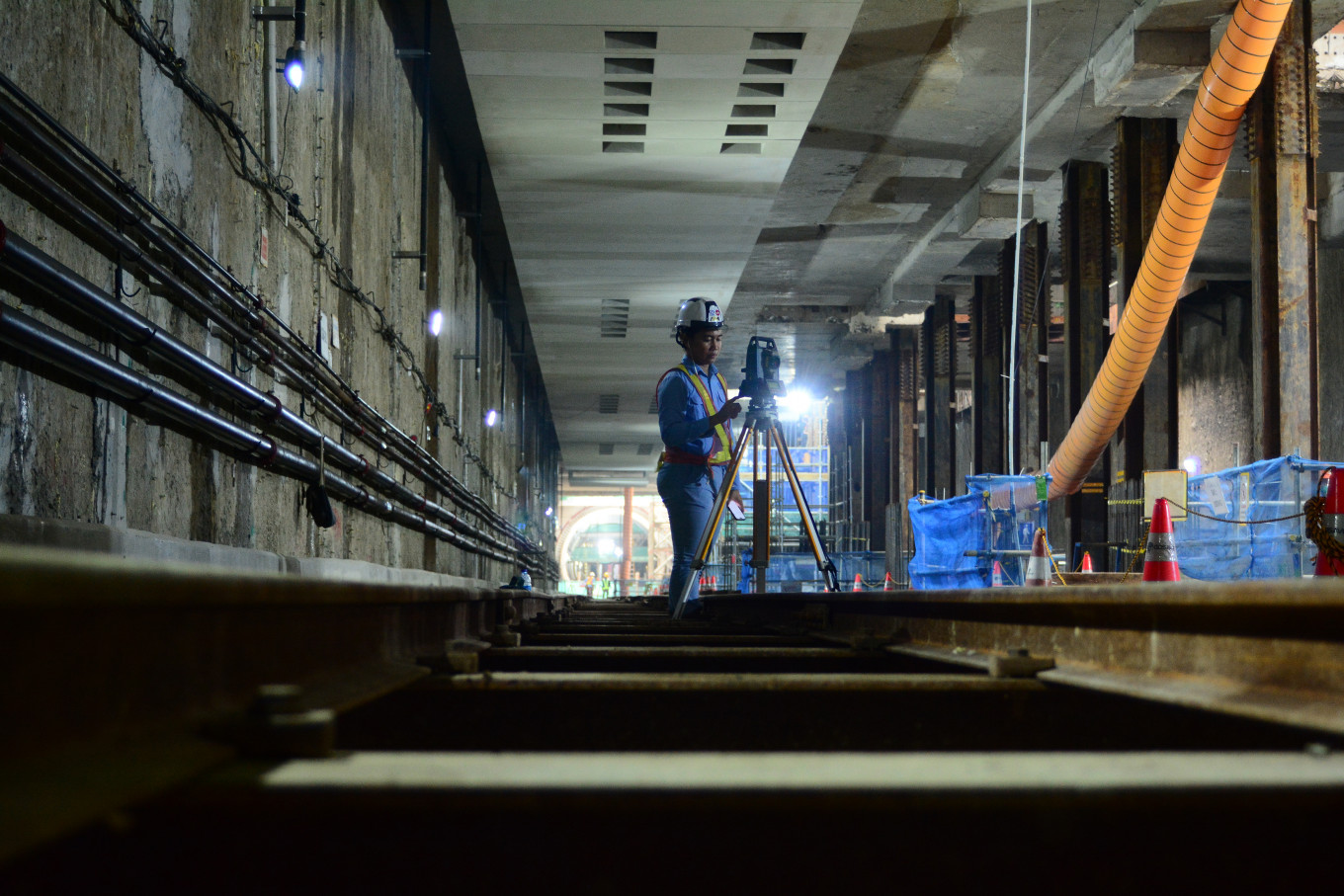 A surveyor inspects a construction site in Central Jakarta on Nov. 27, 2025, part of contract package (CP) 202 in Phase 2A of the MRT Jakarta project. (The Jakarta Post/Iqro Rinaldi)
M
ultilateral development banks (MDBs), chief among them the World Bank, were established to provide capital to developing countries that couldn’t raise it at home or on affordable terms abroad. For decades, they filled that gap. But as more countries move from low- to middle-income status (according to the World Bank’s classification) and the global financial environment becomes more challenging, the role of MDBs must evolve, too.
Consider India, where there is no longer an appreciable gap for MDBs to fill.
In 1991, according to our calculations, external finance covered around 15 percent of the central government’s fiscal deficit. By 2025-2026, that figure had fallen to 1.5 percent. In the intervening years, the country’s capital markets have deepened significantly to the point that domestic market borrowing now covers more than 70 percent of the deficit.
In this, India is simply a prominent example of a more general rule: As middle-income countries develop more sophisticated financial systems, the case for MDB finance grows progressively weaker. The World Bank does not lend to middle-income countries with the long maturities and heavily subsidized rates provided to low-income countries but on close to commercial terms.
At a time when rising global interest rates and depreciating local currencies have made dollar-denominated external debt more expensive to service, price is no longer the chief attraction of MDB finance. If they are to retain or even strengthen their relevance to middle-income countries, MDBs need to rethink their proper role.
India’s experience suggests they should be primarily in the business of providing knowledge, not capital.

As the world’s fastest-growing major economy, India has changed its development priorities substantially over the past generation, with the goal of becoming a developed country by 2047.