The Jakarta Post
Please Update your browser
Your browser is out of date, and may not be compatible with our website. A list of the most popular web browsers can be found below.
Just click on the icons to get to the download page.


Popular Reads
Top Results
No results found. Please check your search term and try again
Can't find what you're looking for?
View all search results
Popular Reads
Top Results
No results found. Please check your search term and try again
Can't find what you're looking for?
View all search resultsThree fault lines in Indonesia’s financial governance
The amendments reveal a broader shift toward a more coordinated and state-directed model of financial governance.
Change text size
Gift Premium Articles
to Anyone
Share the best of The Jakarta Post with friends, family, or colleagues. As a subscriber, you can gift 3 to 5 articles each month that anyone can read—no subscription needed!
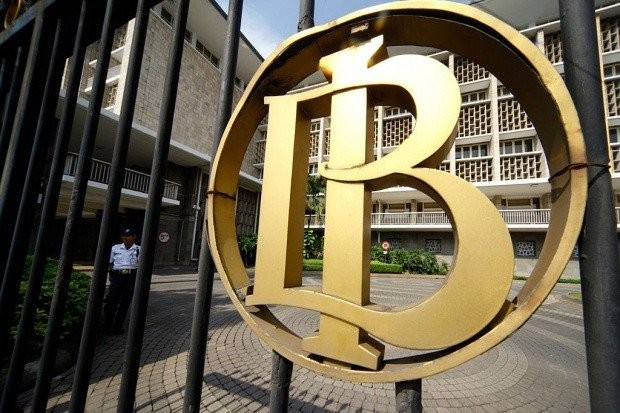 The Bank Indonesia (BI) logo adorns the gate of the central bank's headquarters in Jakarta. (Antara/File)
E
nacted on June 4, the revised Financial Sector Development and Strengthening (P2SK) Law goes well beyond addressing its original Constitutional Court ruling. The final legislation introduces a range of changes from parliamentary evaluation mechanisms for Bank Indonesia (BI), the Financial Services Authority (OJK) and the Deposit Insurance Corporation (LPS) to Danantara-linked financing instruments that collectively reshape Indonesia’s financial governance framework.
Individually, the amendments appear technical and defensible. Collectively, however, they reveal a broader shift toward a more coordinated and state-directed model of financial governance. The significance of this shift only became fully apparent late in the legislative process, raising questions about the adequacy of public disclosure.
Whether this transition strengthens or weakens Indonesia’s financial system will depend on how policymakers manage three interconnected fault lines embedded in the new framework: independence versus control, stability versus growth and market versus state.
The first fault line concerns the balance between institutional autonomy and democratic oversight.
Indonesia’s post-crisis financial architecture was deliberately designed to insulate key economic decisions from short-term political pressures. The operational independence of BI, the supervisory autonomy of OJK and the technocratic role of LPS were intended to strengthen policy credibility and reduce the risk of politically motivated interventions.
The revised P2SK Law has altered the environment in which they operate, even if it has not formally dismantled existing arrangements. Expanded parliamentary evaluation mechanisms over BI, OJK and LPS may strengthen democratic accountability. Yet, they also raise questions about how institutional independence will function in practice.

This concern echoes a long-standing insight in monetary economics. Stanley Fischer, among others, argued that central bank independence ultimately serves as a safeguard against fiscal dominance, the tendency for short-term fiscal considerations to influence monetary policy.