The Jakarta Post
Please Update your browser
Your browser is out of date, and may not be compatible with our website. A list of the most popular web browsers can be found below.
Just click on the icons to get to the download page.


Popular Reads
Top Results
No results found. Please check your search term and try again
Can't find what you're looking for?
View all search results
Popular Reads
Top Results
No results found. Please check your search term and try again
Can't find what you're looking for?
View all search resultsPLN, don't put all your watts in one basket
When a single broken wire darkens five provinces, the problem isn't the weather, it's an outdated, centralized grid architecture. Indonesia must ditch its fragile reliance on mega-scale coal and embrace decentralized renewables before the next inevitable storm cuts the power again.
Change text size
Gift Premium Articles
to Anyone
Share the best of The Jakarta Post with friends, family, or colleagues. As a subscriber, you can gift 3 to 5 articles each month that anyone can read—no subscription needed!
 Set as preferred source
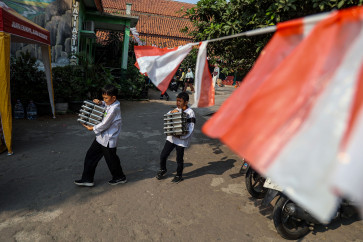
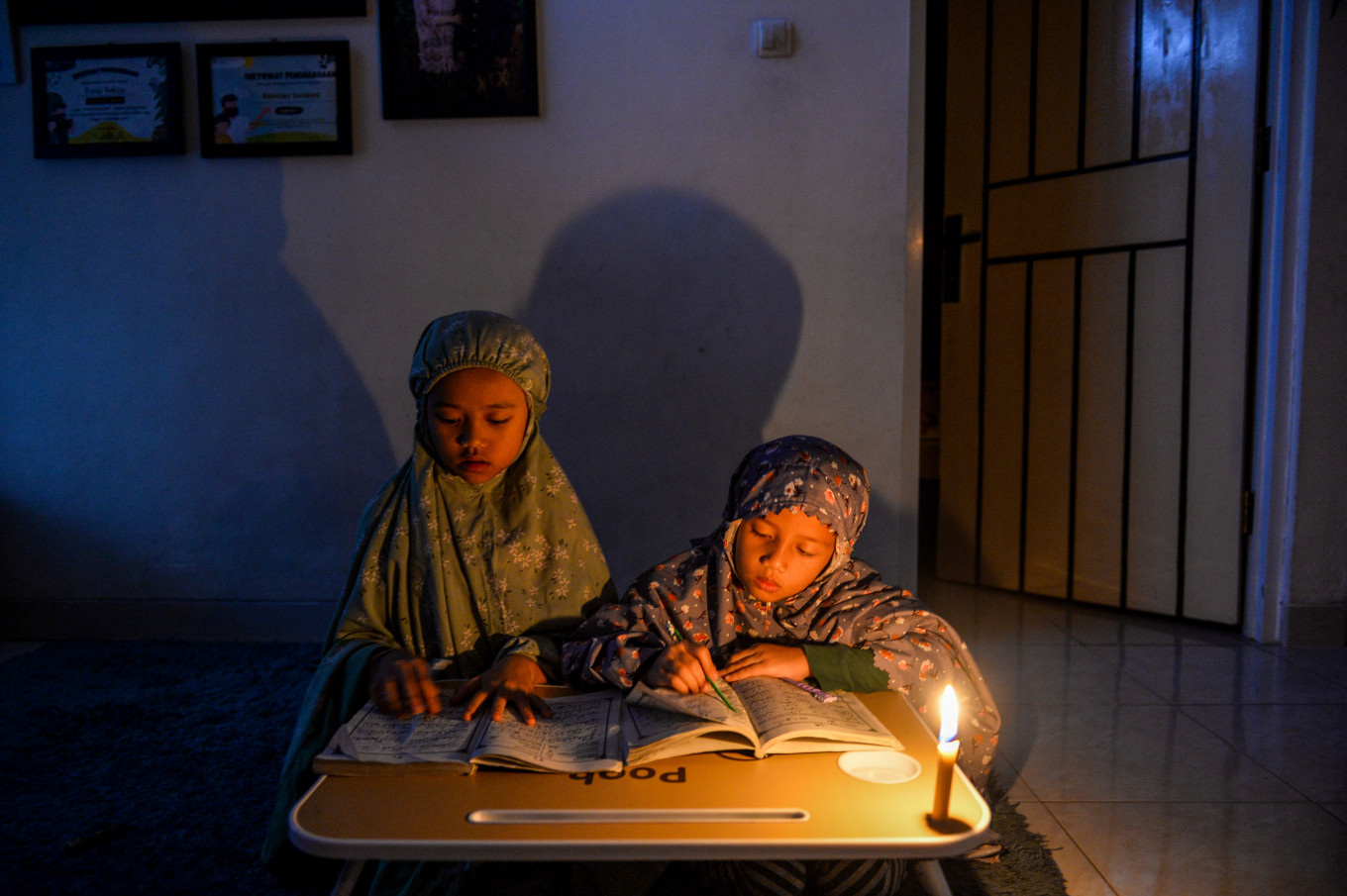 Night study: Two children recite the Quran on June 19, 2026 by candlelight during a scheduled power outage in Cinunuk in West Java. PLN West Java Distribution Main Unit (UID Jawa Barat) implemented limited load management through rolling blackouts in several areas of Greater Bandung due to technical operational issues at power plants and disruptions affecting two major generating units. (Antara/Raisan Al Farisi)
O
n the evening of May 22, a high-voltage transmission line in Jambi failed during severe weather. The fault rippled outward: frequency collapsed, generators tripped to protect themselves, and the grid shed load to save its machines. By 6:44 p.m., the lights were out from Jambi to Aceh. Five provinces, 13 million customers, undone by a single wire.
Lest this be dismissed as a freak accident, Java provided its own warning throughout June. Rolling blackouts marched across the island, cutting power in three- to four-hour blocks for two weeks. The official explanation moved from denial, blaming technical faults at two independent power plants—to an admission: The system had run short of the medium-rank coal its plants require.
Why a coal-exporting giant should run short of fuel is an indictment of regulatory design. A domestic market obligation price capped at US$70 a tonne, well below the global benchmark, leaves miners little incentive to supply state electricity company PLN. Tightened production quotas left them little room to do so anyway. The grid was undone not by scarcity, but by artificial pricing and rules. Yet on June 18, with the lights still flickering, the government reappointed PLN's president director to a fresh term.
PLN's engineers restored the line within hours, and the police found no sabotage. But the weather is not the lesson; the architecture is.
A centralized grid relies on a few large plants pushing power through long, high-capacity arteries. While efficient for early development, it is predictably brittle: when one artery fails, the fault propagates. The interconnection that lets Sumatra share power island-wide is exactly what allowed a Jambi fault to travel to Aceh. Crucially, the centralized coal units took 15 to 20 hours to recover, while flexible hydro and gas came back online in a fraction of that time.
Now imagine a different archipelago. If a meaningful share of demand were met locally via rooftop solar on factories, community solar, and solar-plus-battery microgrids at critical facilities, those pockets would have stayed online when the 275-kilovolt backbone fell. A distributed system fails in fragments, not cascades.

Similarly, a fleet of distributed solar paired with storage would have been indifferent to Java’s empty coal bunkers. Sunlight arrives on no ship, clears no port and answers to no domestic market obligation. Where Sumatra exposed the fragility of a single wire, Java exposed the vulnerability of a single fuel. The answer to both is many small, locally sited sources.