The Jakarta Post
Please Update your browser
Your browser is out of date, and may not be compatible with our website. A list of the most popular web browsers can be found below.
Just click on the icons to get to the download page.


Popular Reads
Top Results
No results found. Please check your search term and try again
Can't find what you're looking for?
View all search results
Popular Reads
Top Results
No results found. Please check your search term and try again
Can't find what you're looking for?
View all search resultsReengaging Myanmar: Why ASEAN must move beyond Naypyidaw
ASEAN can no longer afford to mistake the military junta in Naypyidaw as Myanmar: Doing so ignores a profound transformation where alternative governance is already becoming a lived reality.
Change text size
Gift Premium Articles
to Anyone
Share the best of The Jakarta Post with friends, family, or colleagues. As a subscriber, you can gift 3 to 5 articles each month that anyone can read—no subscription needed!
 Set as preferred source
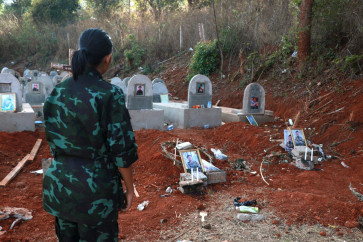
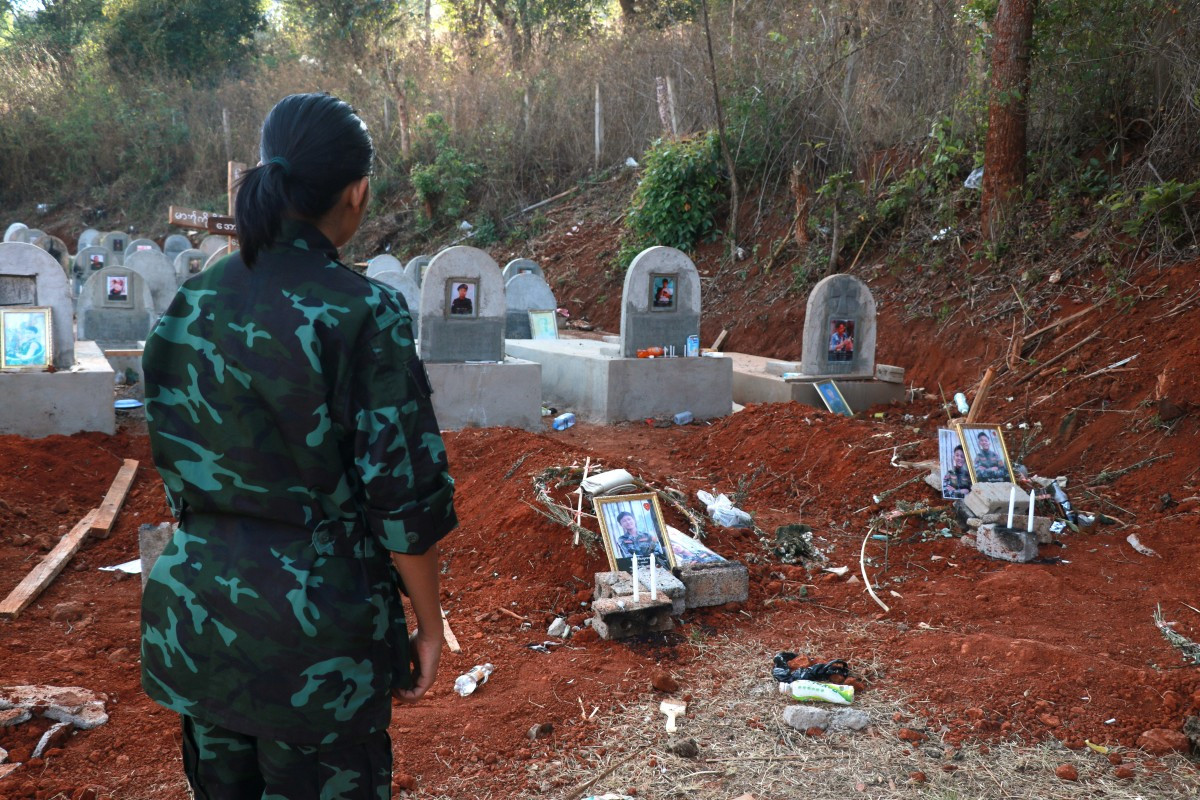 A member of the Urban Revolution Front (URF) stands in a cemetery on March 6, 2025, before the gravestones of two comrades killed in a Myanmar military drone attack in a forest near Moe Bye, eastern Shan state. (AFP/Stringer)
T
he Myanmar that ASEAN is attempting to reengage is no longer the state that existed before the 2021 coup. For decades, regional diplomacy operated on the assumption that influence in Naypyidaw equated to influence over Myanmar as a whole. Five years later, that assumption is increasingly untenable.
Across much of the country, ethnic revolutionary organizations, resistance movements and local administrations are not only challenging military rule but also constructing alternative systems of governance. As several ASEAN member states renew engagement with Myanmar’s military authorities in a bid for stability, they risk overlooking a profound political transformation unfolding far beyond the capital.
This debate was recently sharpened by an exchange in The Jakarta Post following a May 15 op-ed titled “Normalizing Myanmar’s junta will not bring peace”, which drew a formal response from the Myanmar embassy on June 20.
This back-and-forth reflects a central dilemma in ASEAN diplomacy: whether engagement with the State Administration Council (SAC) remains a pragmatic necessity or if it is sliding into a tacit normalization of military rule as Myanmar’s default political order. That distinction is not semantic; it goes to the heart of ASEAN’s institutional credibility.
Proponents of renewed engagement point to Myanmar’s severe regional spillovers. For Thailand and other neighboring states, the crisis poses an immediate security threat. Proliferating cyber scam operations, human trafficking, mass displacement and armed cross-border skirmishes continue to strain border management. Thousands of individuals remain trapped in scam compounds along the Myanmar-Thailand border despite repeated crackdowns, underscoring how fragmented authority enables transnational organized crime.
Consequently, the critical question is not whether ASEAN should engage Myanmar, but whether that engagement is shifting toward the normalization of a military authority that no longer exercises comprehensive sovereign control.

Today, Myanmar is defined by a deepening humanitarian crisis, fragmented governance and expanding resistance-controlled territories. While the SAC retains a diplomatic presence and coercive power, its territorial and administrative reach has significantly eroded.