The Jakarta Post
Please Update your browser
Your browser is out of date, and may not be compatible with our website. A list of the most popular web browsers can be found below.
Just click on the icons to get to the download page.


Popular Reads
Top Results
No results found. Please check your search term and try again
Can't find what you're looking for?
View all search results
Popular Reads
Top Results
No results found. Please check your search term and try again
Can't find what you're looking for?
View all search resultsThe Indonesian hex: When political rhetoric rewrites reality
The administration has erected a political hologram over Indonesia’s economic landscape.
Change text size
Gift Premium Articles
to Anyone
Share the best of The Jakarta Post with friends, family, or colleagues. As a subscriber, you can gift 3 to 5 articles each month that anyone can read—no subscription needed!
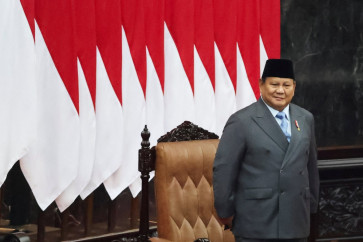
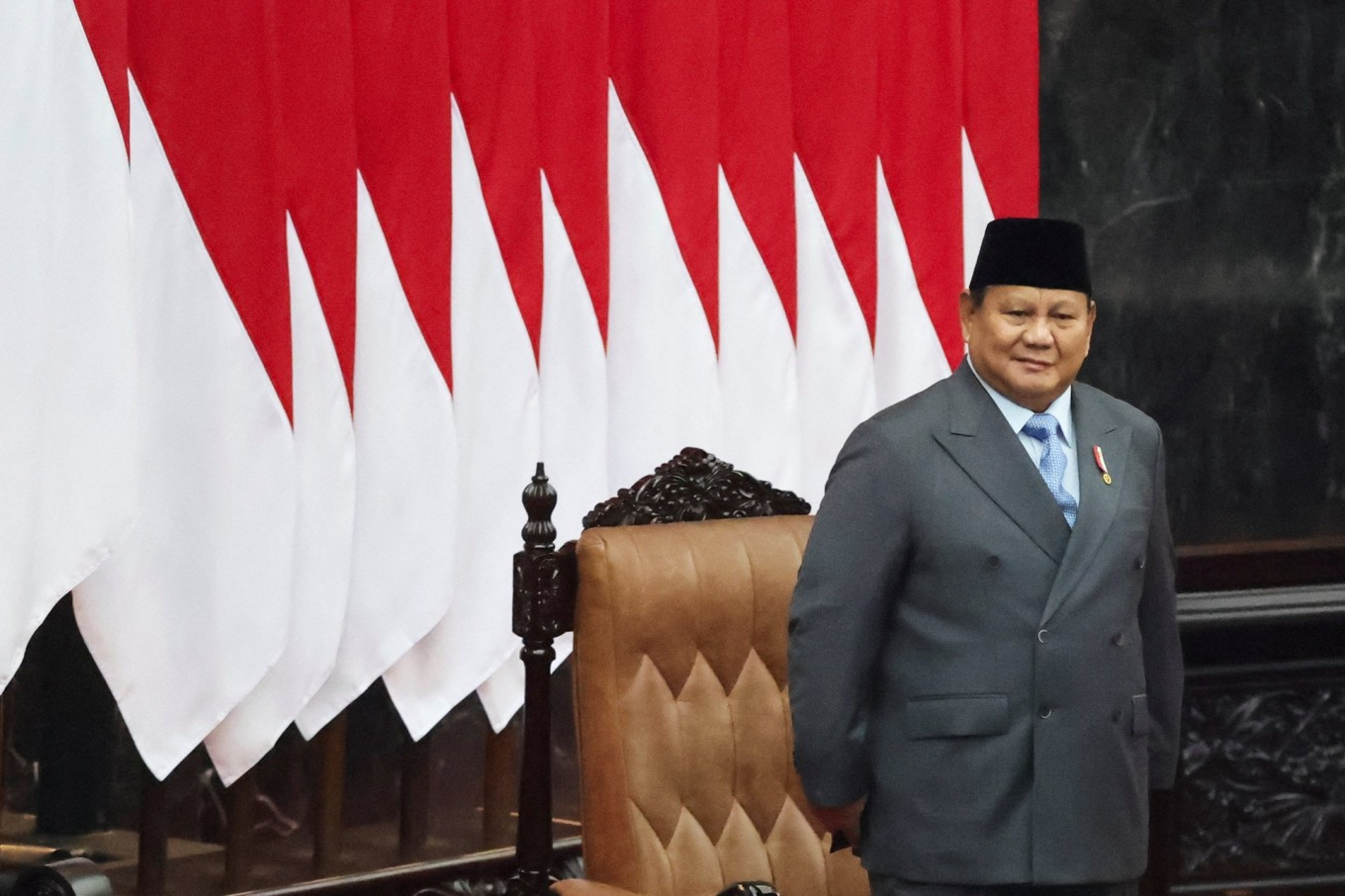 President Prabowo Subianto looks on as he arrives on Aug. 14 at the Senayan Legislative Complex in Central Jakarta for the People's Consultative Assembly (MPR) plenary meeting, in which he delivered the State of the Nation address and the 2027 state budget proposal. (Reuters/Stringer)
I
n the current era of the cinematic multiverse, President Prabowo Subianto, perhaps feeling like Wanda Maximoff casting the reality-warping "Hex" over Westview in WandaVision, has created his own political universe.
From the podium of the House of Representatives building, he depicts an Indonesia vast, prosperous and fundamentally detached from the economic reality lived by ordinary citizens. In his nationally televised State of the Nation speech before legislators on Aug. 14, he rewrote the reality of Ibu Susanah, a housewife from Bogor, West Java. From the podium, he introduced her as a daily laborer peeling onions for an astronomical wage of Rp 700,000 (US$39.7) per kilogram.
In reality, however, Susanah earns just Rp 700 per kilogram, and she isn't even an onion peeler. She works part-time sewing scrap cloth and washing food trays to make ends meet.
Much like Wanda’s Hex, which forced real townspeople to play scripted, happy roles in a retro-sitcom fantasy to cover up grief and structural decay, the administration has erected a political hologram over Indonesia’s economic landscape.
To maintain the illusion of economic rebirth, the administration points to mega-initiatives as proof of structural transformation. First is the flagship free nutritious meal program. Framed as a historic welfare leap aimed at eradicating malnutrition, its public rollout has become a case study in fiscal strain, waste of funds and corruption. To fund the program's massive budget, exceeding hundreds of trillions of rupiah, local municipalities have been obliged to slash budgets for essential public infrastructure, road repairs and regional economic development just to cover daily catering logistics.
Simultaneously, the administration boasts of launching over 80,000 units of Red and White Cooperatives, presenting it as a grassroots economic revolution under Article 33 of the Constitution. Yet, state-mandated cooperatives historically suffer high failure rates due to weak local governance, lack of market demand and severe capital mismanagement. Mandating tens of thousands of cooperatives overnight creates bureaucratic entities on paper, but does not magically build local purchasing power or competitive agricultural supply chains.

Then comes state asset fund Danantara’s aggressive campaign to "streamline" state-owned enterprises (SOEs). The speech praised Danantara for slashing a bloated network of 1,044 state entities down by 250 enterprises, with targets to close up to 750 non-productive subsidiaries. On paper, consolidating state entities and touting Rp 200 trillion in projected dividend targets sounds like corporate efficiency. But stripping corporate layers without implementing independent regulatory oversight merely centralizes control inside a black box.