The Jakarta Post
Please Update your browser
Your browser is out of date, and may not be compatible with our website. A list of the most popular web browsers can be found below.
Just click on the icons to get to the download page.


Popular Reads
Top Results
No results found. Please check your search term and try again
Can't find what you're looking for?
View all search results
Popular Reads
Top Results
No results found. Please check your search term and try again
Can't find what you're looking for?
View all search resultsAnalysis: The threshold fight: What 5 percent debate means for 2029
Change text size
Gift Premium Articles
to Anyone
Share the best of The Jakarta Post with friends, family, or colleagues. As a subscriber, you can gift 3 to 5 articles each month that anyone can read—no subscription needed!
 Set as preferred source
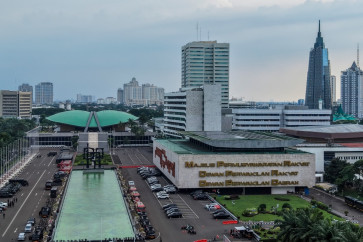
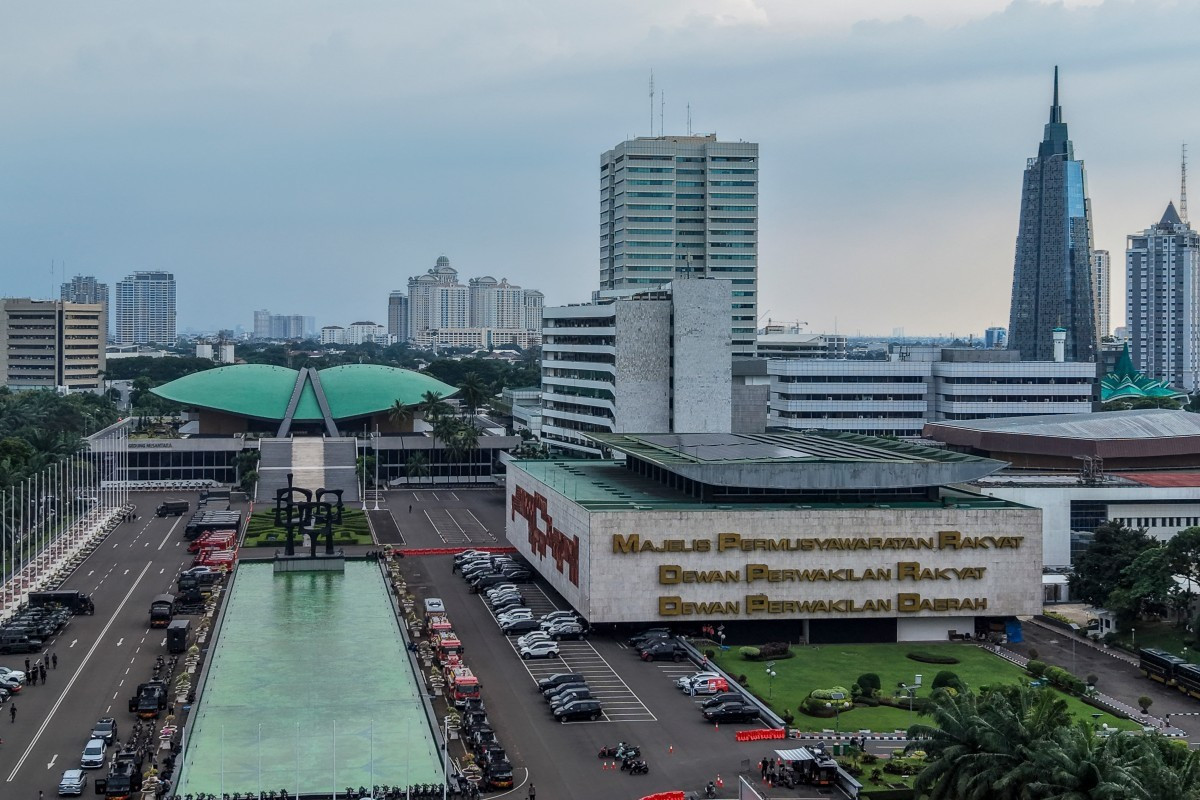 The Senayan legislative complex in Central Jakarta is seen in this picture taken on May 1. (AFP/Bay Ismoyo)
T
he House of Representatives is entering its most consequential electoral reform since 2017. As Commission II drafts a new Election Law for 2029, the fault line is already clear: the legislative threshold.
This month, seven parties in President Prabowo Subianto's governing coalition, Gerindra, Golkar, the Prosperous Justice Party (PKS), National Mandate Party (PAN), NasDem, the Democratic Party and the National Awakening Party (PKB), met behind closed doors and agreed to raise the threshold from 4 to 5 percent. Commission II has confirmed this consensus will be the baseline for formal drafting. The Indonesian Democratic Party of Struggle (PDI-P), the only party in the House not in the coalition but which does not see itself as an opposition force, wavers between supporting and rejecting the plan.
On the other side are parties with no seats in the House, the PPP, the Labor Party, Ummat, and the GKSR coalition. They are pushing the opposite way. The GKSR has proposed three alternatives: abolish the threshold, replace it with a 3.5 percent district-based threshold, or keep a national threshold but cut it to 1 percent. Labor wants 1 percent as a ceiling to limit wasted votes. The clash itself is not new. What is new is the legal context.

The case for simplification: For the coalition parties, the argument is institutional. With eight parties in the current House, building majorities for legislation and budgets is already complex. A higher threshold, they argue, forces consolidation before elections rather than after, pushing parties toward real national infrastructure instead of personality vehicles that surface only at election time. It also guards against hyper-fragmentation (a 10-to-12-faction House would make committee work unworkable) and filters out "rental parties" that exist mainly to be bought into coalitions. In this view, the threshold is legitimate political engineering for a more governable democracy.
The case against: The small parties' argument is about representation and wasted votes, and the numbers are concrete. In 2024, the PPP won 5.9 million votes, 3.87 percent nationally, but got zero seats because of the 4 percent rule. At 5 percent, researchers estimate 15–20 million votes could be discarded in 2029. Their critique has three strands.
First, proportionality: Indonesia's open-list system is supposed to link votes to seats, and a high national threshold breaks that link, a vote valid at the ballot box but worthless in seat allocation undermines the principle of equal vote value.

Second, barriers to entry: A 5 percent national bar demands enormous financial and organizational capital, effectively locking out parties rooted in labor, environmental or regional interests even where they are genuinely strong in specific provinces.