The Jakarta Post
Please Update your browser
Your browser is out of date, and may not be compatible with our website. A list of the most popular web browsers can be found below.
Just click on the icons to get to the download page.


Popular Reads
Top Results
No results found. Please check your search term and try again
Can't find what you're looking for?
View all search results
Popular Reads
Top Results
No results found. Please check your search term and try again
Can't find what you're looking for?
View all search resultsCan young Indonesians still afford home?
Priced out of traditional landed homes, young Indonesians aren't abandoning their ownership dream—they’re rewriting the rules through modern co-living to protect both their savings and their time.
Change text size
Gift Premium Articles
to Anyone
Share the best of The Jakarta Post with friends, family, or colleagues. As a subscriber, you can gift 3 to 5 articles each month that anyone can read—no subscription needed!
 Set as preferred source
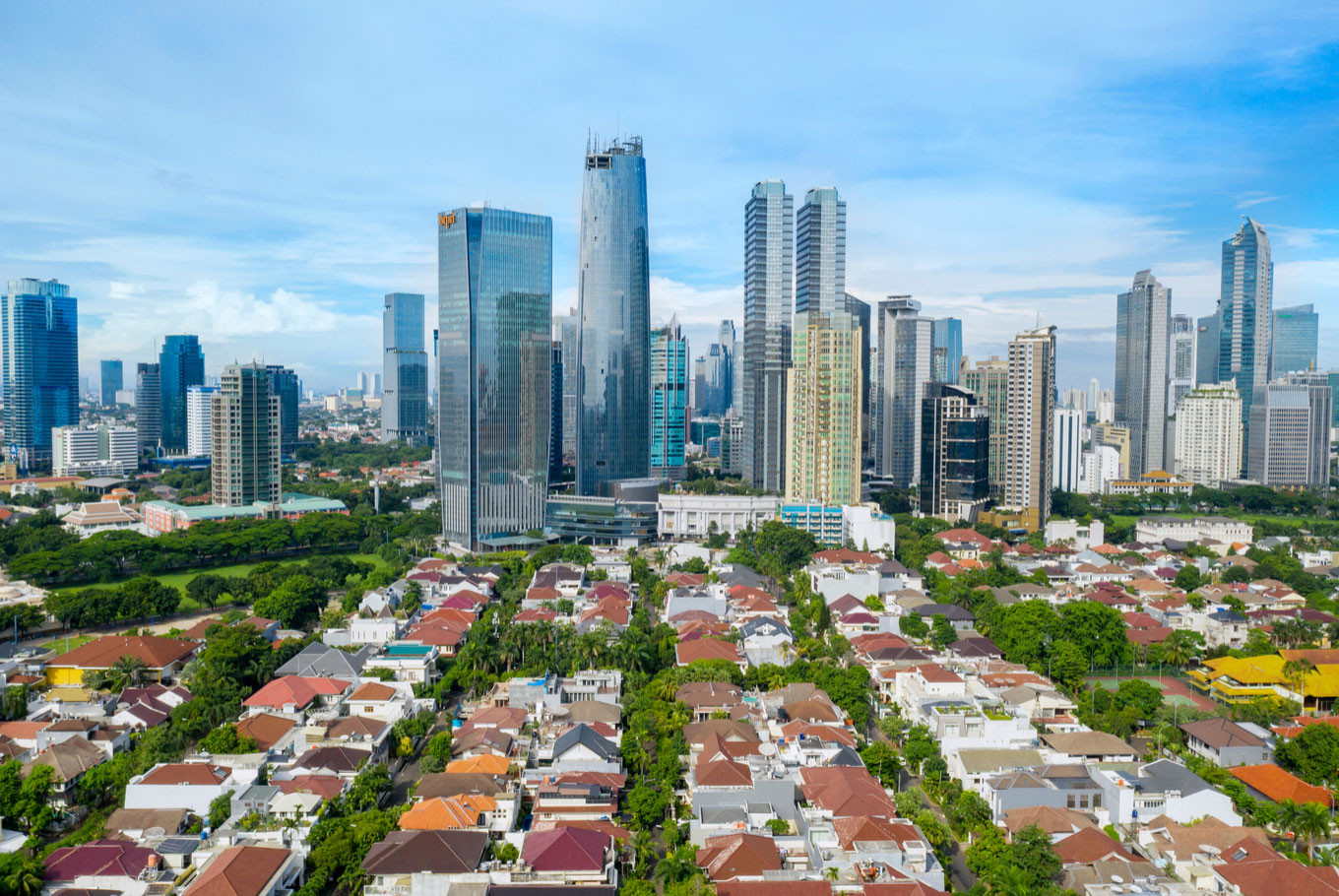 The new towns triggered the property market in the Greater Jakarta as an alternative for most of the middle and lower middle-class. (Shutterstock.com/Creativa Images)
L
iving and working across Asia—including Indonesia—reveals a housing conversation radically different from my years in Paris, Berlin, and Singapore. In those dense global capitals, "home" usually means an apartment in a multi-story development due to acute land constraints.
In Indonesia, the concept of rumah (home) carries far deeper cultural resonance. For generations, a private landed home with a terrace and dedicated parking space has represented far more than a simple real estate asset. It stands as an enduring milestone of adulthood, social stability, and personal success.
Yet Indonesia has reached an urgent socioeconomic crossroads. For the ambitious Gen Z and Millennial workforce powering the nation’s growth, the cherished dream of property ownership is colliding directly with harsh affordability realities. Public debate frequently reduces this dilemma to a blunt binary: purchase an affordable house far out in the periphery, or rent an apartment closer to the city center. In practice, the calculation proves vastly more layered.
The true cost of shelter extends far beyond its sticker price. It encompasses the hours surrendered to exhaustive daily commutes, the physical toll of transit, and the personal opportunities either unlocked or foreclosed by geographic location.
This struggle does not unfold in isolation. Across Asia’s major metropolitan centers, prolonged renting has become the standard response to soaring residential values. The Urban Land Institute (ULI) Asia Pacific 2025 Home Attainability Index revealed that only seven of 51 surveyed regional markets met the benchmark for attainable homeownership—defined as a median residential purchase price under five times median annual household earnings.
Indonesia reflects this regional strain with acute intensity. In Jakarta, the ULI index established that median landed home prices exceed 22 times average household income, compared to 8.8 times for vertical units.

Compounding this pricing hurdle is relentless urbanization. As Jakarta anchors national economic activity, rural and regional youth continue to arrive in search of upward mobility. ULI estimates the metropolis requires 800,000 additional units to absorb incoming migrants, even as 63 percent of existing dwellings fall below standard quality thresholds.
Proprietary 2025 Cove research highlights that 68 percent of Gen Z and Millennial residents across Greater Jakarta (Jabodetabek) view prevailing property prices as prohibitive. Yet this financial barrier yields an intriguing paradox: Young Indonesians have not abandoned their aspiration to own property.
Roughly 80 percent of survey respondents maintain steady optimism that they will secure a home within the coming decade. The underlying ambition remains intact; what is fundamentally transforming is the timeline and pathway required to get there.
For an unassisted professional in their late 20s, accessible landed homes sit almost exclusively inside distant satellite towns. While peripheral mortgages look viable on paper, they demand a heavy physical toll: two to four hours squandered daily in gridlock. Meanwhile, our data indicates that 15 to 30 minutes represents the acceptable commute threshold for Jakarta’s emerging professionals.
Trading lower rent for grinding transit fees and chronic exhaustion is a losing bargain. Time has emerged as the young professional's most precious asset. Consequently, the traditional kost system has asserted itself as an indispensable pillar of metropolitan life, granting independent, centrally positioned living without consuming daily energy.
Typically configured as low-rise neighborhood compounds housing 10 or more private rooms, the kost bridges the gap between costly isolated apartments and remote landed houses. It provides budget-conscious central shelter wrapped in communal familiarity. It is not an inferior substitute for a condo, but rather an organic Indonesian innovation answering density, financial scarcity, and proximity demands.
Today, expectations are shifting again. Modern urban tenants increasingly demand privacy, contemporary aesthetics, comprehensive security, and thoughtful facilities. This appetite has sparked the professionalization of the sector into modern co-living: serviced properties offering fully equipped communal kitchens, co-working lounges, landscaped rooftops, and on-site hospitality.
Even as coliving fees rival entry-level suburban mortgage installments, occupancy across our portfolio averages 85 percent. Rather than picking between rigid long-term debt or sub-par accommodations, residents embrace an empowering alternative: living exceptionally well today while methodically compounding resources for tomorrow.
The housing dream is not dying; it is evolving into a more flexible, non-linear journey that honors both future security and present vitality.
***
The writer is cofounder and CEO of Cove.