The Jakarta Post
Please Update your browser
Your browser is out of date, and may not be compatible with our website. A list of the most popular web browsers can be found below.
Just click on the icons to get to the download page.


Popular Reads
Top Results
No results found. Please check your search term and try again
Can't find what you're looking for?
View all search results
Popular Reads
Top Results
No results found. Please check your search term and try again
Can't find what you're looking for?
View all search resultsFrans Seda, finance minister during a difficult period
Frans Seda played a pivotal role in navigating Indonesia’s economic crisis from 1965 to 1966. As finance minister, he helped restore stability amid hyperinflation, while his wider career reflected a lifelong commitment to Indonesia’s political, economic and social development.
Change text size
Gift Premium Articles
to Anyone
Share the best of The Jakarta Post with friends, family, or colleagues. As a subscriber, you can gift 3 to 5 articles each month that anyone can read—no subscription needed!
 Set as preferred source
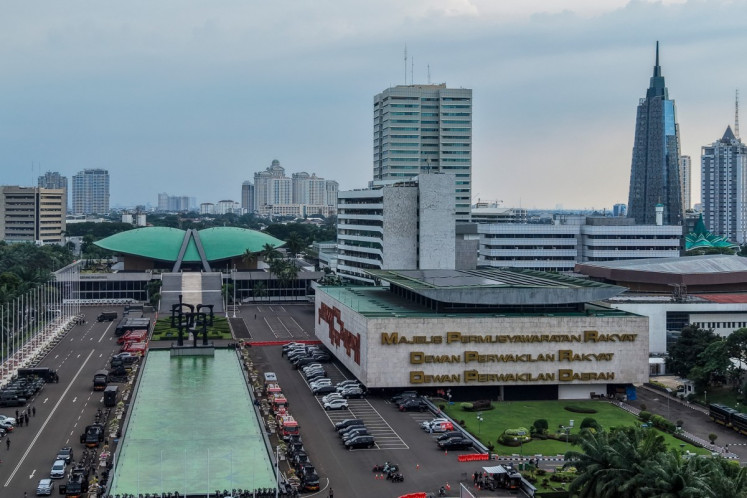
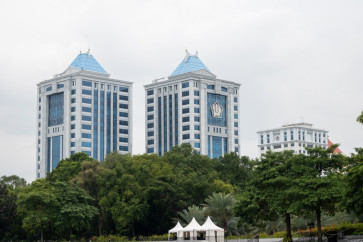
 A general view of the Finance Ministry office is seen on Dec. 6, 2024, in Jakarta. (Shutterstock/ardiwebs)
A
s Indonesia experiences economic difficulties today, we need to look back at how efforts to rescue the economy were carried out in the past. Frans Seda made significant contributions during the transition of power from 1965 to 1966.
Seda was trusted by Sukarno to become plantations minister. He had previously served as chairman of the Catholic Party because I.J. Kasimo, in opposition to the president, resigned. Seda was more flexible in dealing with Sukarno. At that time, power could be said to have been divided among Sukarno, the Army and the Indonesian Communist Party (PKI), with Sukarno at the top as a balancing force.
A struggle took place between the Army and the PKI. General Ahamd Yani asked Seda to establish a newspaper as the mouthpiece of the Catholic Party to influence public opinion. In a subsequent discussion with IJ Kasimo as well as Jakob Oetama and PK Ojong, it was agreed to establish a press media outlet but as a general newspaper rather than a party media outlet. The requirement of 3,000 signatures from people willing to subscribe to the newspaper was easily obtained by Seda, especially from the people of Flores. The newspaper, which was originally planned to be named Bentara Rakyat, was changed to Kompas at Sukarno's suggestion.
When he became plantations minister, Seda had to be able to manage various competing interests. This sector faced many obstacles in the form of quotas and taxes imposed on foreign exchange earnings from exports. He had to bridge the needs of the government and exporters, including workers in this sector.
In 1966, Seda assumed the position that Sumitro Djojohadikusumo called “Finance Minister during a very difficult period”. At that time, the national economy was at its lowest point, with inflation reaching 650 percent. As finance minister, he and Radius Prawiro (then-Central Bank governor) were responsible for addressing the severe monetary problems. Departmental spending was tightened while businesses were hampered because credit expansion was restricted.
Seda issued the Oct. 3, 1966, Regulation, which became the basis for economic policy with a balanced budget, a floating exchange rate and the introduction of market mechanisms. Indonesia rejoined the World Bank and International Monetary Fund, European countries were lobbied to reschedule foreign debt and the IGGI (Inter Governmental Group on Indonesia) was established. Within a year, inflation fell to 185 percent, the following year to 138 percent and finally in the 1970s it was down to single digits.

From 1968 to 1972, Seda served as transportation minister and was instrumental in pioneering shipping and air services, and he worked to ensure that every province had an airport.