TheJakartaPost
Please Update your browser
Your browser is out of date, and may not be compatible with our website. A list of the most popular web browsers can be found below.
Just click on the icons to get to the download page.


Popular Reads
Top Results
No results found. Please check your search term and try again
Can't find what you're looking for?
View all search results
Popular Reads
Top Results
No results found. Please check your search term and try again
Can't find what you're looking for?
View all search resultsHumanity hits 8 billion mark
Higher fertility rates in poor countries ‘put development goals at risk’.
Change text size
Gift Premium Articles
to Anyone
Share the best of The Jakarta Post with friends, family, or colleagues. As a subscriber, you can gift 3 to 5 articles each month that anyone can read—no subscription needed!
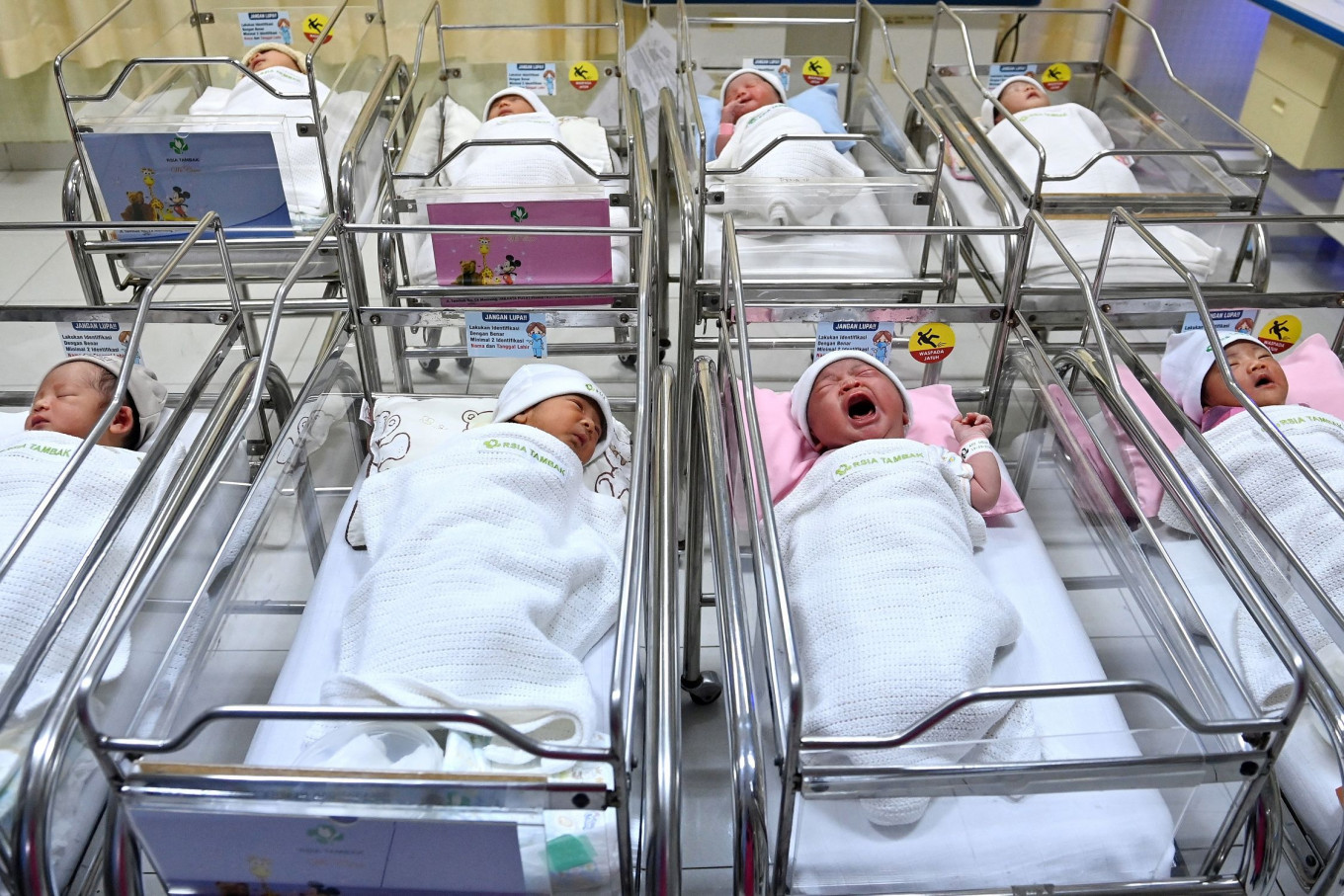
A baby born somewhere on Tuesday was the world's 8 billionth person, according to a projection by the United Nations.
"The milestone is an occasion to celebrate diversity and advancements while considering humanity's shared responsibility for the planet," UN Secretary-General Antonio Guterres said in a statement.
The UN attributes the growth to human development, with people living longer thanks to improvements in public health, nutrition, personal hygiene and medicine.
It is also the result of higher fertility rates, particularly in the world's poorest countries – most of which are in sub-Saharan Africa – putting their development goals at risk.
How many is too many?
Population growth has also magnified the environmental impacts of economic development.
But while some worry that 8 billion humans is too many for planet Earth, most experts say the bigger problem is the overconsumption of resources by the wealthiest people.