The Jakarta Post
Please Update your browser
Your browser is out of date, and may not be compatible with our website. A list of the most popular web browsers can be found below.
Just click on the icons to get to the download page.


Popular Reads
Top Results
No results found. Please check your search term and try again
Can't find what you're looking for?
View all search results
Popular Reads
Top Results
No results found. Please check your search term and try again
Can't find what you're looking for?
View all search resultsNot in the driving seat
The historic high-speed railway project only focused on physical construction, while the human resources development was left neglected, at least until February of this year.
Change text size
Gift Premium Articles
to Anyone
Share the best of The Jakarta Post with friends, family, or colleagues. As a subscriber, you can gift 3 to 5 articles each month that anyone can read—no subscription needed!
 Set as preferred source
I
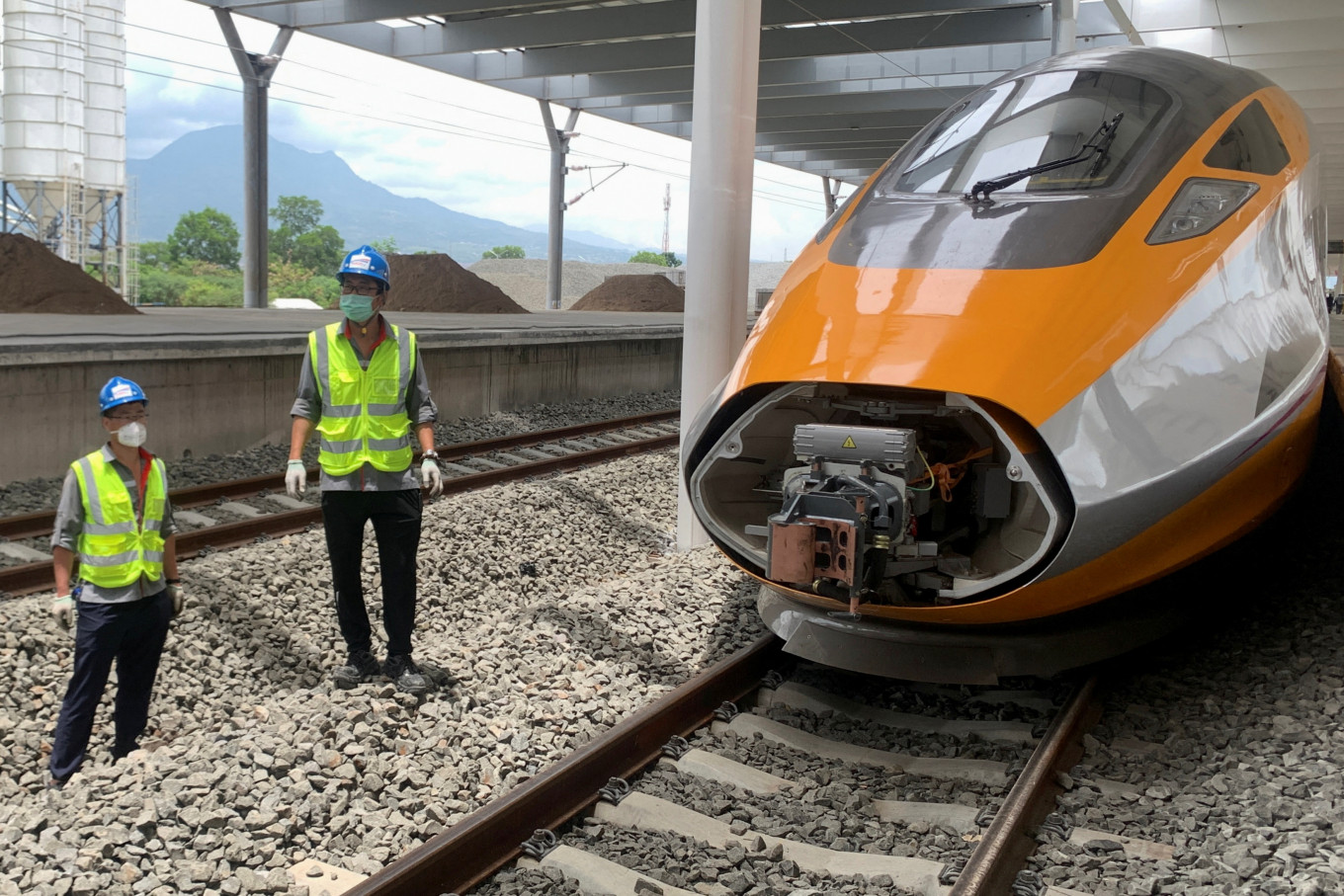
t has been decided that Chinese staff will operate Indonesia’s first high-speed rail link, at least for the first year pending the readiness of local employees to take over the role. The move appears to be a compromise to ensure the train will start plying the Jakarta-Bandung route in August while meeting the strict safety standards that the government demands.
Although it appears the project is largely complete, it has just faced another delay in terms of the preparedness of local human resources to operate the flagship mode of transportation built as part of China’s Belt and Road Initiative campaign.
To be more precise, such a postponement will mean the promised technology transfer that the government has envisioned since the start of the project, will not materialize anytime soon. It may take one or two years, even longer, from the day the high-speed railway is inaugurated in August before the much-awaited transfer of technology takes place.
Operating a high-speed rail system naturally offers far tougher challenges than conventional trains as the former is a novel technology with a complexity that dwarfs the latter. This means local operators will have to learn from scratch from China, which has mastered the technology.
The technology transfer will be completed when we have the capacity to run and maintain the rail link, solve technical problems that may arise, and to develop our own high-speed train technology or help other countries build theirs.
Unless the government can prove the local human resources are capable of independently running the new railway, there is not much we can celebrate when the high-speed train begins operations sometime in August.
Moreover, the delay would also suggest bad planning in the project, for which the government has to take responsibility. Indeed, the project has been plagued by controversies ever since the government surprisingly gave the project to China, after potential bidder Japan completed its feasibility study and financing scheme.