The Jakarta Post
Please Update your browser
Your browser is out of date, and may not be compatible with our website. A list of the most popular web browsers can be found below.
Just click on the icons to get to the download page.


Popular Reads
Top Results
No results found. Please check your search term and try again
Can't find what you're looking for?
View all search results
Popular Reads
Top Results
No results found. Please check your search term and try again
Can't find what you're looking for?
View all search resultspramono-anung
Jakarta 6 months ago
PREMIUM
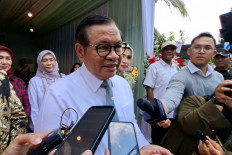
Pramono touts ‘top global city’ ambition in first year leading Jakarta
In the first year of his administration, Jakarta Governor Pramono Anung has repeatedly conveyed his ambition to elevate Jakarta’s status to a top global city, but the vision risks overshadowing mounting urban problems that still confront the world’s most populous metropolis.

Editorial 6 months ago
PREMIUM
Pramono’s uneventful start
One year in, Jakarta’s "more colorful" makeover is facing a gray reality of systemic waste and stagnant flood mitigation. With the honeymoon over, the city’s 11 million residents are waiting to see if their governor will finally tackle the perennial problems lurking behind the populist wins.
Jakarta 6 months ago
PREMIUM
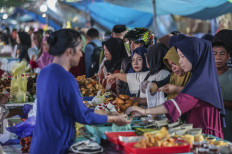
Jakarta bans restaurant raids during Ramadan to promote tolerance
The Jakarta administration has prohibited restaurant raids commonly carried out by members of certain mass organizations during daylight hours in the Islamic fasting month of Ramadan, citing the need to maintain public order and religious tolerance.
Jakarta 6 months ago
PREMIUM
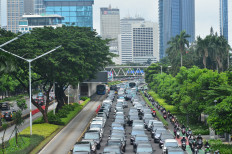
Jakarta accelerates air quality roadmap as pollution worsens
The Jakarta administration has committed to finalizing a 20-year air quality control and protection road map this year, aimed at establishing a regulatory framework to curb pollution and support the city’s goal of achieving net-zero emissions by 2050.
Jakarta 7 months ago
PREMIUM
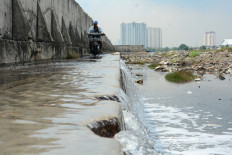
Jakarta tightens groundwater rule to curb subsidence
The city administration has tightened its ban on groundwater extraction in industrial zones and from beneath public roads to curb worsening land subsidence, but environmental groups warn the move may fall short without consistent enforcement and stricter oversight.
Jakarta 7 months ago
PREMIUM
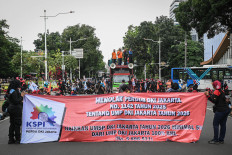
No revision to Jakarta’s minimum wage, Governor Pramono says
Labor unions have argued in a series of protests against the Jakarta administration that this year’s city minimum wage of Rp 5.73 million (US$341) is still lower than the Rp 5.89 million of income recommended by Statistics Indonesia (BPS) for decent living in the city.

Jakarta 7 months ago
PREMIUM
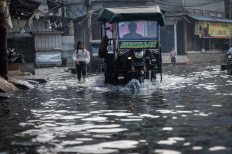
Jakarta battles floods with river cleanup, normalization plan
The Jakarta administration has stepped up river cleanup and normalization efforts as flooding continued to disrupt large parts of the capital on Friday, following heavy overnight rainfall that caused rivers to overflow, inundating residential areas and major roads.

Jakarta 8 months ago
PREMIUM
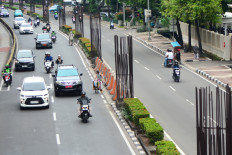
Jakarta to remove abandoned monorail pillars in South Jakarta
Jakarta will soon begin dismantling the long-abandoned monorail structure in South Jakarta, clearing dozens of concrete pillars along Jl. HR Rasuna Said and Jl. Asia Afrika to make way for wider roads and improved pedestrian facilities.
Editor's Picks
Popular
- Mass poisonings cast doubt on free meals reforms
- New data rules could unlock cross-border data flows
- Malaysia must not breathe Indonesia’s governance failure
- The state's new muscle
- Jakarta airport and others reopen after volcanic ash crisis
- Anak Krakatau eruption halts flights, schools, fishing
- Soekarno-Hatta airport extends closure after Anak Krakatau eruption
- Barelang Police, Japanese diplomat hold meeting on Batam security
- Travelers scramble as Anak Krakatau ash exposes gaps in contingency plans
- Jakarta international airport extends closure after Anak Krakatau eruption


