The Jakarta Post
Please Update your browser
Your browser is out of date, and may not be compatible with our website. A list of the most popular web browsers can be found below.
Just click on the icons to get to the download page.


Popular Reads
Top Results
No results found. Please check your search term and try again
Can't find what you're looking for?
View all search results
Popular Reads
Top Results
No results found. Please check your search term and try again
Can't find what you're looking for?
View all search resultsconflict
Academia 2 months ago
PREMIUM
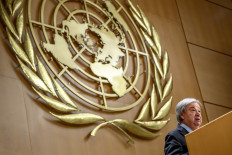
The next UN chief must rebuild, reconcile and heal
As the United Nations prepares to choose its next leader, the selection must not be treated as a routine bureaucratic appointment. For Indonesia and the broader Global South, the stakes demand a courageous diplomat who will transform the office into a shield for the many, rather than a tool of convenience for the powerful.
Academia 3 months ago
PREMIUM
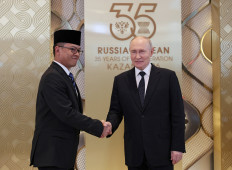
Why Indonesia must become a strategic pivot state
The blurring lines between the Middle East and the Indo-Pacific signal the death of predictable globalization and the rise of a volatile, multi-theater era of systemic competition. To avoid becoming a mere spectator to great power rivalry, Indonesia must shed its passive neutrality and embrace "Strategic Autonomy 2.0" toward bold, technological sovereignty.





Academia 3 months ago
PREMIUM
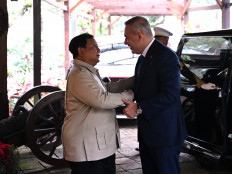
The Strait of Hormuz shock is reshaping East Asia’s economic future
In the wake of the crisis stemming from the closure of the Strait of Hormuz, ASEAN should consider a regional strategic reserve mechanism, coordinated procurement arrangements and emergency energy-sharing frameworks.
Editor's Picks
Popular
- Not the Ministry of Magic
- PISA gains belie Indonesia’s persistent education crisis
- The benefit of the doubt has expired
- Suahasil seen to prioritize fiscal discipline, continuity
- Osama the gamer: A list of Bin Laden’s video games from his hard drive
- Saudi civil defense sends all-clear after alerts issued for capital Riyadh
- Indonesian Navy welcomes former Italian warship as its first aircraft carrier
- Prabowo skips UNGA as RI seeks to bridge divides
- Another 150 Indonesians deported from Malaysia to Batam
- Ed Sheeran struggles against Gaza tide


