The Jakarta Post
Please Update your browser
Your browser is out of date, and may not be compatible with our website. A list of the most popular web browsers can be found below.
Just click on the icons to get to the download page.


Popular Reads
Top Results
No results found. Please check your search term and try again
Can't find what you're looking for?
View all search results
Popular Reads
Top Results
No results found. Please check your search term and try again
Can't find what you're looking for?
View all search resultscooking
Opinion 2 months ago
PREMIUM
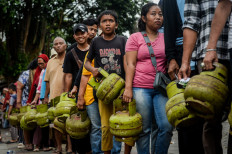
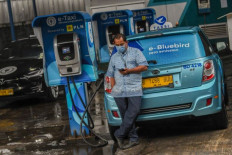
Analysis: Cooking up energy security: CNG or induction stoves?
Amid rising geopolitical tensions and growing concerns over energy security, the government is considering phasing out liquefied petroleum gas (LPG) for cooking—around 80 percent of which is imported—by reviving a nationwide induction (electric) stove program. At the same time, policymakers are also exploring the replacement of subsidized LPG with compressed natural gas (CNG) canisters. Yet beyond the promise of reducing import dependence, the question remains: Who stands to benefit from these policy shifts?




Environment 2 years ago
Bid to end deadly cooking methods which stoke global warming
Some 2.3 billion people across 128 countries breathe in harmful smoke when they cook on basic stoves or over open fires, according to an International Energy Agency (IEA)-African Development Bank (ADB) report that sounded the alarm last year.


Opinion 3 years ago
PREMIUM
Analysis: Govt adopts another ill policy over scarcity of cheap cooking oil
The government has decided to increase the portion of domestic market obligation (DMO) of crude palm oil (CPO), the raw material of cooking oil, and slow down CPO exports to reign in the recent hike of government-sponsored, simple-packaged cooking oil Minyakita. The antimarket policy has irked industry players as it will again punish them more.

Front Row 3 years ago
SESA introduces new cooking innovation for healthier and more hassle-free meals
Among the many things that have become more abundant after the pandemic is the rise of “homepreneurship”, in which even stay-at-home parents have decided to open their own businesses in order to stay afloat financially.

Editor's Picks
Popular
- PISA gains belie Indonesia’s persistent education crisis
- Not the Ministry of Magic
- Suahasil seen to prioritize fiscal discipline, continuity
- The benefit of the doubt has expired
- Ed Sheeran struggles against Gaza tide
- Osama the gamer: A list of Bin Laden’s video games from his hard drive
- Another company flees Batam, abandons 1,025 workers
- Indonesian Navy welcomes former Italian warship as its first aircraft carrier
- Is Indonesia returning to fiscal orthodoxy?
- Saudi civil defense sends all-clear after alerts issued for capital Riyadh


