The Jakarta Post
Please Update your browser
Your browser is out of date, and may not be compatible with our website. A list of the most popular web browsers can be found below.
Just click on the icons to get to the download page.


Popular Reads
Top Results
No results found. Please check your search term and try again
Can't find what you're looking for?
View all search results
Popular Reads
Top Results
No results found. Please check your search term and try again
Can't find what you're looking for?
View all search resultscooperatives
Politics 1 month ago
PREMIUM
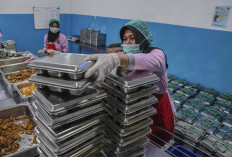
Prabowo orders reviews of flagship programs, signals possible shift
President Prabowo Subianto is reassessing two of his flagship programs, signaling a possible shift in the rollout of the free nutritious meals and the Red and White cooperatives program, amid persistent controversies and growing public scrutiny surrounding his costly initiatives.

Opinion 2 months ago
PREMIUM
Analysis: Militarization, business risk in cooperatives program
The controversy over military-style training for candidate managers of the Red and White Cooperatives and Fisherman’s Villages programs points to something larger than a single policy failure: the steady expansion of the Indonesian Military (TNI) into civilian governance and economic management. While the deaths of five civilian trainees has sparked public alarm, the deeper concern is how state institutions are being reshaped around military discipline and authority.
Regulations 2 months ago
PREMIUM
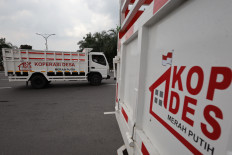
Government slows down rollout of cooperatives program
The government has slashed by half its planned rollout of KMP units in October from 80,000 to just 40,000, while the finance minister is adamant that any unnecessary augmentations to the original program will be ditched before implementation.

Archipelago 2 months ago
PREMIUM
Pressure mounts for probe into five deaths in military-run cooperative training
Just 10 days after the nationwide training began on June 14, five participants had died across multiple regions. The military said they died following various medical emergencies, including heatstroke, cardiac arrest and pneumonia.
Politics 2 months ago
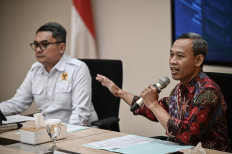
Komnas HAM urges end to military training in Prabowo cooperative project
Launched in July last year, the "Red and White Cooperatives" programme aims to establish around 80,000 village cooperatives across Indonesia to create jobs and meet the government's target of 8 percent economic growth in 2029. They are intended to sell basic goods, subsidised cooking gas and fertiliser.
Companies 5 months ago
PREMIUM
PMJS lands Rp 10.8 trillion truck deal for village cooperatives
Through its subsidiary DIPO, the company will supply 20,600 trucks to Agrinas Pangan Nusantara as part of the government’s red and white cooperatives program, amid a broader plan to procure up to 160,000 vehicles nationwide.

Opinion 6 months ago
PREMIUM
Analysis: Desperately seeking funds for Red and White cooperatives
The Red and White Cooperative (KDMP) initiative is rapidly transforming from a flagship economic program into a mandate that must succeed at any cost. In its wake, the program is now cannibalizing the Village Fund, the very backbone of rural development and a decade-long symbol of local empowerment.
Academia 6 months ago
PREMIUM
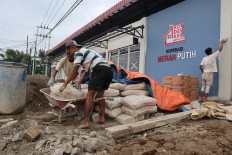
Promise or performance? Weighing the macroeconomic footprint of cooperatives
While Indonesia’s Red and White initiatives aim to revitalize cooperatives as constitutional cornerstones of the economy, empirical data reveals a sector struggling to translate scale into growth. True economic sovereignty will require shifting the focus from administrative expansion to high-value productivity and human capital reform.


Archipelago 6 months ago
PREMIUM
Villages struggle to secure land for red and white cooperatives
Many villages are situated in mountainous areas with uneven terrain, requiring expensive cut-and-fill work to prepare a 1,000-square-meter plot. In addition, some village land is located far from main roads due to limited infrastructure, making access difficult.
Editor's Picks
Popular
- Much ado about asset forfeiture
- Mass poisonings cast doubt on free meals reforms
- Prabowo sacks Purbaya, turns to familiar hand at Finance Ministry
- Indonesia, China eye cooperation to boost 3 million homes program
- The benefit of the doubt has expired
- Children are no longer the priority, were they ever?
- Australian woman dies after falling from cliff at Bali’s Kelingking Beach
- Wildfire breaks out again at Mount Bromo
- Purbaya says he was 'upset', but half expected removal
- Ferry disaster renews scrutiny of vessel safety checks


