The Jakarta Post
Please Update your browser
Your browser is out of date, and may not be compatible with our website. A list of the most popular web browsers can be found below.
Just click on the icons to get to the download page.


Popular Reads
Top Results
No results found. Please check your search term and try again
Can't find what you're looking for?
View all search results
Popular Reads
Top Results
No results found. Please check your search term and try again
Can't find what you're looking for?
View all search resultscriminal-code

Academia 4 months ago
PREMIUM
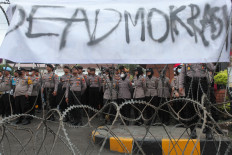
New legal paradigm demands an end to impunity
The transfer of Andrie Yunus’s acid attack case to a military court threatens to shield perpetrators behind a "wall of impunity." To uphold the rule of law, Indonesia must prioritize civilian jurisdiction and establish an independent fact-finding team.

Opinion 7 months ago
PREMIUM
Analysis: Fear of misuse looms as new Criminal Code takes effect
After decades of relying on Dutch colonial regulations, Indonesia finally has its own Criminal Code (KUHP), which came into effect on Jan. 2. While the government claims the new KUHP reflects modern legal standards, critics say it retains significant gaps, particularly regarding potential conflict between law enforcement practices and human rights protections.

Politics 8 months ago
PREMIUM
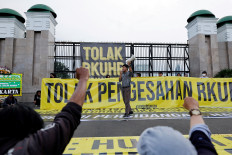
Prabowo embraces criticism but new penal code draws free speech concerns
President Prabowo Subianto has said that he welcomes criticism as a necessary part of governance. But the newly effective Criminal Code (KUHP) that makes insulting a sitting president and the government a crime has raised concern over restrictions on criticism.
Politics 8 months ago
PREMIUM
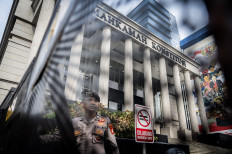
New KUHP, KUHAP meets legal pushback in Constitutional Court
At least 10 judicial review petitions against the new Criminal Code (KUHP) and Criminal Law Procedures Code (KUHAP) have been filed with the Constitutional Court within four days after the new laws came into force.
Politics 8 months ago
PREMIUM
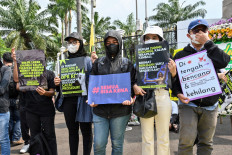
Authoritarian fears loom as new criminal code takes effect
Several articles of the new Criminal Code (KUHP) and Criminal Law Procedures Code (KUHAP) may erode civil liberties and freedom of expression, especially rights to criticize government policies, according to pro-democracy activists and scholars.

Archipelago 9 months ago
PREMIUM
Riau Islands ready to impose community sentences, governor says
Riau Islands province has signaled it is ready to implement community service as an alternative punishment for criminal offenses carrying a maximum five years in prison or a fine of Rp 10 million when the new KUHP goes into effect on Jan. 2.
Editor's Picks
Popular
- Mass poisonings cast doubt on free meals reforms
- New data rules could unlock cross-border data flows
- Malaysia must not breathe Indonesia’s governance failure
- Volcanic eruptions take toll on economy
- Search intensifies for journalists, crew as Anak Krakatau ashfall eases
- Mitigation budget under scrutiny as Indonesia grapples with disasters
- Indonesian wildfire emissions surge to world's highest
- Anak Krakatau doesn't need an earthquake to kill
- Student suffers memory loss, seizures after free meal food poisoning
- Search resumes for missing journalists on Anak Krakatau mission


