The Jakarta Post
Please Update your browser
Your browser is out of date, and may not be compatible with our website. A list of the most popular web browsers can be found below.
Just click on the icons to get to the download page.


Popular Reads
Top Results
No results found. Please check your search term and try again
Can't find what you're looking for?
View all search results
Popular Reads
Top Results
No results found. Please check your search term and try again
Can't find what you're looking for?
View all search resultsdirect-election
Politics 2 months ago
PREMIUM
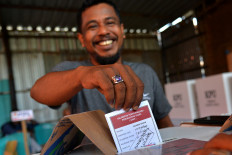
Political parties respect court ruling upholding direct regional elections
Several political parties have welcomed the Constitutional Court's recent ruling reaffirming that regional heads must continue to be elected directly by voters, a decision observers say effectively closes the door on renewed proposals to scrap direct regional elections.

Politics 8 months ago
PREMIUM
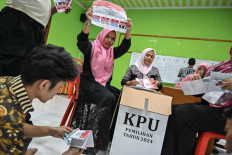
House postpones plan to scrap direct regional elections
The House of Representatives has shelved plans to revise the Regional Elections Law this year amid mounting public pushback against a renewed proposal by President Prabowo Subianto’s ruling coalition to end direct elections for regional heads.
Editorial 8 months ago
PREMIUM
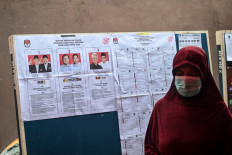
Direct attack on democracy
It is not too far a stretch of our collective imagination to deduce that antidemocratic forces have continued to whittle away at the hard-won gains of the Indonesian people, when nearly three decades since the precipitous events that led to massive sociopolitical reform, those who have benefited from direct elections are now seeking retrogression.

Politics 8 months ago
PREMIUM
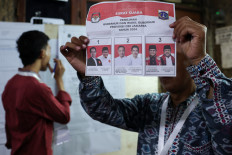
PDI-P stands with voters against indirect polls
The Indonesian Democratic Party of Struggle (PDI-P) has become the only party to formally oppose scrapping direct regional elections in the House of Representatives, pushing back against the ruling coalition’s plan while acknowledging the need to curb soaring election costs by other effective means.
Politics 8 months ago
PREMIUM
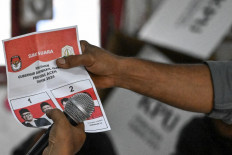
Democrats back Prabowo’s plan to end direct regional elections
The pro-government Democratic Party has thrown its weight behind President Prabowo Subianto’s suggestion to abolish direct elections for regional heads, potentially overturning a legacy of democracy that came about under its founding figure, former president Susilo Bambang Yudhoyono.
Politics 8 months ago
PREMIUM
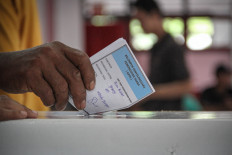
Pro-Prabowo parties close ranks to scrap direct regional elections
Political party leaders of the ruling coalition have begun solidifying support for President Prabowo Subianto’s proposal to scrap direct elections for regional heads, a major change that analysts and critics say could help the President centralize power in a way that risks reversing hard-won democratic reforms.
Politics 9 months ago
PREMIUM
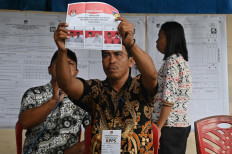
Pro-government parties open to scrapping direct regional elections
Members of the ruling coalition are open to President Prabowo Subianto’s suggestion of scrapping the prevailing direct elections for regional heads, despite strong opposition from pro-democracy advocates who warned that would undercut democratic accountability and risk reversing hard-won reforms.
Politics 9 months ago
PREMIUM
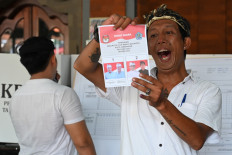
Prabowo signals support for Golkar’s push to end direct regional elections
Ahead of a planned revision to election rules, President Prabowo Subianto has once again raised the idea of scrapping direct regional head elections to cut costs, despite persistent opposition from pro-democracy activists who have warned of a possible rollback of democratic safeguards.
Editor's Picks
Popular
- Indonesia calls for more representative UN amid changing world order
- Safeguarding Indonesia's AI future
- Recentralization concerns in fiscal, education heighten
- Court decision tightens House oversight on free meals funding
- Twenty years on, BRICS faces a defining choice
- Jakarta water shortages worsen as dry season drags on
- Indian arrested for smuggling gold bars to Thailand via N. Sumatra airport
- Singapore’s BDx launches 640MW data center project in West Java
- Govt under pressure as 3 million home drive hits cracks
- Gontor leader’s blunt remarks highlight ‘pesantren’ political independence


