The Jakarta Post
Please Update your browser
Your browser is out of date, and may not be compatible with our website. A list of the most popular web browsers can be found below.
Just click on the icons to get to the download page.


Popular Reads
Top Results
No results found. Please check your search term and try again
Can't find what you're looking for?
View all search results
Popular Reads
Top Results
No results found. Please check your search term and try again
Can't find what you're looking for?
View all search resultsenergy
Academia 2 months ago
PREMIUM
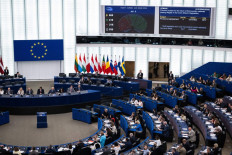
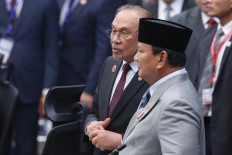
Japan-ASEAN cooperation continues to evolve in an age of turbulence
As geopolitical and technological shifts rock the region, Japan and ASEAN are evolving their 50-year "heart-to-heart" partnership into an indispensable anchor for Indo-Pacific stability and economic resilience.
Academia 2 months ago
PREMIUM
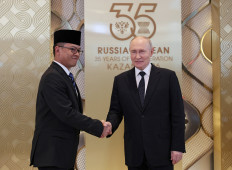
ASEAN's energy security and Russia's risky infrastructure
As ASEAN deepens its energy ties with Moscow, the bloc faces a volatile new reality defined by long-range drone strikes deep inside Russian territory. To safeguard its economic future, Southeast Asia must balance the allure of vast Siberian reserves against the growing vulnerability of the infrastructure that delivers them.

Opinion 2 months ago
PREMIUM
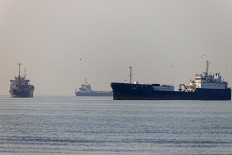
Analysis: Power blackouts reveal a deeper energy dilemma
Recent rolling blackouts have exposed more than temporary technical failures. Although the government and state-owned electricity company PLN attributed the outages to shortages of medium-calorie coal and technical problems at two independent power plants, the disruptions highlight a deeper dilemma: balancing affordable electricity tariffs with the financial sustainability of electricity amid rising geopolitical and energy market uncertainty.
Economy 2 months ago
PREMIUM
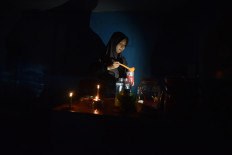
Rolling blackouts in Java reignite concerns over electric grid
Rolling power outages across parts of Java and Bali over the weekend have disrupted household and business activities, reigniting concerns over the reliability of Indonesia’s electricity system, with experts warning that the situation could persist for up to two more weeks.
Academia 2 months ago
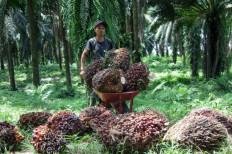
Sustainability rhetoric vs. economic reality: Can we square the circle?
Global economic shocks and climate volatility are no longer temporary disruptions; they are structural crises deeply embedded in our strained natural systems. For resource-rich nations like Indonesia, surviving the next shock requires rewriting the global incentive structure to value nature on the national balance sheet and fairly compensate the smallholders on the front lines.
Europe 2 months ago
PREMIUM
Indonesia joins ASEAN push for deeper Russia ties
Indonesia has called for expanded cooperation between ASEAN and Russia on the economy, food security and energy resilience, as leaders from the regional bloc wrapped up talks in Kazan, Russia, on Thursday with a renewed commitment to deepen engagement with Moscow amid continuing global volatility.
Editor's Picks
Popular
- Much ado about asset forfeiture
- The benefit of the doubt has expired
- Mass poisonings cast doubt on free meals reforms
- New data rules could unlock cross-border data flows
- Children are no longer the priority, were they ever?
- Prabowo sacks Purbaya, turns to familiar hand at Finance Ministry
- Prabowo replaces Finance Minister Purbaya with his deputy
- Six killed, 129 missing after ferry capsizes off Java
- Indonesia, China eye cooperation to boost 3 million homes program
- SOE dividend grab tests Danantara’s mandate


