The Jakarta Post
Please Update your browser
Your browser is out of date, and may not be compatible with our website. A list of the most popular web browsers can be found below.
Just click on the icons to get to the download page.


Popular Reads
Top Results
No results found. Please check your search term and try again
Can't find what you're looking for?
View all search results
Popular Reads
Top Results
No results found. Please check your search term and try again
Can't find what you're looking for?
View all search resultsenergy

Asia & Pacific 3 months ago
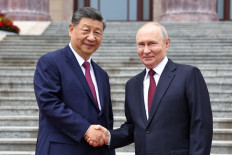
Putin, Xi hail 'unyielding' ties in talks after Trump visit
President Xi Jinping hailed China and Russia's "unyielding" ties in talks with Vladimir Putin on Wednesday, as the pair met to underscore their alliance days after Donald Trump's visit to the Asian superpower economy.
Opinion 3 months ago
PREMIUM
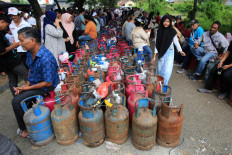
Analysis: Indonesia eyes CNG, DME to ease LPG import burden amid energy crisis
The Indonesian government is looking to dimethyl ether (DME) and compressed natural gas (CNG) as alternatives to import-reliant liquefied petroleum gas (LPG), as it grapples with the impact of the global energy crisis triggered by the United States-Israeli war with Iran. Competing blockades by Iran and the US have shown little sign of easing, pushing up global energy prices and increasing pressure on Indonesia’s state budget, particularly energy subsidies for 3-kilogram LPG cylinders. In response, the government has raised prices for unsubsidized LPG products, sought alternative import sources and accelerated efforts to develop DME and CNG as substitute fuels.

Academia 3 months ago
PREMIUM
Deconstructing conflict in Papua: A land beyond vacancy
As the government intensifies its food estate ambitions in Papua, a staggering 58-to-1 military-to-insurgent ratio reveals a development strategy that prioritizes industrial expansion over the basic human rights and ancestral lands of the indigenous population.

Economy 4 months ago
PREMIUM
Prabowo backs ASEAN to fast-track renewable energy, Borneo power grid
President Prabowo Subianto has called on ASEAN member states to accelerate the development of renewable energy and make progress on the long-proposed Trans-Borneo Power Grid, warning that energy security is an “urgent” necessity amid instability in the Middle East.
Asia & Pacific 4 months ago
PREMIUM
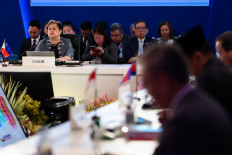
ASEAN convenes under shadow of global oil shock
Top officials from across Southeast Asia packed a hectic schedule of back-to-back meetings in Cebu, the Philippines, on Thursday, laying the groundwork for the leaders’ summit while zeroing in on a unified ASEAN response to the Middle East crisis, as fears of a deepening energy crunch hang over the 11-nation bloc.
Asia & Pacific 4 months ago
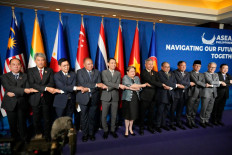
Southeast Asian nations start summit, aiming to tackle energy crisis
While supply chain woes sparked by the US-Israeli attack on Iran may dominate talks, the Association of Southeast Asian Nations, now 11 strong with the addition of Timor-Leste, has a still-raging civil war in its own backyard.

Regulations 4 months ago
PREMIUM
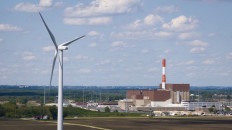
Pivoting from LPG to CNG to require 'billions of dollars’
As the government looks to replace millions of subsidized 3‑kilogram LPG cylinders with compressed natural gas (CNG) to reduce costly imports, experts warn the switch would require billions of dollars in investment, and a tight safety regime.
Asia & Pacific 4 months ago
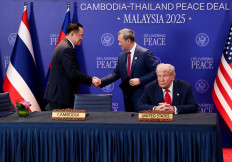
Thailand scraps agreement with Cambodia on joint energy exploration
The Thai cabinet's cancellation of the 2001 agreement, which seeks to develop a framework to jointly explore hydrocarbons in parts of the Gulf of Thailand where the claims of Thailand and Cambodia overlap, had long been expected and follows two rounds of armed conflict between the two countries last year.
Editor's Picks
Popular
- New data rules could unlock cross-border data flows
- Malaysia must not breathe Indonesia’s governance failure
- Mass poisonings cast doubt on free meals reforms
- Volcanic eruptions take toll on economy
- Search intensifies for journalists, crew as Anak Krakatau ashfall eases
- Mitigation budget under scrutiny as Indonesia grapples with disasters
- Indonesian wildfire emissions surge to world's highest
- Student suffers memory loss, seizures after free meal food poisoning
- Anak Krakatau doesn't need an earthquake to kill
- Search resumes for missing journalists on Anak Krakatau mission


